
A guide to multi-agent architecture
Multi-agent systems are no different from how we all function at work.
Instead of one person doing everything, specialists focus on different tasks, engineers build, support handles users, sales closes deals. Specialization speeds work, improves decisions, and makes the system more resilient.
Multi-agent architectures work the same way.
TLDR: multi-agent system
A multi-agent system is a network of autonomous AI agents that work together to complete complex tasks. Each agent specializes in a specific role, and by coordinating with others, the system improves speed, accuracy, and reliability compared to a single-agent approach.
So instead of a single AI trying to reason about everything at once, tasks are distributed across specialized AI agents. One agent writes code, another analyzes data, another handles user interaction. The business case is straightforward: specialization improves accuracy, parallel execution increases speed, and distributing responsibility reduces single points of failure.
Multi-agent systems are transforming industries by enabling specialized AI agents to collaborate on complex tasks. Financial firms like Morgan Stanley use agents for market analysis and fraud detection, while pharma companies coordinate research and clinical trials to accelerate drug discovery. In retail, Amazon deploys robotic agents to manage warehouse tasks efficiently.
As AI systems move from experimental tools to core infrastructure, this kind of distributed intelligence isn’t just helpful, it’s becoming the default production architecture.
Let’s look at how it actually works.
The shift from single agents to multi-agent systems
The single-agent model made sense initially. Deploy one LLM, give it a knowledge base, let it answer queries. Simple. Clean. Except it doesn’t scale.
Single agents hit walls fast. They loop endlessly trying to perfect outputs. They hallucinate without mechanisms to self-correct. They can’t plan across multi-step workflows. When a task requires research, analysis, synthesis, and presentation, one agent attempts all four—poorly.
Multi-agent systems solve this through division of labor. Break complex problems into specialized roles: one agent researches, another analyzes, a third synthesizes, a coordinator ensures coherence. Each agent focuses on what it does best. The system handles what no single agent can.
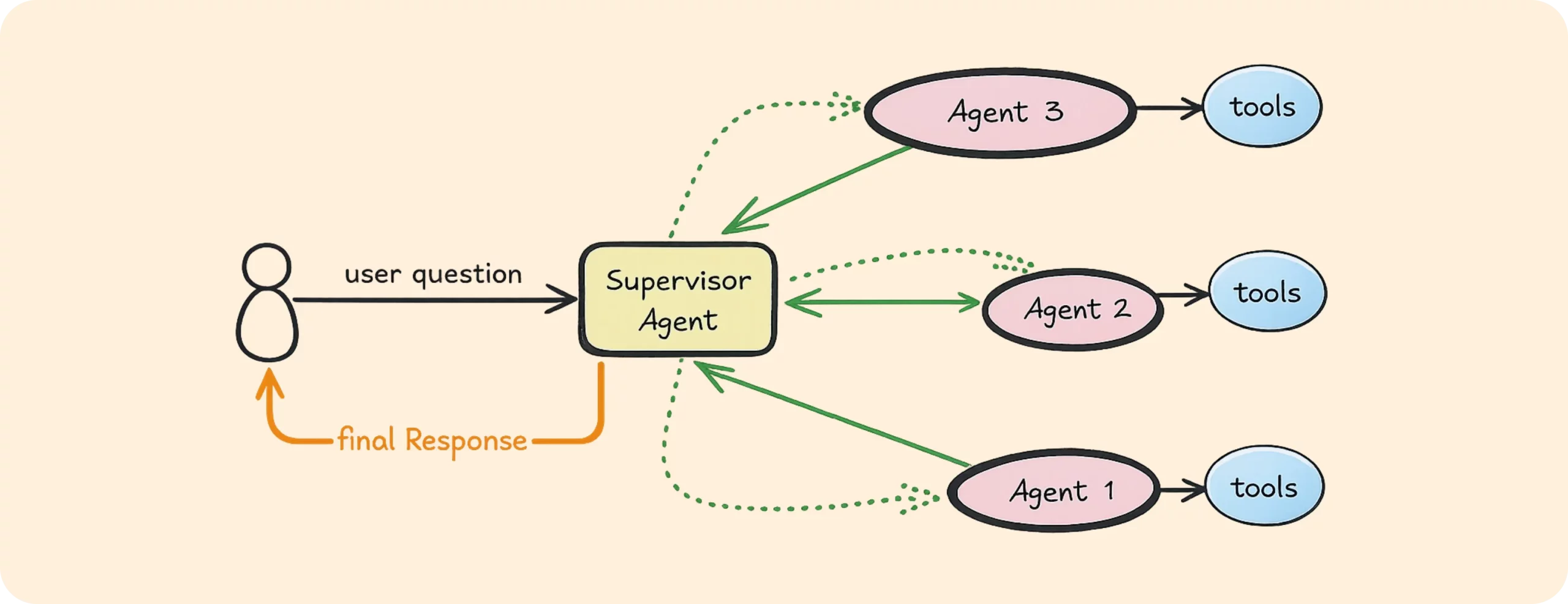
Start simple: coordinator plus specialist. The coordinator decomposes tasks and routes work. The specialist executes its domain. Scale complexity by adding specialists: a data agent, a code agent, a validation agent. The architecture grows with your needs.
| Dimension | Single-Agent | Multi-Agent |
| Architecture | Monolithic, sequential | Distributed, parallel |
| Error handling | Single point of failure | Fault-tolerant, redundant |
| Specialization | Generalist model | Expert agents per domain |
| Accuracy | Prone to compounding errors | Cross-validation improves 40% |
| Scalability | Limited by model capacity | Scales horizontally |
| Latency | Sequential bottleneck | Parallel execution |
| Complexity | Simple to implement | Requires coordination layer |
Why single agents fail at scale: real-life example
Consider a financial services firm processing loan applications with a single agent handling extraction, verification, credit checks, risk assessment, and document generation sequentially. Within weeks: 23% error rate. The agent hallucinated employment data, miscalculated ratios, and generated contradictory terms. Each error cascaded.
They rebuilt with specialized agents for each function. Error rate dropped to 3%. Processing time decreased 40%. Volume capacity increased 5x.
Core components that matter in multi-agent systems
Multi-agent systems aren’t just multiple models talking. The architecture requires specific components working in concert
- Task-specific agents. Specialized units focusing on particular domains, data analysis, code generation, content creation, risk assessment. Each agent has a defined role, persona, and context.
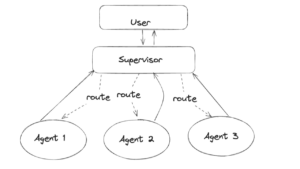
- Coordinator agents. Supervisory agents that orchestrate interactions, manage workflow, and route tasks to appropriate specialists. Think of this as the control plane.
- Communication protocols. Systems enabling information exchange between agents. This includes message passing for direct communication, shared databases for central repositories, event-driven notifications for real-time alerts, and consensus mechanisms for group decisions.
- Memory systems. Shared or individual memory banks for context retention. Critical for maintaining state across multi-turn workflows and learning from past interactions.
- External tool integrators. Agents that interface with APIs, databases, and external resources. This extends the system beyond pure reasoning into actual execution.
Multi-agent coordination patterns for production
Three coordination patterns have emerged as dominant:
- Hierarchical structure. Supervisor agents assign subtasks to subordinate workers, enabling scalable task division. This mirrors how organizations function and work well for large-scale environments. One coordinator makes strategic decisions, specialized workers execute tactical tasks.
- Peer-to-peer collaboration. Every agent communicates with every other agent. Maximum flexibility, but coordination complexity scales with agent count. Use this for smaller systems requiring high adaptability.
- Hub-and-spoke. The central coordinator routes all communication. Simplified coordination, potential bottleneck at the hub. Effective for systems with clear command-and-control requirements.
- The choice depends on your use case. High-frequency trading might be hierarchical. Customer service might use hub-and-spoke. Research workflows might use peer-to-peer.
Real-world multi-agent system implementations
Multi-agent systems are running production workloads today.
Amazon’s warehouse automation deploys hundreds of robots as agents. Task allocation agents manage robot assignments. Traffic management agents prevent collisions. Navigation agents exchange map data. No central controller, robots coordinate in real-time, producing emergent flow patterns that boost efficiency.
Healthcare systems use multi-agent architectures to manage patient flow, coordinate care teams, and optimize resources. One implementation at a large hospital network achieved a 15% reduction in average length of stay and 20% improvement in operating room utilization within six months.
Financial services employ multi-agent systems for fraud detection and risk assessment. Data collection agents gather information, risk evaluation agents analyze patterns, fraud detection agents identify anomalies, pricing agents suggest rates based on market conditions. Each agent specializes, the system synthesizes.
Autonomous vehicles use multi-agent coordination for traffic management. Vehicles communicate to optimize flow, prevent congestion, and reduce accidents. As one agent encounters construction, it signals others to reroute. The system adapts in real-time without central control.
Multi-agent system frameworks to know in 2026
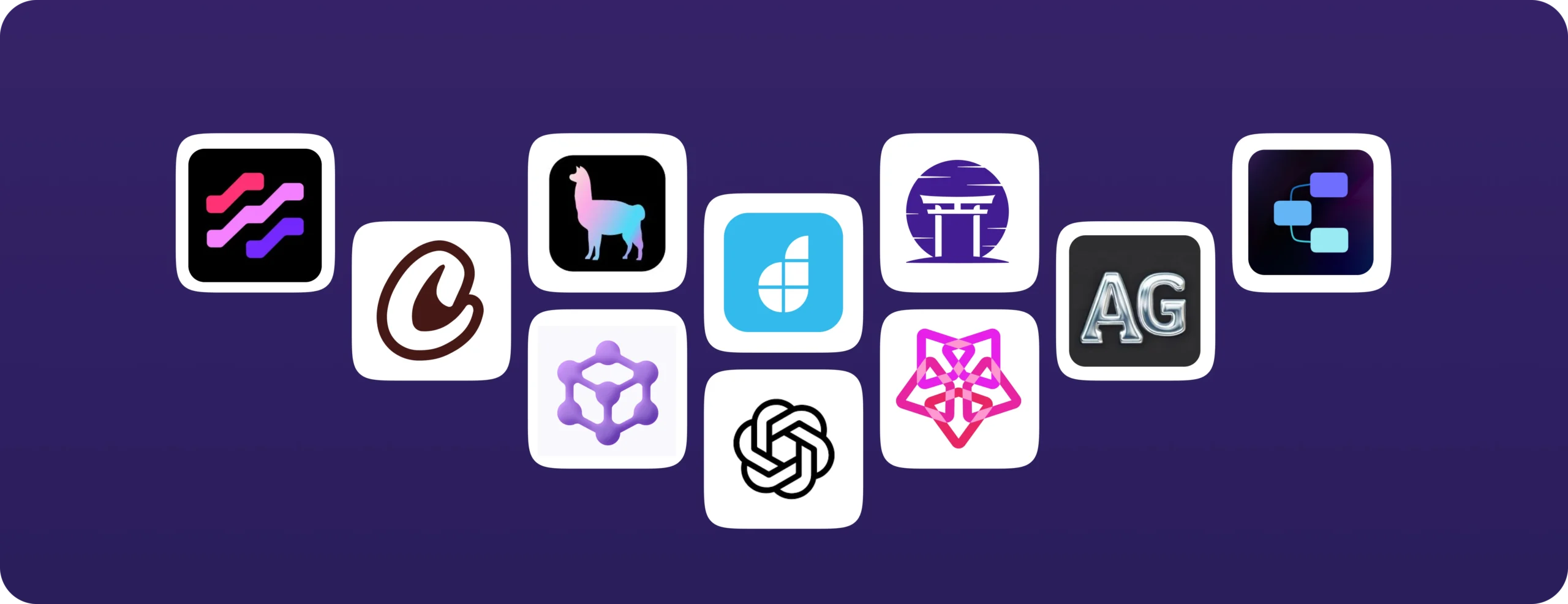
The tooling matured rapidly. Three frameworks won in 2025:
LangGraph. Graph-based architecture handles complex workflows, cycles, conditionals, state persistence. The recommended successor to LangChain for agent orchestration. Use this when you need maximum flexibility and control.
Microsoft Agent Framework. Microsoft merged AutoGen and Semantic Kernel into a unified enterprise platform. General availability set for Q1 2026 with production SLAs, multi-language support, and Azure integration. For organizations already in the Microsoft ecosystem, this is the path.
CrewAI. Focuses on creating “crews” of AI agents with defined roles working together. Lower barrier to entry, good for business applications and structured team-based workflows. Think of it as the Heroku of multi-agent systems, opinionated, easy to start, but with ceiling constraints.
The uncomfortable truth: choosing wrong is expensive. Teams spend 3-6 months building on one framework, hit limitations, face a 50-80% rewrite to migrate. Framework choice is an architectural decision, not a library decision.
The migration isn’t trivial. Start with a single use case. Identify tasks that benefit from specialization. Build the simplest multi-agent system that works. Add complexity only when needed.
Common multi-agent system failures and solutions
Multi-agent systems introduce new failure modes:
Coordination overhead. Agents talking to each other creates communication costs. Solution: Design clear protocols, minimize unnecessary chatter, use asynchronous patterns where possible.
Conflicting decisions. Decentralized systems may produce conflicting outputs. Solution: Implement consensus mechanisms, define clear hierarchies, establish tie-breaking rules.
Emergent behaviors. Multiple autonomous agents can produce unexpected outcomes. Solution: Extensive simulation before production, continuous monitoring, human-in-the-loop for critical decisions.
Scaling challenges. As agent count grows, complexity explodes. Solution: Optimize infrastructure, use efficient algorithms, consider hierarchical organization to prevent bottlenecks.
The good news: these are engineering problems, not fundamental limitations.
Why multi-agent architecture is a strategic bet
If you’re still building single-agent systems for complex workflows, you’re building technical debt.
Multi-agent architecture isn’t the future. It’s the present. The laggards just haven’t noticed yet. The tools exist. The patterns are proven. The cost-benefit is clear.
The question isn’t whether to adopt multi-agent systems. It’s how quickly you can migrate your existing workflows and what competitive advantage you can extract before everyone else does.
Start small. Build fast. Deploy to production. Learn from real usage. The window for first-mover advantage is closing.
Next steps
Ready to build? Start by experimenting with AI agents on DronaHQ and explore multi-agent systems without heavy setup. If you want to go deeper,join one of the agentic workshops and learn hands-on from teams already running these systems in production. Then, spend some time with real use cases across industries to see what works, what doesn’t, and why.
The tools are ready. What’s left is execution.
Related Articles