
AI Agents in Restaurants and QSRs | Redefining guest experience
TL;DR: AI agents for restaurants and QSRs
- AI agents bring goal‑driven intelligence into restaurant kiosks, drive‑thru lanes, tables, apps, kitchens, and HQ, so every outlet can behave more like a local favourite at scale.
- The AI in QSR space is already a hundreds‑of‑millions‑of‑dollars market and is projected to grow at roughly 25–27% CAGR through this decade, with automated ordering as the single largest use case.
- By 2026, most leading restaurant and QSR brands in major markets will be running at least one production AI agent (typically kiosk or drive‑thru) as core infrastructure, not as an experiment. The most advanced teams treat these agents as a “virtual GM” balancing queues, labour, and menu mix across FOH, BOH, and HQ.
Quick‑service and fast‑casual concepts were built on a simple promise: a familiar meal, served fast, across hundreds or thousands of locations. That still matters. But for guests juggling school runs, office calls, and late‑night drives, sheer speed is no longer enough. They also expect interactions to feel relevant, remembered, and easy.
We’ve moved into a phase where agentic AI is changing what “AI for restaurants” actually means. It’s no longer about bolting a chatbot onto a website or dropping a static screen in the lobby. The opportunity is to deploy AI agents that understand context, remember patterns, and take action – so a national brand can feel as attentive as a neighbourhood spot.
In this world, the meaningful unit of automation isn’t a single kiosk or voice bot. It’s a virtual general manager: an AI agent that quietly watches queues, labour, and menu mix across channels and locations, nudging the system toward better outcomes shift after shift. The human teams stay in charge of hospitality and recovery; the agent does the remembering and number‑crunching that humans can’t sustain all day.
What are AI agents in restaurants?
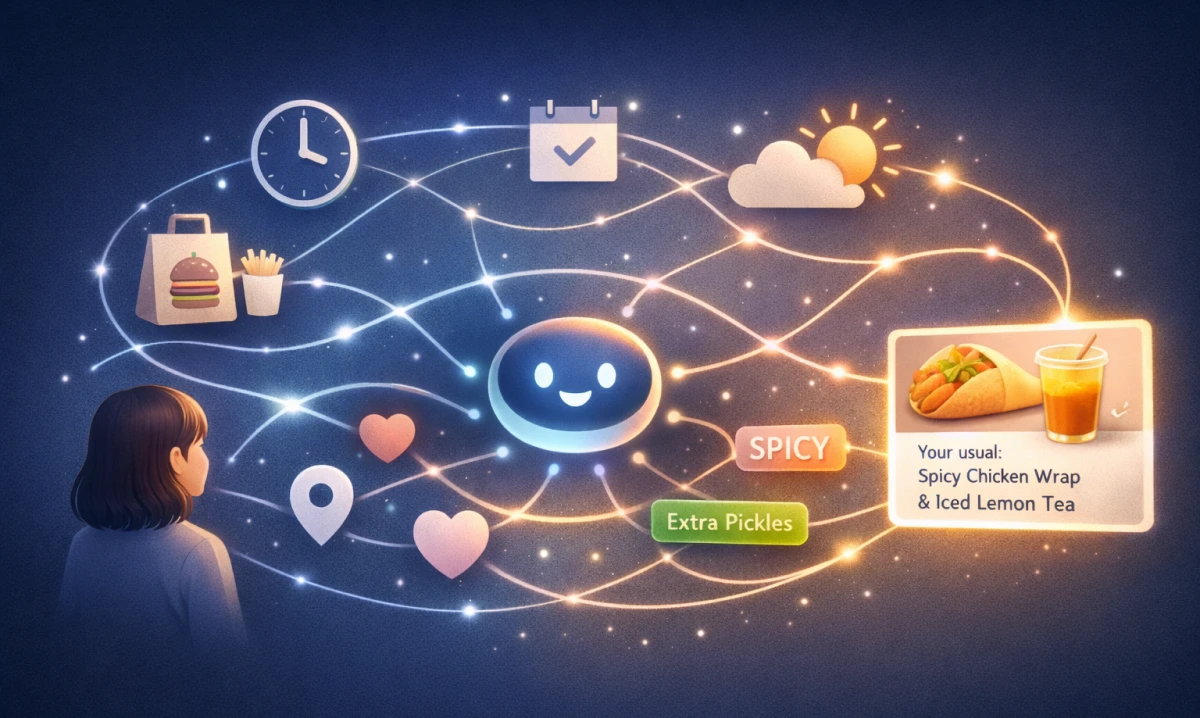
In technical terms, agentic AI combines large language models (LLMs), tools, and feedback loops to pursue goals, not just respond to isolated prompts. In a restaurant context, you can think of an AI agent as a system you can hold accountable for outcomes such as shorter queues, higher order accuracy, or better upsell performance.
In restaurants and QSRs, AI agents typically:
- Interpret messy, human inputs such as “Dinner for eight, mostly kids, nothing spicy,” or “something healthy but filling in under ten minutes.”
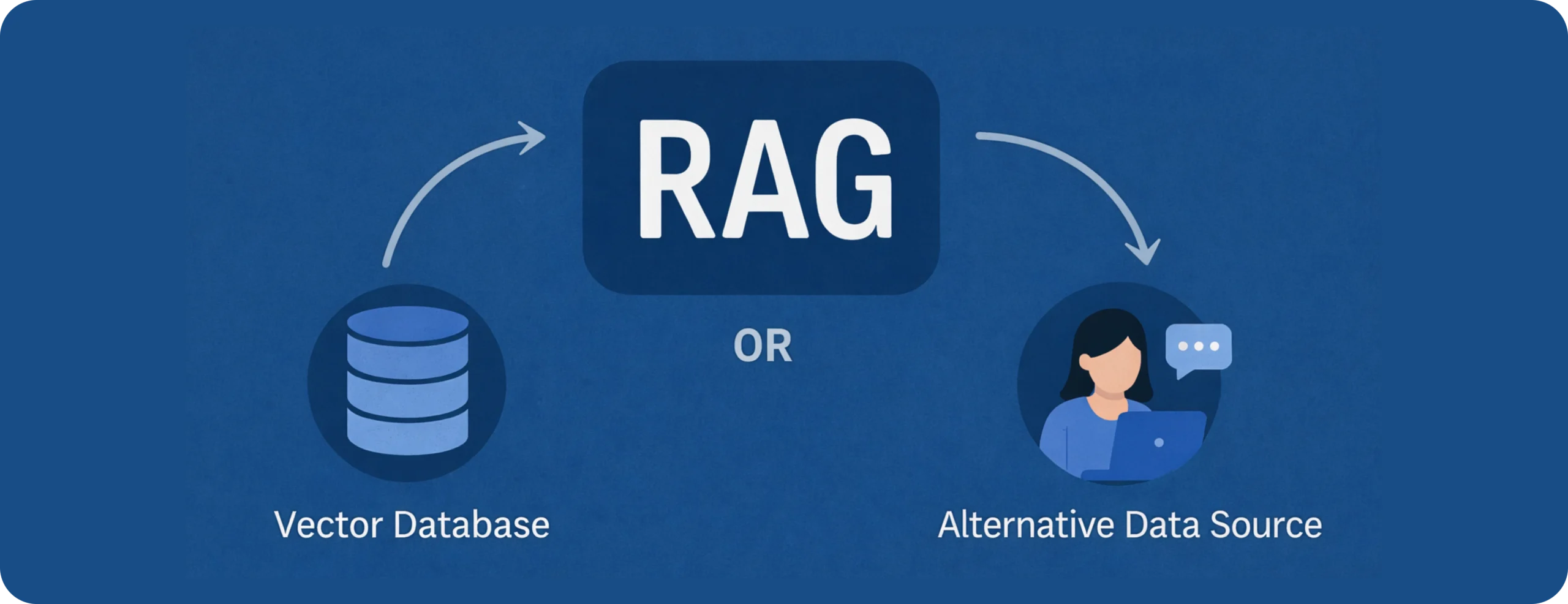
- Use retrieval‑augmented generation (RAG) to ground suggestions in your real menu, allergens, prices, and policies instead of guessing.
- Coordinate with POS, inventory, kitchen displays, loyalty platforms, workforce tools, and payment rails, so they can carry out multi‑step flows: clarify, recommend, confirm, route to kitchen, handle payment, update loyalty.
Unlike rule‑based flows or generic restaurant chatbots, these agents are goal‑directed and system‑aware. They balance what the guest wants with what the kitchen and operation can actually deliver at that moment.
Why restaurants need AI agents now
Three shifts are driving the urgency.
- Demand is shifting to digital.
Digital and off‑premise channels already represent a large and growing slice of QSR revenue, with many brands reporting that mobile, web, and kiosk orders together account for over a quarter of sales. - Labour has become a make‑or‑break line item.
In many markets, labour costs for limited‑service restaurants have climbed into the low‑30% range as a share of sales, with unprofitable peers a few points higher – a gap that can decide whether a store is viable. - Guest tolerance for friction is shrinking.
People expect app‑level personalisation and clarity at drive‑thru speeds, and wrong items or confusing flows translate directly into lost loyalty.
At the same time, real deployments are proving that AI can pay its way:
- Drive‑thru AI at large chains has cut service times by tens of seconds per car while pushing order‑accuracy rates into the mid‑90s.
- Even a five‑second speed‑up in busy locations can translate into meaningful extra annual revenue per store.
The restaurants that turn these learnings into agentic infrastructure – not isolated pilots – will quietly raise the bar for what “fast and friendly” feels like. Others will find themselves compared to that new standard, whether they join in or not.
Restaurant AI agents use cases across FOH, BOH, and HQ
Agentic restaurants don’t “add an AI feature” and call it done. They roll out a set of targeted agents where friction and value are highest – at the front of house, in the back of house, and at HQ.
Front of house (FOH): kiosks, drive‑thru, tables, and apps
1. Group‑aware kiosks
Picture a family walking up to a kiosk that doesn’t just show a grid of tiles. The first prompt they see is:
“Ordering for a group? Tell us a bit about who’s eating.”
They might type:
“Party of 8 adults, 4 kids, 2 vegetarians. Kids don’t eat spicy.”
Behind the scenes, the kiosk agent:
- Interprets that description using an LLM.
- Pulls kid‑friendly, vegetarian, and crowd‑pleaser options from the live menu and prices.
- Checks current inventory so it doesn’t push items that are low or unavailable.
- Assembles a few balanced bundles rather than forcing the group through dozens of individual taps.
Instead of a static menu, you get a group‑aware recommendation engine that lowers decision fatigue and mistakes while quietly steering guests toward combinations that work for both them and your margins.
2. Drive‑thru voice agents
Open this agent simulation in a new tab
Drive‑thru lanes are some of the most demanding environments in foodservice. Noise, accents, complex customisations, and impatience all collide.
In a typical voice‑enabled drive‑thru, an AI agent on the intercom:
- Invites drivers to order in their preferred language.
- Handles natural phrasing without forcing rigid scripts.
- Reads back the order clearly, with total and pickup instructions.
- Sends a payment link over SMS or the app, then fires tickets to the kitchen and pickup window.
Here, performance lives and dies on latency and clarity. Deployments that succeed consistently shave significant time off per‑car service and maintain high satisfaction because they are quick, unambiguous, and predictable. The ones that stall usually do so because responses lag or confirmations are confusing.
Many voice pilots falter by optimising for small talk instead of accuracy. In a breakfast rush, guests don’t want a conversation; they want confidence that “no mayo, extra pickle” actually made it into the system.
3. Tableside QR intelligence
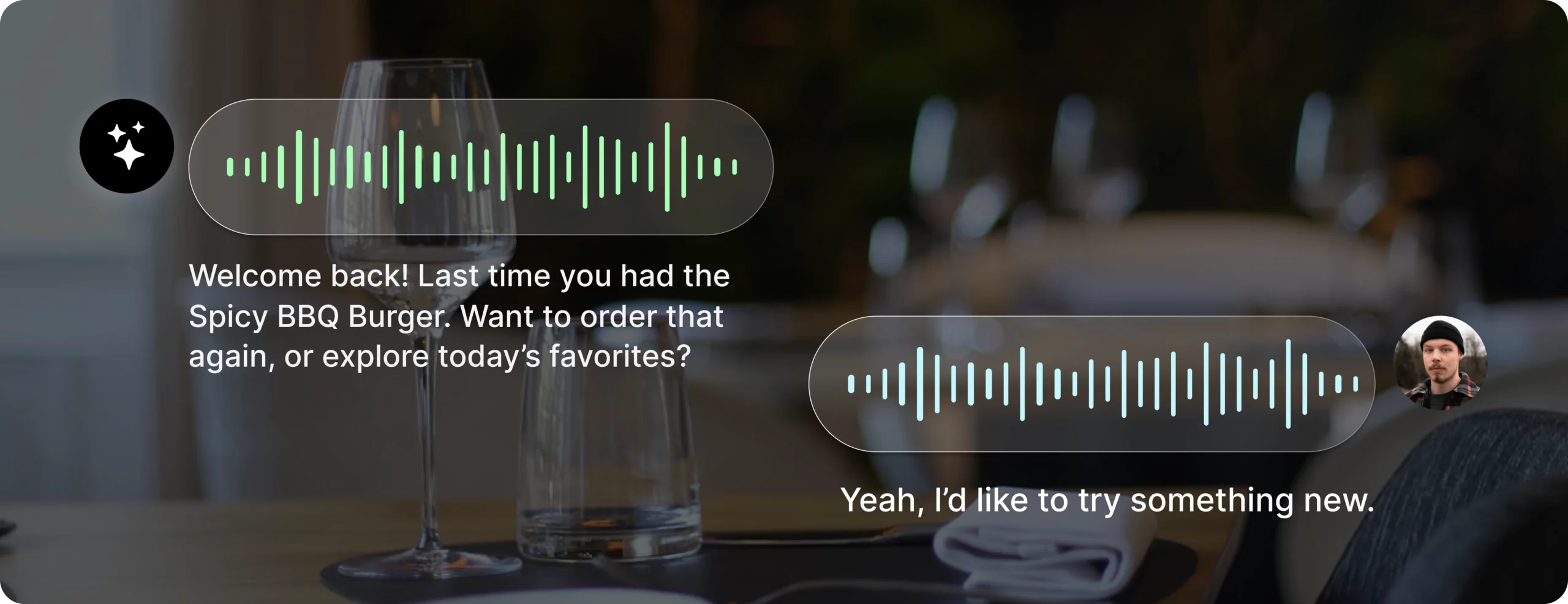
In dine‑in or fast‑casual formats, a simple table QR can become a memory‑enabled host.
A returning guest scans the code and sees:
“Welcome back. Last time you ordered the Nashville Chicken Sandwich. Want that again, or try what similar guests are loving today?”
The tableside agent can surface, on a single screen:
- Individual or group order history.
- Top‑trending dishes at this location right now.
- Options that fit declared dietary tags and current availability.
The result is less scrolling, fewer questions, and the subtle sense that someone on staff actually remembers you, even when the team on duty is new.
4. Wait‑time agents
A wait‑time agent at the door or in your app:
- Uses live order volume, kitchen load, and staffing to estimate something like “Table for 3: about 7 minutes.”
- Offers to start the order while guests wait, so prep can begin as soon as they are seated.
Guests gain control and transparency; the kitchen gets better staggered prep, and front‑of‑house sees smoother handoffs from queue to table.
Back of house (BOH): kitchen, inventory, and staff
The aim for staff is support, not surveillance.
5. Kitchen and expo agents
A kitchen display backed by an agent can do more than list tickets:
- Reorder the queue by promised time, complexity, and channel, not just first‑in‑first‑out.
- Flag important context (large family order, high‑value loyalty member, known allergen considerations).
- Suggest smart substitutions when an item runs out (“Swap fries for wedges with a small offer; preserve the check size, protect the experience.”).
Instead of acting as a monitoring tool, the agent becomes a quiet decision‑support layer that helps cooks and cashiers stay focused on execution rather than constant micro‑prioritisation.
6. Inventory, prep, and scheduling agents
Behind the scenes, other agents work on the “boring but critical” bits:
- Inventory agents look at order history, upcoming events, weather, and trends to recommend purchase orders and prep levels.
- Prep agents tweak batch sizes and timings so you’re not over‑ or under‑prepping for expected surges.
- Scheduling agents propose shift plans that align labour with predicted demand, campaign calendars, and historical no‑show patterns.
A lot of what passes for “AI‑driven” merchandising today is still gut feel with a spreadsheet. Agents only start compounding value when they’re allowed to touch these repetitive, data‑rich decisions day in, day out.
HQ and franchise: the “virtual GM”
At headquarters and franchise level, AI agents start behaving like a virtual GM overseeing the network. They can:
- Track demand patterns by daypart, store, and channel.
- Recommend staffing templates and labour mixes for different weeks or seasons.
- Flag where promos or menu items are over‑ or under‑performing.
- Highlight locations where queues, error rates, or complaint volumes are trending the wrong way.
Instead of leaders scanning dashboards manually, an HQ agent might say:
“Fridays 6–8 p.m. at Stores 14 and 27 are consistently missing drive‑thru targets. Reassigning one person from counter to kitchen between 6:15 and 7:45 should claw back around 18 seconds per car and about 3% additional revenue.”
This is the difference between scattering a few AI “features” around the business and building an agentic operating system for the brand.
The Agentic Restaurant Stack: brain, memory, hands, and face
Under all these use cases is a shared architecture. One way to frame it is the Agentic Restaurant Stack, with four layers: Brain, Memory, Hands, and Face.
1. Brain: LLM‑powered reasoning and policy
The Brain is the reasoning layer powered by LLMs and business logic. It:
- Understands natural language inputs and constraints.
- Plans multi‑step flows, from clarifying requests to closing the order and updating loyalty.
- Applies policies such as allergen rules, discount limits, escalation paths, and offer eligibility.
Without clear tool‑use rules and orchestration, the Brain degrades into a kiosk‑shaped chatbot – articulate, but operationally unreliable.
2. Memory: guests, menus, and operations
The Memory layer combines structured data and retrieval:
- Guest context: past orders, spice tolerance, dietary flags, language, visit patterns.
- Menu and offer context: live menus, limited‑time offers, daypart‑specific bundles, regional specials.
- Operational context: stock levels, prep times, open/close hours, current kitchen load.
Every time an agent answers, it retrieves the relevant facts and then generates a response. That’s how it avoids suggesting out‑of‑stock items, missing allergen constraints, or forgetting that a child “doesn’t eat spicy” from previous visits.
3. Hands: low‑latency API orchestration
The Hands are the integration layer that turns decisions into actions:
- Creating and updating orders via POS APIs.
- Checking inventory before proposing substitutions or promos.
- Updating kitchen displays, firing tickets, pushing payments, logging loyalty events.
Latency is unforgiving here. If a drive‑thru or kiosk agent takes four or five seconds to respond because it’s chaining slow, serial API calls, staff and guests will route around it. Robust implementations parallelise requests, use smart caching, and define graceful fallbacks when a downstream system misbehaves.
4. Face: kiosks, mics, tablets, and phones
The Face is where people experience the system:
- Guest‑facing: kiosks, drive‑thru microphones, table QR interfaces, mobile apps, WhatsApp, SMS.
- Staff‑facing: kitchen displays, cashier terminals, shift‑lead tablets.
Multiple Faces can share the same Brain, Memory, and Hands. That’s why a family recognised at the kiosk can feel equally recognised when they order through the app or pull into the drive‑thru a week later.
Economics: when do AI agents actually pay back?
Restaurant AI that lasts usually moves at least one of four metrics:
- Throughput – time per order at drive‑thru or kiosk.
- Order accuracy – fewer remakes and comps.
- Labour utilisation – shifting staff from low‑value to higher‑value work.
- Average ticket size – consistent, context‑aware upsells.
Labour costs alone sit in the low‑30% of sales for many limited‑service concepts; shifting just two or three points through better utilisation can flip the P&L from negative to positive. And in high‑volume units, agents that reliably cut tens of seconds off each order while making smart upsell attempts are often the first to show clear, store‑level ROI.
If a deployment isn’t moving one of these numbers, it’s closer to a demo than to infrastructure.
Agentic maturity model for restaurants
A simple way to locate your brand on the journey:
- Stage 1 – Digital basics
Online ordering, simple kiosks, basic automation; most decisions remain manual. - Stage 2 – Assisted agents
AI agents handling one or two flows – for example, drive‑thru ordering, kiosk recommendations, or call‑centre orders – with humans still handling a share of edge cases. - Stage 3 – Virtual GM
Agents coordinating across FOH, BOH, and HQ, influencing staffing, promos, menu mix, and guest engagement across multiple locations.
The point isn’t to rush everyone to Stage 3. It’s to know where each concept and store sits, and to advance in a deliberate, ROI‑backed way.
Why most restaurant AI pilots fail (and how to avoid it)
Patterns from early waves of restaurant AI show a few recurring failure modes:
- Demo‑first, reality‑second
Systems perform well in quiet lab conditions, then struggle with noise, accents, and custom orders in real lanes or lobbies. - No latency or reliability budget
Teams never decide “drive‑thru responses must come back in under 1–2 seconds,” so performance erodes until staff stop trusting the agent. - No clear operational owner
IT owns the model, marketing owns the offers, operations owns the floor, and no one owns how the agent behaves at peak. - Over‑polite voice flows, under‑precise orders
Agents that ask, “How’s your day going?” but mishear “no mayo” won’t last. Guests will accept a bit of script if the fundamentals are rock‑solid; they won’t forgive repeated mistakes.
Agentic AI gives you the building blocks to fix these issues – but only if you treat agents as products with owners, KPIs, and guardrails, not as one‑off experiments.
How to roll out AI agents in restaurants or QSR
A practical approach:
- Start with 1–2 high‑impact agents
- QSRs often begin with drive‑thru voice and group‑aware kiosks.
- Fast‑casual venues might prioritise tableside QR intelligence plus a feedback/loyalty agent.
- Integrate with core systems early
- POS, inventory, and loyalty integrations are non‑negotiable. Without them, agents are playing guesswork.
- Set channel‑specific performance targets
- Define response‑time and uptime expectations per channel (for example, 1–2 seconds for drive‑thru and kiosk, slightly more tolerance for table or app flows).
- Assign a clear operational owner
- Someone in operations should be responsible for how each agent behaves on the busiest day of the week.
- Scale when staff and guests vote with their feet
- When guests prefer agentic flows because they’re smoother – and staff prefer agent‑backed tools because they save time – you have a signal to expand.
Roadmaps for three archetypes
- Independent restaurant or small group
- Start narrow with one kiosk or QR ordering agent plus a feedback/loyalty agent.
- Use no‑code platforms so you can iterate flows without heavy engineering.
- Regional QSR chain or franchise group
- Design a central Agentic Restaurant Stack and roll out common agents across locations.
- Allow regional variation in language and menu while sharing the same Brain and Memory.
- SaaS / POS vendors
- Embed agentic capabilities around your core offerings (ordering, payments, CRM) so customers view you as the natural AI agent layer.
- Offer templates for standard flows (drive‑thru, kiosk, table, call‑centre) with a clear upgrade path toward virtual‑GM‑style features.
Related Articles