
Top 5 UiPath alternatives for agentic workflow automation
UiPath is still one of the first names that comes up when enterprises talk about automation. That is not surprising. It built its reputation on RPA, expanded into process orchestration, and now positions itself around agentic automation with products like Agent Builder and Maestro. UiPath describes its platform as agentic automation that brings together AI agents, robots, models, tools, and people across business processes.
But the buying conversation has changed.
Teams looking for UiPath alternatives today are often not just comparing bot builders. They are rethinking the whole stack. Do they still need classic RPA? Do they need more API first automation? Do they want AI agents operating across workflows? Do they want something easier to deploy, easier to customize, or easier to justify commercially?
That shift is happening at the same time the market is moving toward embedded AI agents. Gartner predicted in August 2025 that up to 40% of enterprise applications will include integrated task-specific AI agents by 2026, up from less than 5% in 2025. So this is no longer just an RPA replacement conversation. It is increasingly about agentic workflow automation.
This guide compares the top UiPath alternatives for agentic workflow automation and helps you understand which platforms are strongest for your architecture, operating model, and level of AI ambition.
What is an AI agent builder?
An AI agent builder is a platform or framework used to create agents that can interpret goals, retrieve context, use tools, take actions, and operate across workflows or business systems. In the context of agentic workflow automation, it goes beyond static automation by helping software decide what to do next at runtime.
How we selected the tools for this comparison
We selected these tools based on five practical filters.
First, they had to be credible alternatives to UiPath in real buying conversations, not random AI tools pulled into the list for traffic. Second, they needed meaningful automation depth, whether through RPA, workflow orchestration, API automation, or operational execution. Third, they needed some relevance to AI or agentic workflows, because this article is about where enterprise automation is heading, not just where it has been. Fourth, they needed enough market visibility or technical adoption to matter. And finally, they needed to represent different architectural approaches so the comparison is actually useful.
That is why this list includes both direct enterprise automation competitors such as Automation Anywhere and Microsoft Power Automate, and more modern workflow or agent oriented platforms such as DronaHQ, n8n, Workato, and Make.
What is UiPath?
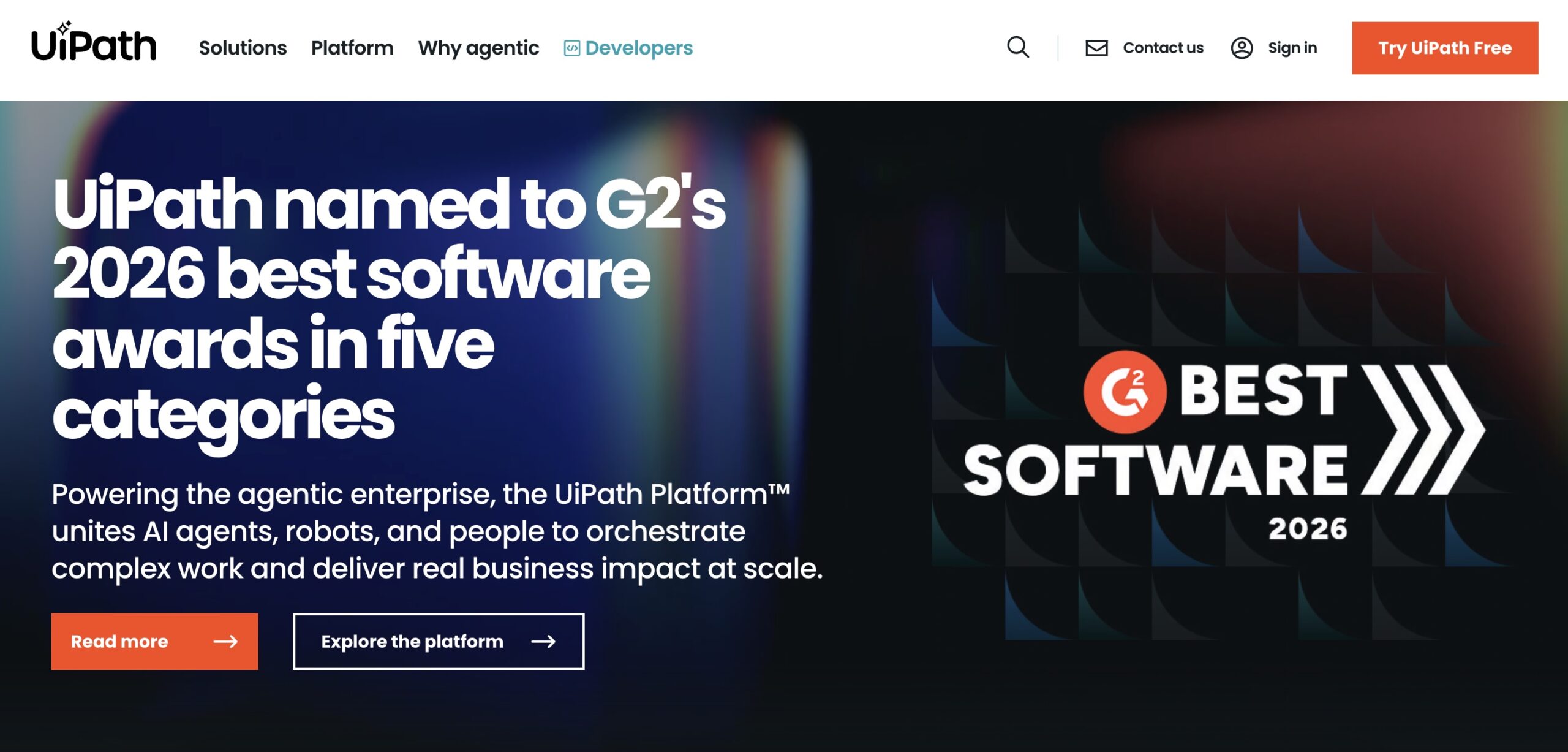
UiPath is an enterprise automation platform best known for robotic process automation, but it now positions itself around agentic automation. It combines RPA, process orchestration, AI models, APIs, and human approvals in one stack, making it a strong fit for enterprises that want structured automation with growing AI capability. UiPath pricing starts at $25 per month for its Basic plan, while higher tiers are custom-priced.
Key features
- RPA for desktop, web, and legacy system automation
- Agent Builder for creating AI agents
- Maestro for orchestrating agents, robots, and people
- Integration Service for API and SaaS connectivity
- Process mining and task mining for automation discovery
Pricing
- Basic plan starts at $25 per month
- Standard and Enterprise tiers require custom pricing
Limitations
- Enterprise setup can feel heavy for smaller teams
- Bot first architecture does not suit every AI workflow
- Custom pricing makes comparison harder for buyers
Best suited for
UiPath is best suited for enterprises with mature automation programs, especially those that still need strong RPA alongside newer AI capabilities. It makes the most sense when desktop automation, governance, and process structure matter as much as agentic ambitions.
Best UiPath alternatives for agentic workflow automation
Here are the UiPath alternatives that matter most in this conversation.
- DronaHQ for teams building AI agents that operate across business systems.
- n8n for technical teams that want flexible workflow orchestration with growing AI support.
- Automation Anywhere for enterprises that want a close UiPath style alternative with an agentic process automation story.
- Workato for integration led automation and orchestration across SaaS and enterprise systems.
- Microsoft Power Automate for organizations deeply invested in the Microsoft ecosystem.
- Make for teams that want speed, visual automation, and lighter weight workflow building.
DronaHQ
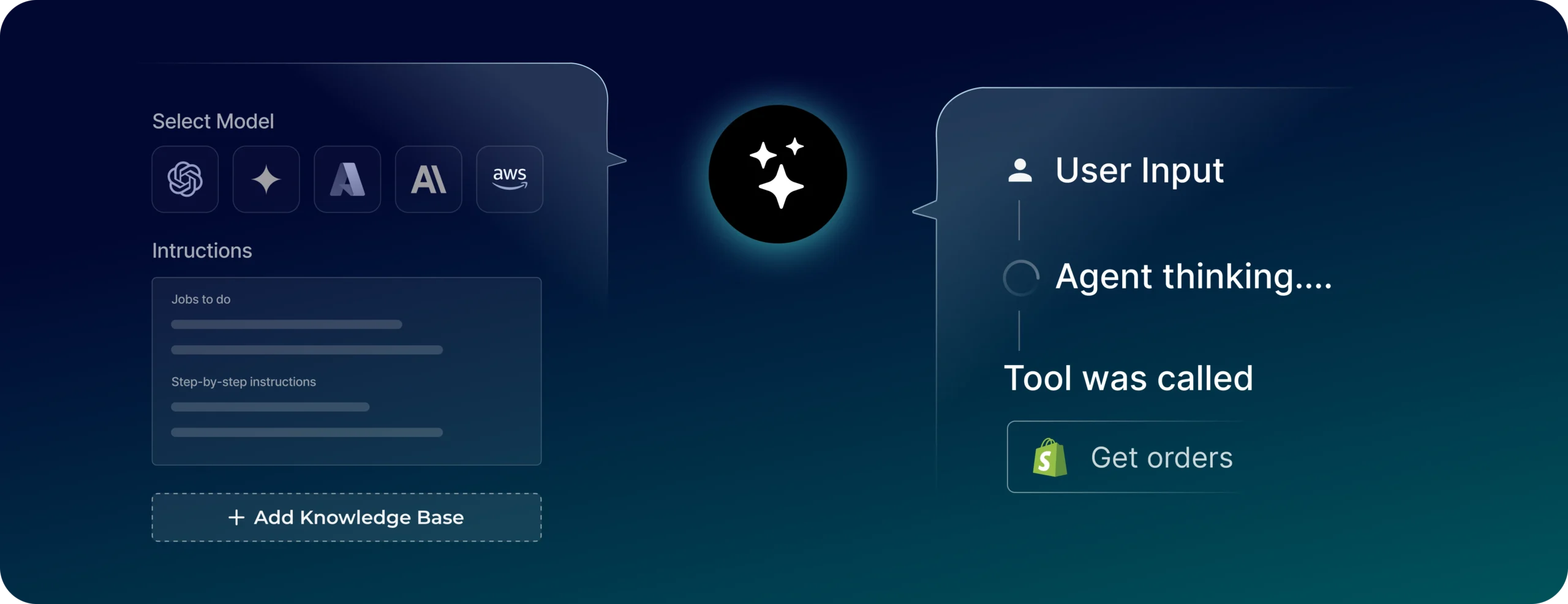
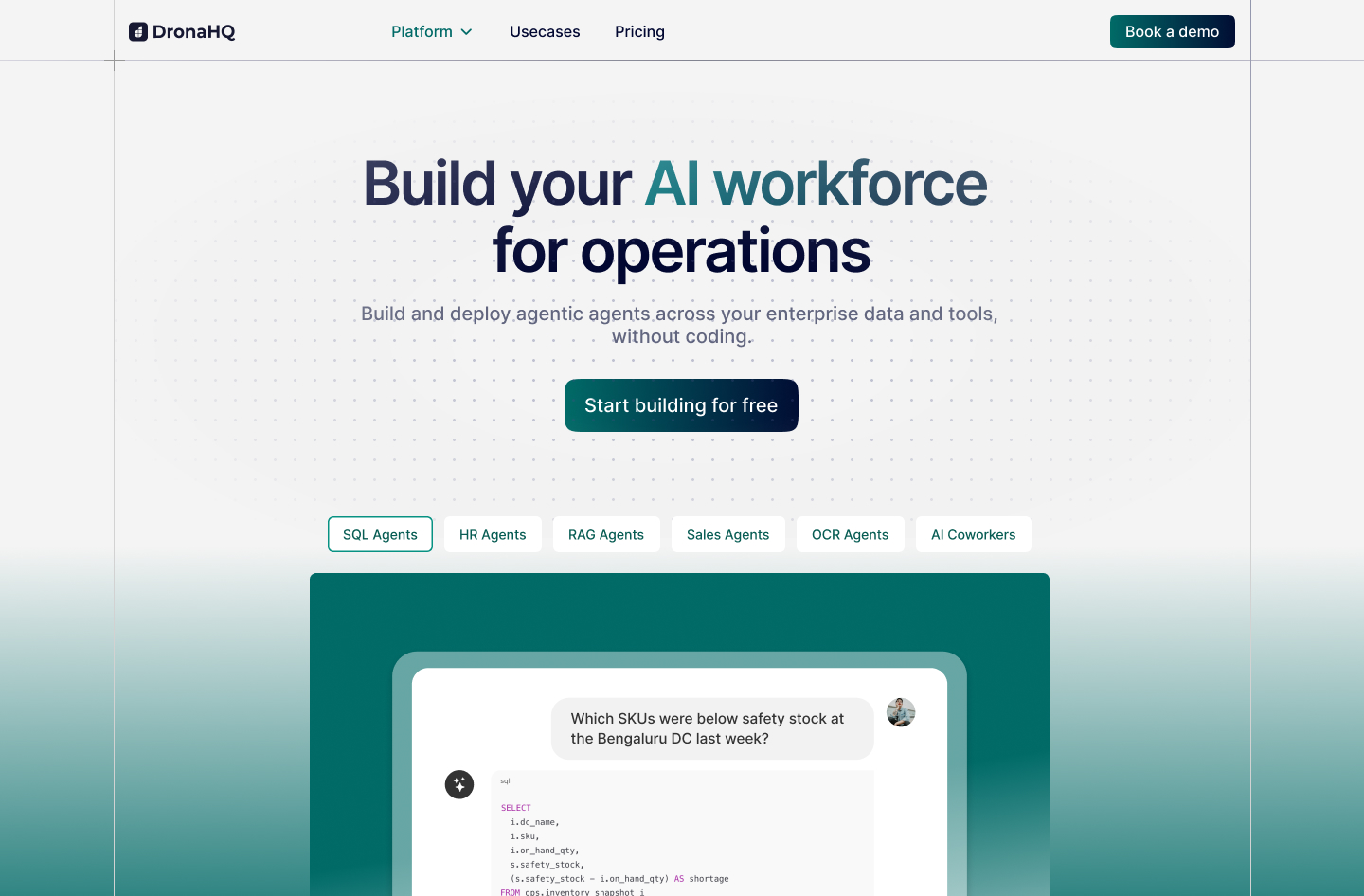
DronaHQ is an AI agent platform for building agent-driven workflows across APIs, databases, and operational systems. It is aimed at teams that want agents to retrieve context, trigger actions, and operate inside governed business processes rather than stay limited to prompt-based assistants.
Key features
- AI agents connected to APIs and enterprise systems
- Multi agent orchestration with tools and triggers
- Built in RAG, traces, and observability
- JavaScript and Python execution for custom logic
- Guardrails, masking, and human review controls
Pricing
- Starter starts at $100 per month (agents pricing info)
- Enterprise pricing is custom-based on needs and scale
Limitations
- Better for API and system automation than desktop bot replication
- Requires clear process design for stronger outcomes
- Less suited to teams seeking legacy RPA first tooling
Best suited for
DronaHQ is best suited for teams moving from fixed automation into agent driven execution across business systems. It is especially relevant when the goal is not just task automation, but building AI agents that can work with data, tools, and operational workflows inside real production environments.
n8n
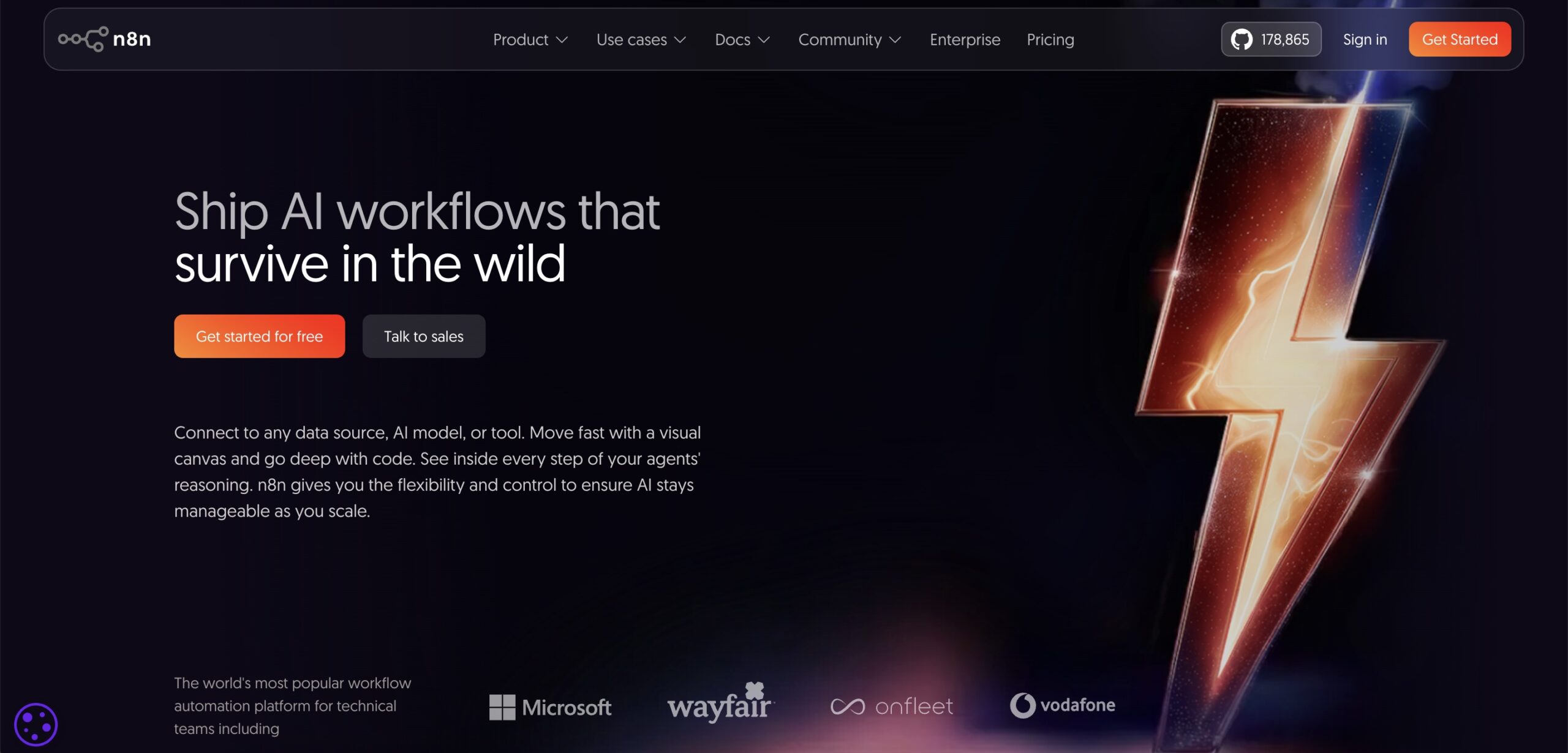
n8n is a developer friendly workflow automation platform that has become popular for API orchestration, self hosting, and AI enabled flows. It is strong for technical teams that want flexibility and control, though the architecture still remains workflow first rather than agent first.
Key features
- Visual workflow builder with code friendly extensibility
- Self hosted and cloud deployment options
- Large integration ecosystem across apps and APIs
- AI workflow builder credits in hosted plans
- Error workflows, execution logging, and queue mode
Pricing
- Starter starts at 20€ per month billed annually
- Pro starts at 50€ per month billed annually
Limitations
- Larger flows can become hard to manage visually
- AI support exists, but core architecture is workflow led
- Production governance is lighter than enterprise RPA suites
Best suited for
n8n is best suited for technical teams that want flexible automation without the weight of classic enterprise RPA. It works well when API orchestration and workflow control matter more than desktop automation or formal bot governance.
Automation Anywhere
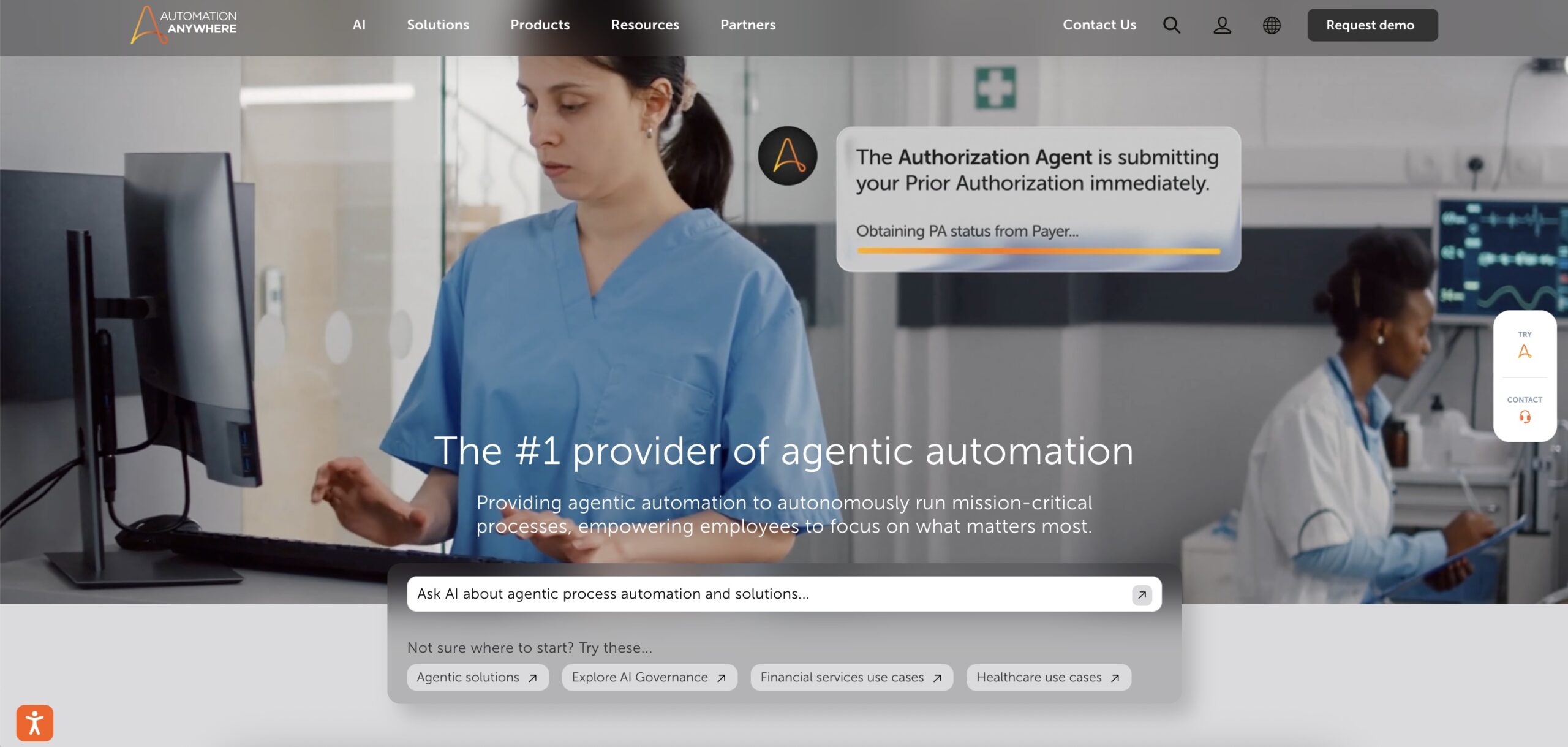
Automation Anywhere is one of the closest enterprise alternatives to UiPath. It comes from the same broad RPA world, but now pushes agentic process automation with AI agents, reasoning, and orchestration layered onto enterprise automation and process execution.
Key features
- Enterprise RPA across attended and unattended automation
- Agentic process automation positioning with AI agents
- Process Reasoning Engine for orchestration claims
- Document automation and process discovery capabilities
- Cloud native enterprise automation platform
Pricing
- Community Edition is available for free
- Enterprise pricing is quote based
Limitations
- Commercial packaging is less transparent than lighter tools
- Still carries enterprise RPA complexity in many deployments
- Best value often appears at larger organizational scale
Best suited for
Automation Anywhere is best suited for enterprises that want a direct UiPath style alternative without leaving the RPA category behind. It makes the most sense when bot automation, process governance, and enterprise scale still matter, but AI driven orchestration is becoming a priority.
Workato
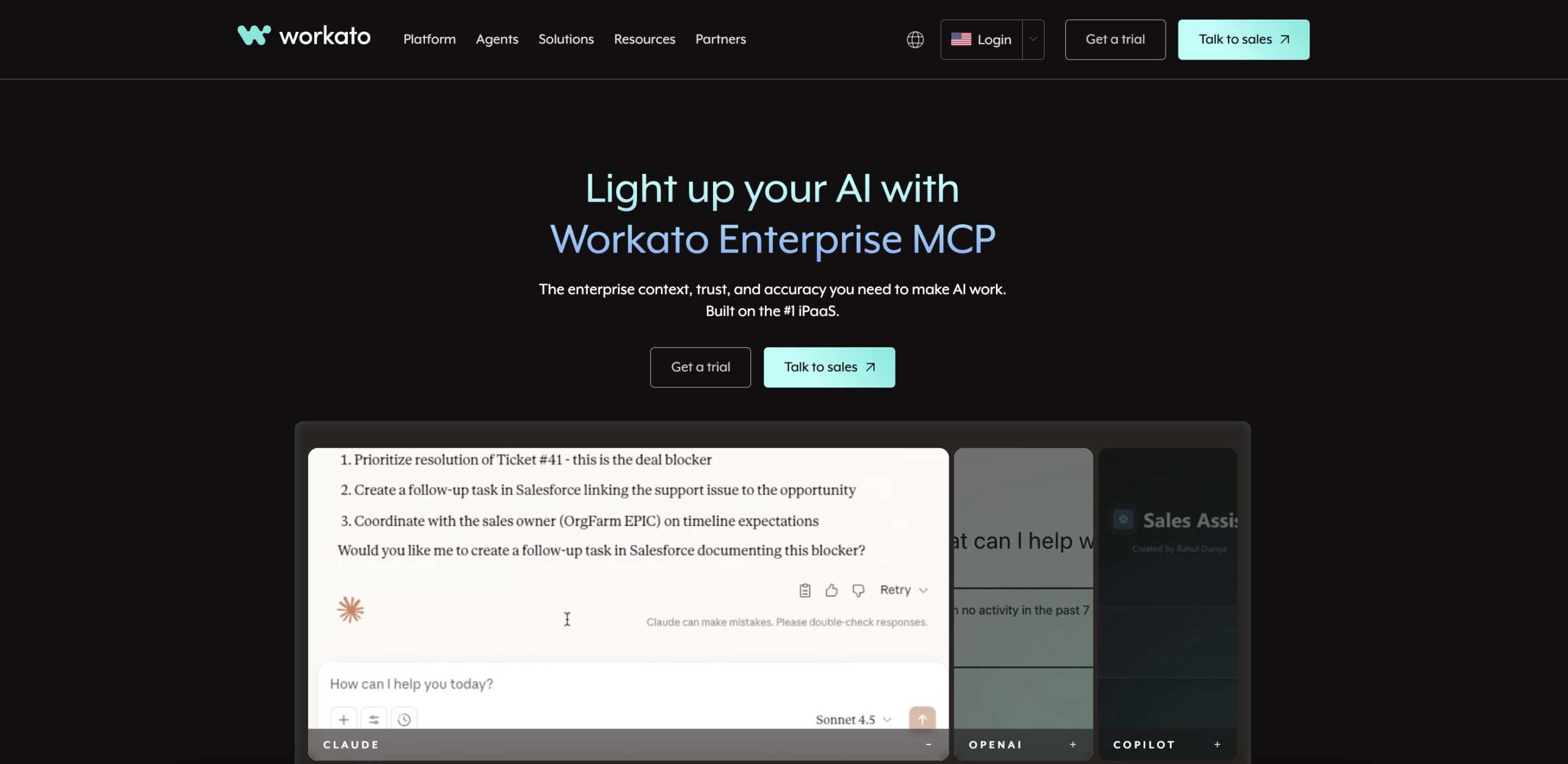
Workato is an integration and workflow automation platform that has become increasingly relevant to agentic process automation. Its strength is not classic desktop RPA. It is orchestration across SaaS apps, APIs, and enterprise systems, now extended into AI and enterprise MCP style workflows.
Key features
- Integration led automation across business applications
- Enterprise AI and MCP positioning for agents
- Large connector library and recipe based automation
- Strong orchestration across SaaS and data systems
- Usage based model built for scalable operations
Pricing
- Pricing is usage based and custom quoted
- Workato documents a platform edition fee plus usage fee
Limitations
- Not a direct desktop RPA replacement for every UiPath use case
- Custom pricing can slow early evaluation
- Best value appears when integration depth is the priority
Best suited for
Workato is best suited for organizations that care more about application orchestration than screen level bot automation. It is a strong option when the automation problem lives across systems, APIs, and cross functional workflows rather than inside desktop driven process replication.
Microsoft Power Automate
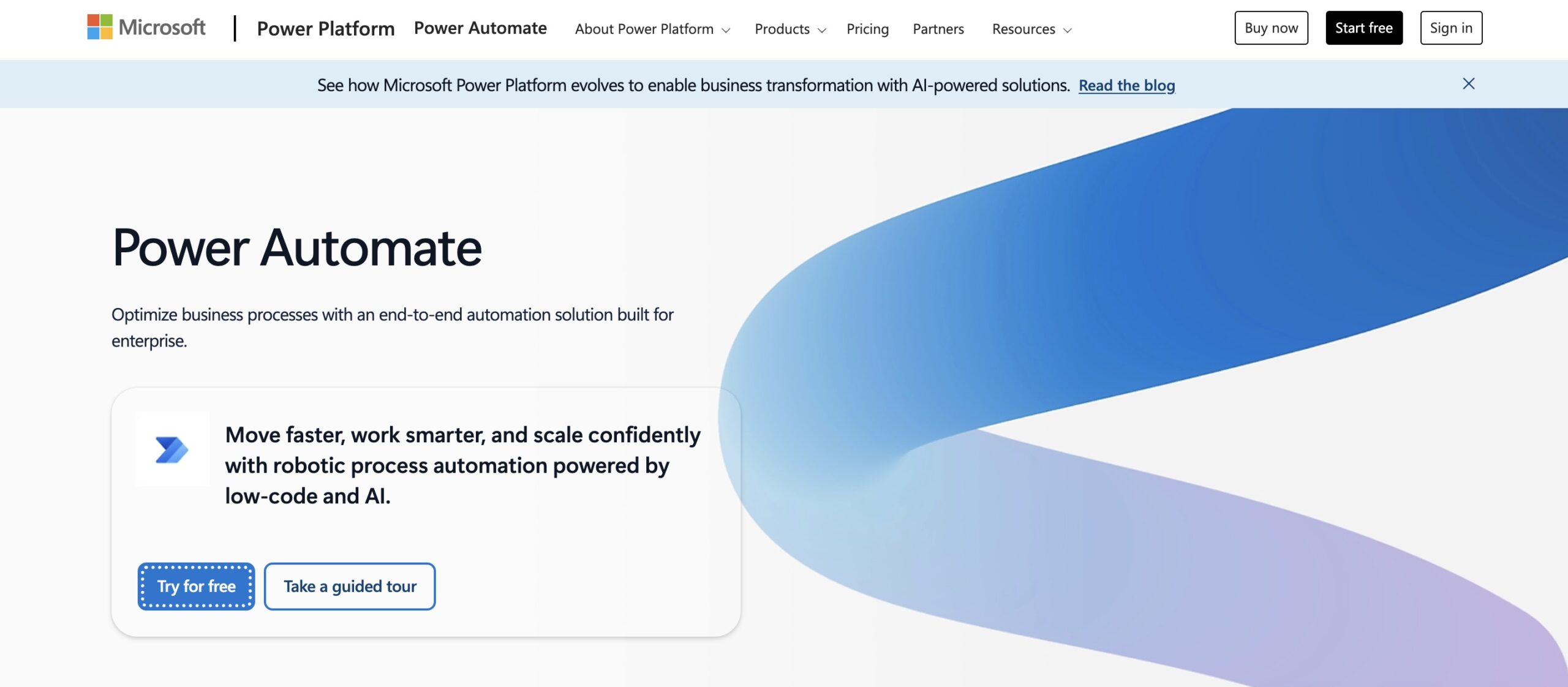
Microsoft Power Automate is a natural UiPath alternative for Microsoft centric enterprises. It combines cloud flows, desktop flows, Copilot assistance, and Microsoft ecosystem integration, making it attractive for teams that want automation tightly connected to Microsoft 365, Azure, and Power Platform.
Key features
- Cloud flows and desktop flows in one platform
- Deep Microsoft 365, Teams, and Dynamics integration
- Premium connectors and process mining support
- Copilot assisted automation authoring
- Strong fit with the wider Power Platform stack
Pricing
- Power Automate Premium is listed at $15 user per month paid yearly
- Free trial is available for 30 days
Limitations
- Best experience depends on Microsoft ecosystem alignment
- Can become fragmented across broader Power Platform choices
- Less specialized than RPA first vendors for some enterprise cases
Best suited for
Microsoft Power Automate is best suited for organizations already committed to Microsoft. It is often the most practical choice when automation needs to sit close to Teams, Outlook, Excel, SharePoint, Dynamics, and broader Power Platform governance.
Make
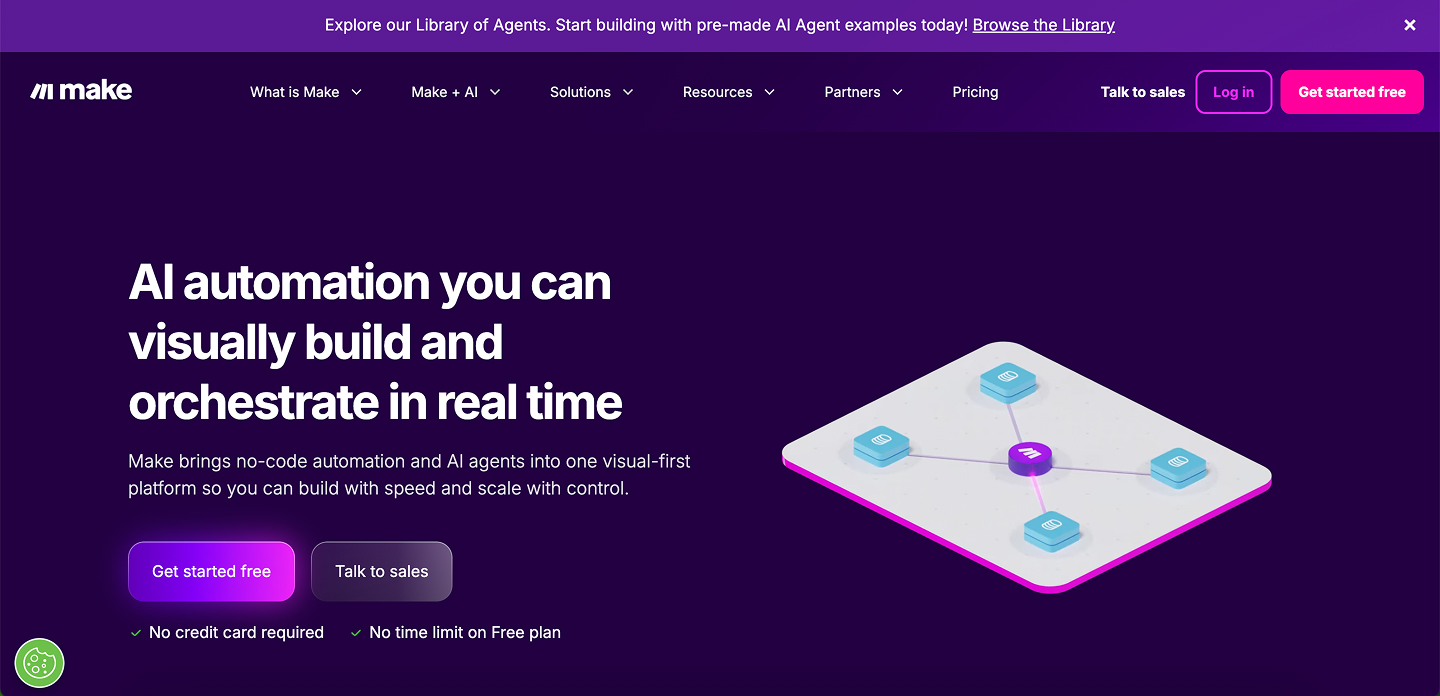
Make is a visual workflow automation platform used by teams that want speed, flexibility, and lower overhead than traditional enterprise RPA. It is lighter weight than UiPath, but increasingly relevant where agentic workflow automation means API driven coordination rather than formal bot programs.
Key features
- Visual workflow builder with routers and filters
- AI agents and AI toolkit support in pricing page messaging
- Large app library with webhook flexibility
- Fast scenario building for operational automations
- Lower entry pricing than enterprise RPA suites
Pricing
- Free plan is available
- Core starts at $9 per month billed annually
Limitations
- Governance depth is lighter than enterprise automation suites
- Less suited to large formal RPA programs
- Can become messy as scenarios scale across teams
Best suited for
Make is best suited for teams that need fast workflow building and broad app connectivity without buying into a full enterprise RPA stack. It works well for mid market operations and technical teams that care more about speed and flexibility than formal automation governance.
Benefits of using an AI agent builder
The biggest benefit is that an AI agent builder can handle work that is too dynamic for fixed rules alone.
Instead of hardcoding every path, teams can build systems that retrieve context, choose between tools, and decide how to proceed at runtime. That becomes useful in operational work where requests are incomplete, context changes across systems, and the right action depends on what the agent discovers along the way.
A good AI agent builder also helps close the gap between automation and execution. It connects models to business systems, gives teams more control over how agents act, and reduces the amount of brittle coordination that would otherwise be pushed into long rule trees.
Which AI agent builder should you choose?
Choose UiPath or Automation Anywhere if your automation program still depends heavily on structured RPA, desktop flows, and enterprise process governance.
Choose Workato or Microsoft Power Automate if ecosystem fit and cross system orchestration matter more than classic bot automation.
Choose n8n or Make if your team values flexibility, faster workflow creation, and more direct control over API driven automation.
Choose DronaHQ if you want AI agents operating across business systems with stronger agent-driven workflow execution, governance, and production readiness.
Getting started with DronaHQ
If your team is moving from rule-based automation toward agent driven workflows, start with one workflow where ambiguity is already causing friction. That could be support triage, reconciliation, approvals, or operations handoffs across multiple systems.
From there, evaluate how the agent retrieves context, what tools it can use, how actions are traced, and what controls exist around execution. DronaHQ Agentic Platform is one place to test that shift in a real workflow. You can also compare it with other low code AI agent builders if you want a broader view of how this category is evolving.
Related Articles