
9 best LangChain alternatives
LangChain is still one of the most recognised frameworks for building AI applications and agent workflows. It gives developers a way to connect models, tools, retrieval, memory, and orchestration patterns inside one ecosystem. That reach is exactly why it became popular. But it is also why many teams start looking for alternatives once their needs become more specific.
Some teams want stronger multi-agent coordination. Some want cleaner retrieval pipelines. Some care more about prompt testing and evaluation than broad framework flexibility. Others are trying to build agents for actual business operations, where data access, workflows, permissions, and usable interfaces matter just as much as the agent logic itself.
That is where this comparison becomes useful. This article looks at what LangChain offers, why teams search for LangChain alternatives, and which competing tools make the most sense depending on what you are actually trying to build.
What is an AI agent framework?
An AI agent framework is a system that helps developers build software where language models can do more than generate text. It gives them a way to connect the model to tools, documents, databases, APIs, memory, and workflow logic so the system can reason, retrieve context, and take action.
In simple terms, an AI agent framework helps turn a model into a working application. Instead of only answering questions, the agent can fetch account data, review documents, trigger actions, or guide users through multi-step tasks.
How we selected these LangChain alternatives
This comparison focuses on tools that are relevant to developers, AI teams, and product builders evaluating alternatives to LangChain.
I looked at five things while selecting the tools in this list:
- orchestration depth. Some products are better at structured agent execution, while others are stronger at visual flows or document-heavy pipelines.
- tool and data connectivity. A useful alternative should help teams work with APIs, retrieval systems, databases, or external tools.
- production readiness. That includes evaluation, observability, control, and reliability.
- developer experience. Some tools are broad and flexible. Others are more focused and easier to operationalise for a narrower use case.
- use-case fit. Not every team searching for a LangChain alternative wants the same thing, so the list includes framework-style competitors as well as products that solve adjacent parts of the problem better.
LangChain
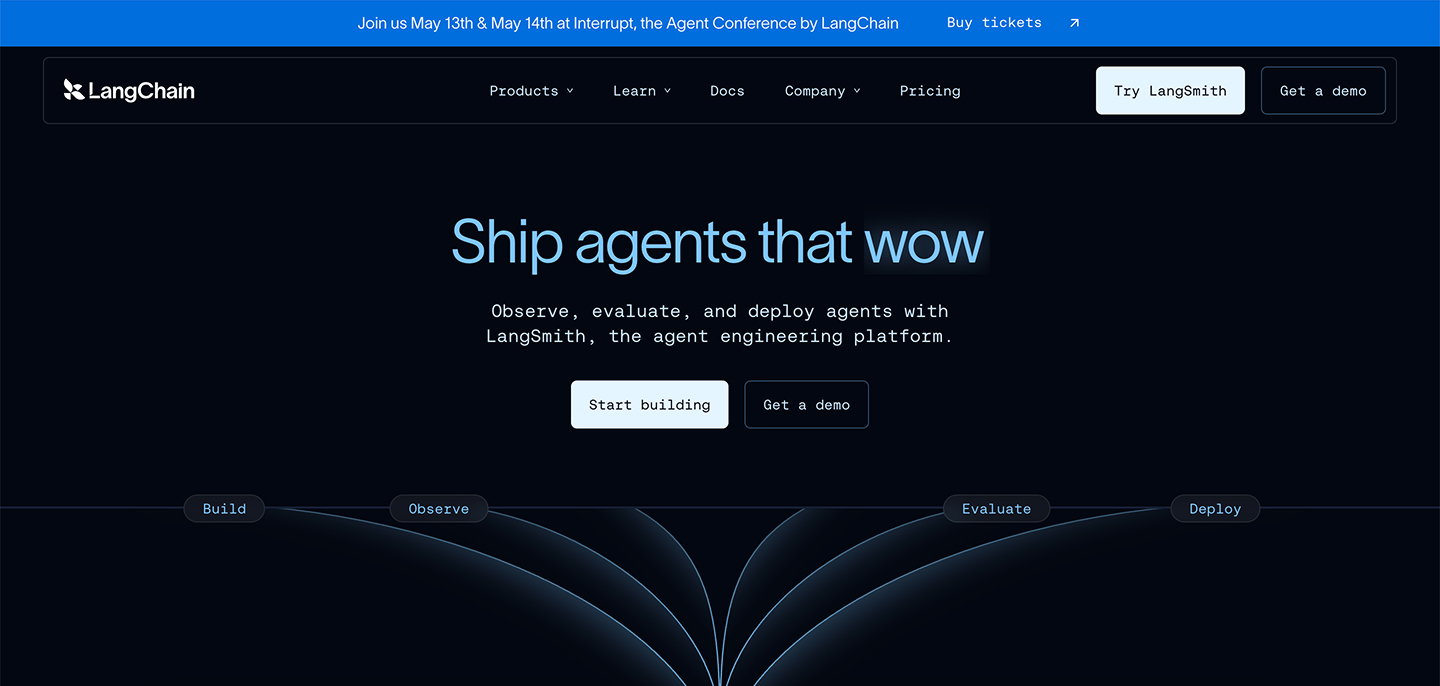
Overview: LangChain is an open-source framework for building LLM applications and agent workflows. It is best known for helping developers connect models to prompts, tools, retrieval systems, memory, and orchestration logic. It remains one of the most established names in the AI agent ecosystem, especially for teams that want breadth and flexibility.
Key features:
- Broad ecosystem covering models, tools, prompts, retrieval, and agents
- Works with LangGraph for more complex stateful workflows
- Strong integration story across models and external systems
- Widely recognized by developers and AI builders
- Good fit for teams that want framework flexibility
Pricing:
- LangChain is open source
- Paid platform components may apply for related tooling such as observability and evaluation in the wider ecosystem
Limitations:
- Can feel broad and complex for teams that want a more opinionated workflow
- Some use cases require stitching together multiple parts of the ecosystem
- Not every team looking for an operational AI system wants a framework-first experience
Best suited for: LangChain is best suited for development teams that want a flexible framework for building AI applications and agent workflows from scratch. It works well when your team is comfortable composing the stack and wants wide ecosystem support rather than a narrow, highly opinionated product.
Best LangChain alternatives
1. DronaHQ
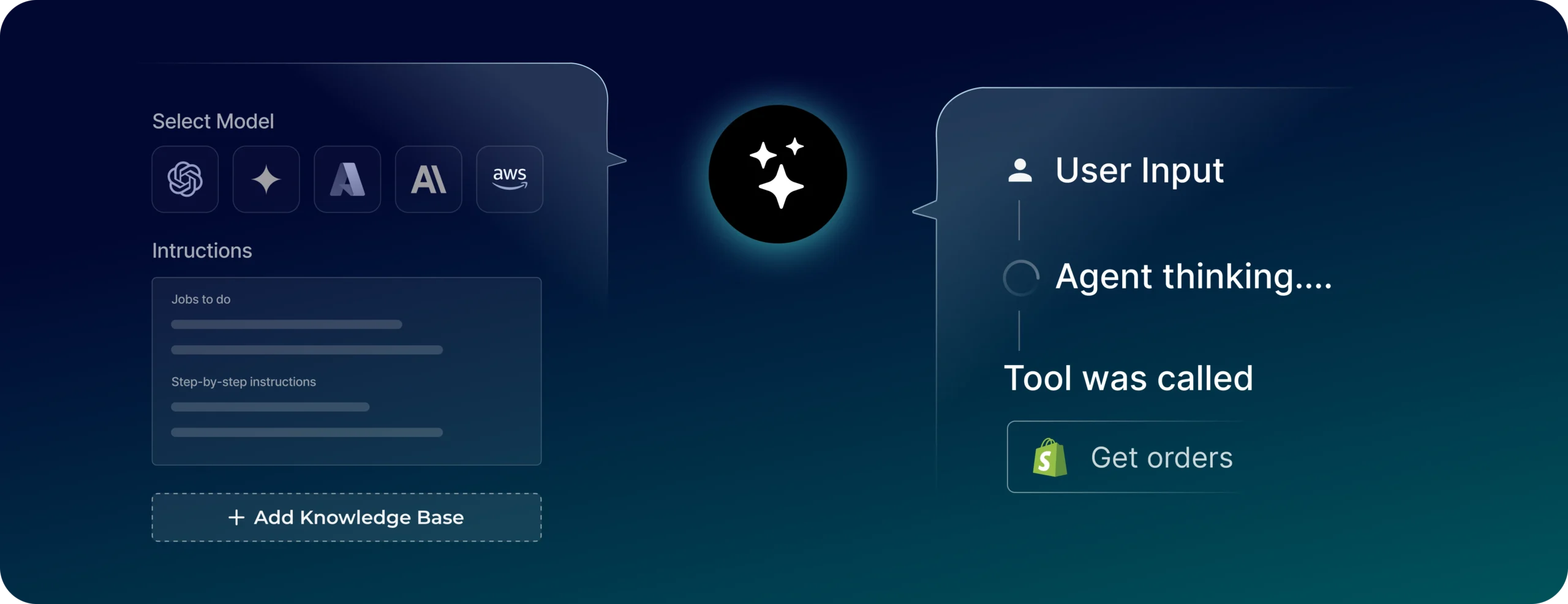
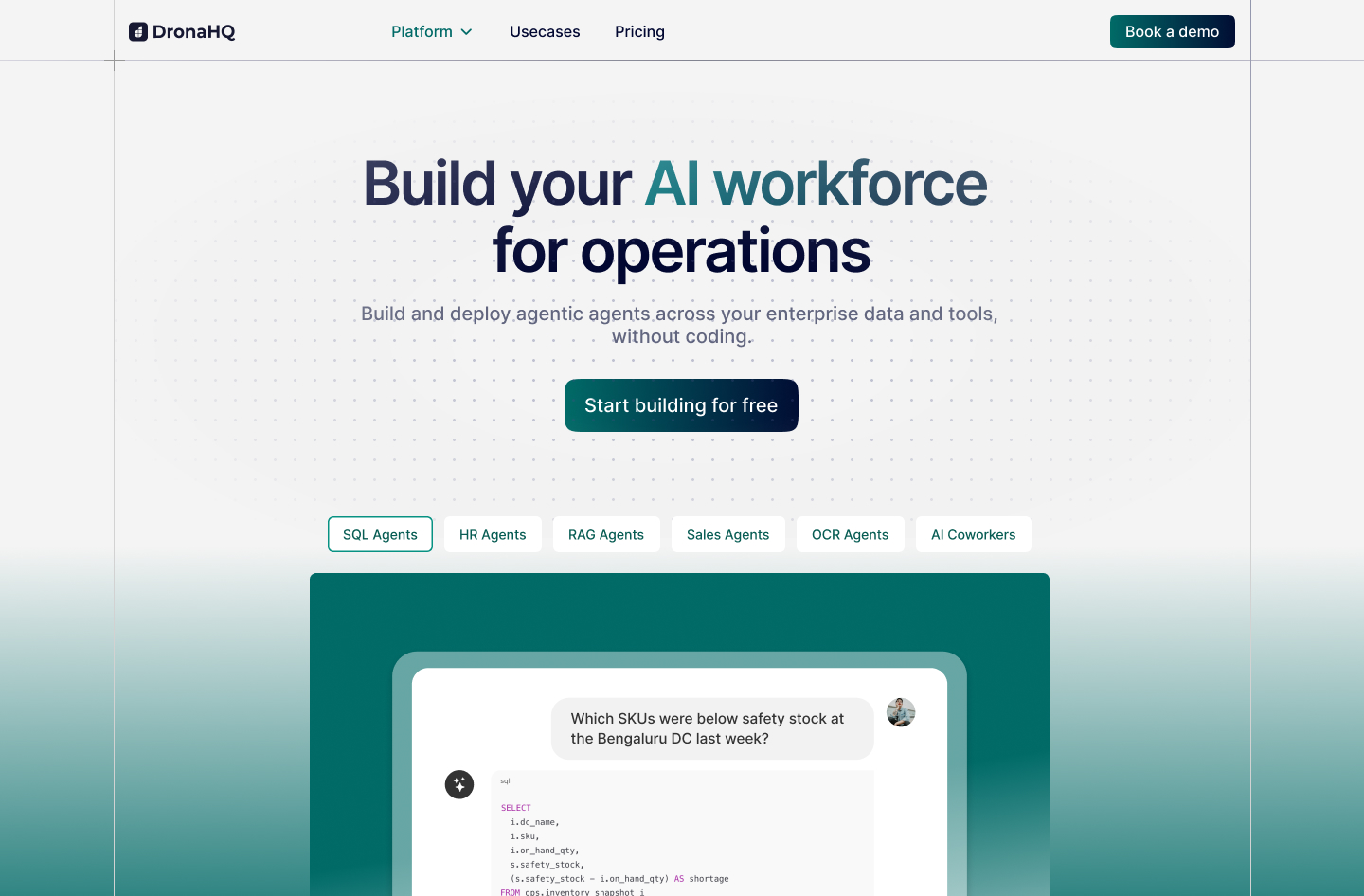
Overview: DronaHQ is an agentic platform for teams that want to move from prompts and agent logic to production workflows faster. While LangChain focuses on framework abstractions for building LLM applications, DronaHQ packages orchestration, integrations, RAG, workflow execution, and observability into a system that helps agents operate inside real business environments.
Key features:
- Unified agent configuration with model-agnostic setup, natural language instructions, and reasoning controls
- Secure skill layer that turns connected APIs, databases, and enterprise systems into governed agent tools
- Built-in RAG with managed knowledge bases, chunking, embeddings, and vector storage
- App-to-agent handover through webhooks, email triggers, and embedded DronaHQ apps
- Native observability with traces, guardrails, replay, and debugging inside the platform
Pricing:
- Pricing depends on product plan and deployment needs
- Enterprise teams typically evaluate it based on workflow, integration, and operational requirements
Limitations:
- Less suitable for developers who only want a low-level Python orchestration framework
- Not a direct replacement for teams that want to hand-code every graph, node, and runtime behaviour themselves
- Best fit appears when the use case involves real business systems, approvals, interfaces, and governed execution
Best suited for: DronaHQ is best suited for product teams, internal tools teams, and enterprise teams building AI systems that need to work across real operational environments. It makes the most sense when the challenge is broader than agent logic and includes workflows, actions, permissions, and interfaces.
2. CrewAI
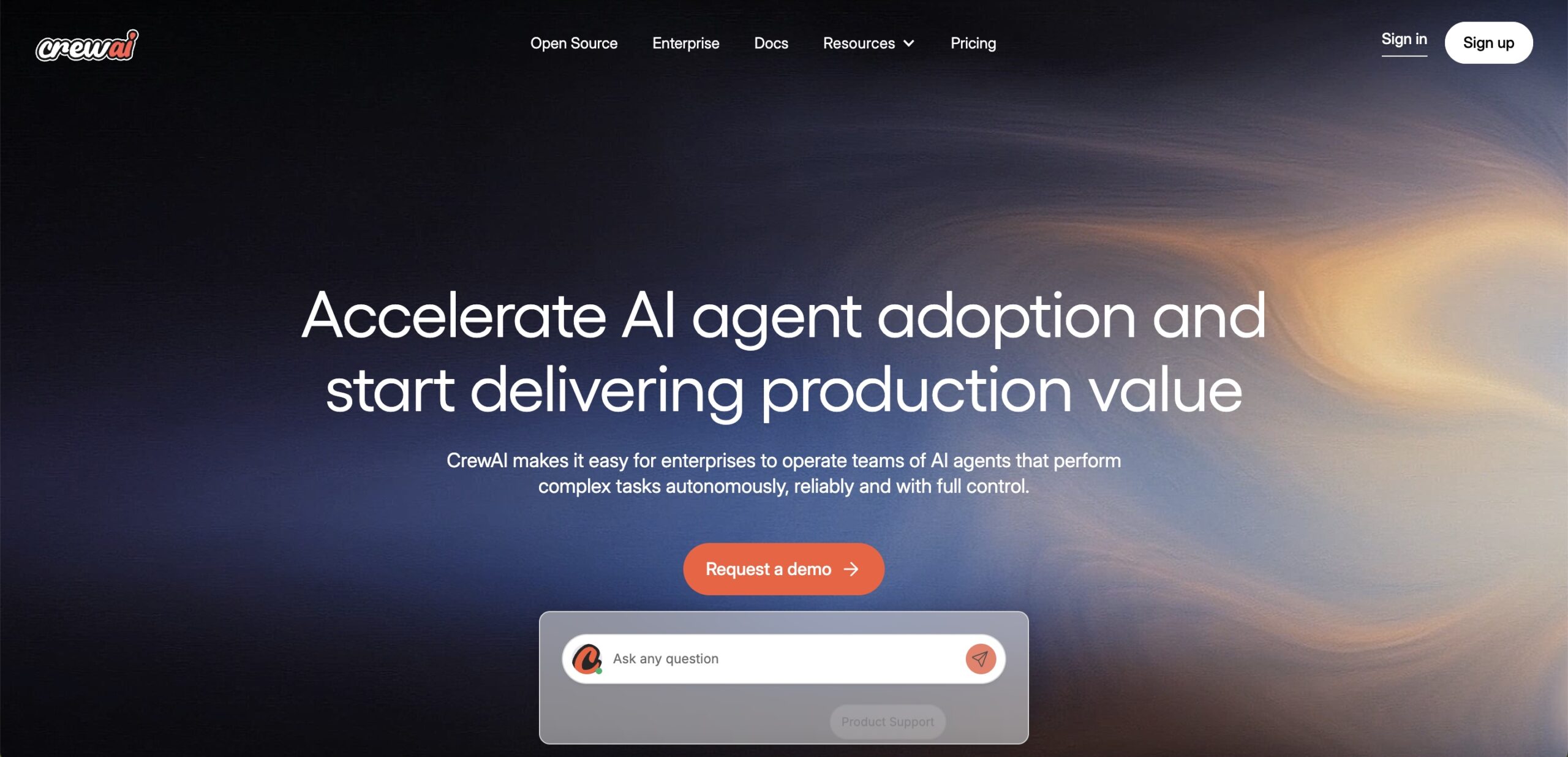
Overview: CrewAI is a popular alternative for teams building multi-agent systems with clear role-based collaboration. It focuses on crews and flows, making it easier to define how different agents work together on a shared objective.
Key features:
- Built around multi-agent collaboration
- Clear role and task assignment model
- Useful for staged or role-based agent workflows
- Flow-based structure for orchestration
- Strong fit for teams deliberately designing multi-agent systems
Pricing:
- Open-source components are available
- Commercial pricing varies by platform and team needs
Limitations:
- Multi-agent architecture can be unnecessary for simpler workflows
- Still requires strong design discipline to avoid overengineering
- Less useful if your real bottleneck is evaluation or business system execution
Best suited for: CrewAI is best suited for AI engineering teams that know their architecture genuinely requires multiple agents with separate responsibilities. It is a strong fit for research, analysis, and collaborative task orchestration workflows where role separation is central to the design.
3. Vellum
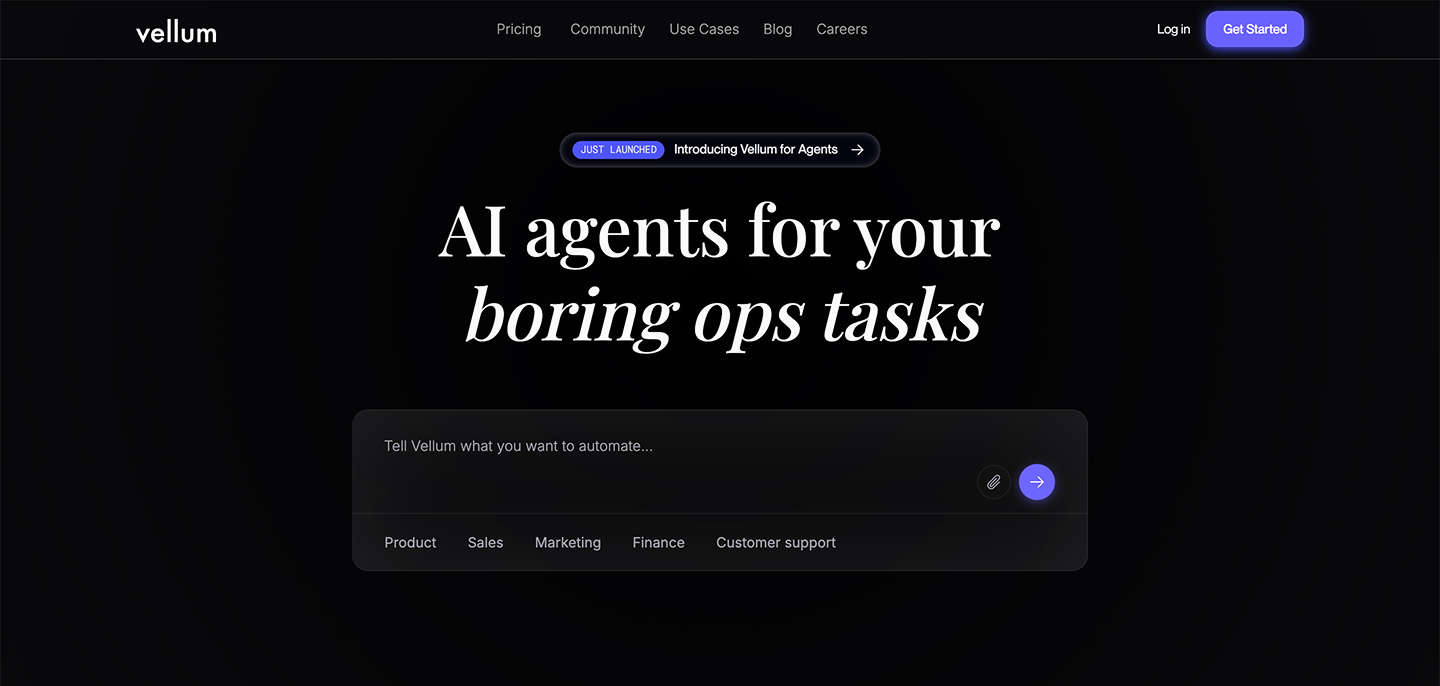
Overview: Vellum is a strong LangChain alternative for teams that care deeply about prompt quality, workflow testing, and evaluation. It is more productized than a broad framework and is well suited for teams trying to improve reliability and repeatability across AI workflows.
Key features:
- Strong support for prompt and workflow experimentation
- Evaluation-focused workflow management
- Better visibility into output quality and iteration
- Useful for teams managing AI product reliability
- More structured environment for testing and refinement
Pricing:
- Commercial pricing is plan-based
- Teams typically evaluate it based on workflow scale and evaluation needs
Limitations:
- Less appealing if you want broad open-ended framework flexibility
- Better for teams with workflow and evaluation discipline than ad hoc experimentation
- May not solve business execution layers outside the AI workflow itself
Best suited for: Vellum is best suited for AI product teams and developers who want stronger testing, evaluation, and quality control around prompts and workflows. It is especially useful when the challenge is keeping outputs reliable as your AI system evolves.
4. LlamaIndex
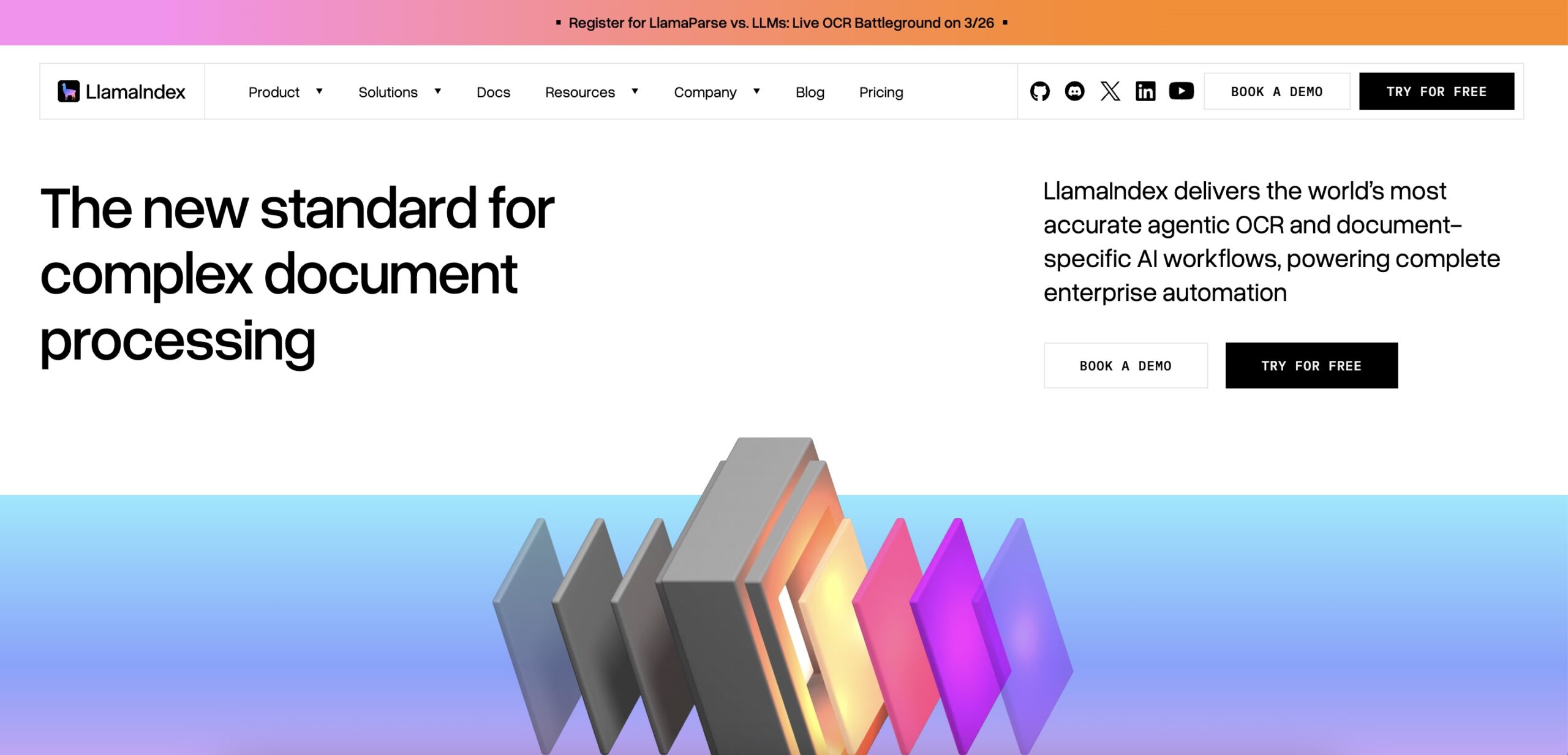
Overview: LlamaIndex is one of the strongest alternatives for document-heavy, retrieval-heavy, and knowledge-intensive AI systems. It is particularly well suited for teams building around enterprise knowledge, document workflows, and structured retrieval.
Key features:
- Strong document and retrieval focus
- Good fit for knowledge-heavy AI systems
- Useful for parsing, indexing, and working with enterprise documents
- Supports agentic document workflows
- Strong choice when retrieval is the center of the use case
Pricing:
- Open-source components are available
- Commercial offerings depend on platform usage and team requirements
Limitations:
- Broader operational workflows may still need other tools around it
- Less ideal when your core challenge is business workflow execution beyond documents
- Best value shows up in retrieval and document-centric use cases
Best suited for: LlamaIndex is best suited for teams building enterprise search, document intelligence, and knowledge automation workflows. It makes the most sense when documents and retrieval are the real heart of the application.
5. Haystack
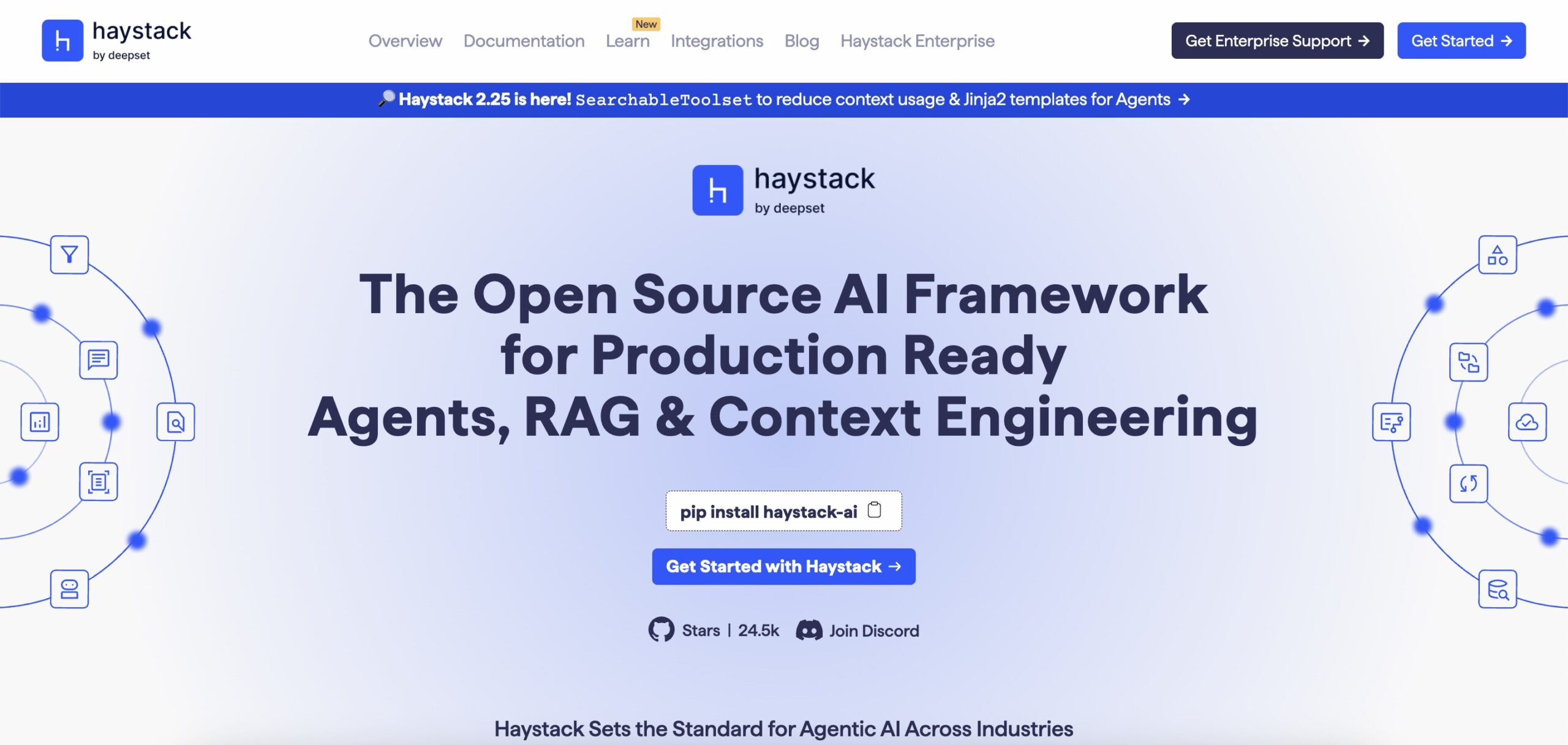
Overview: Haystack is a strong choice for developers who want modular RAG pipelines and clear architectural control. It appeals to teams that prefer explicit pipeline design over broader framework abstraction.
Key features:
- Modular pipeline architecture
- Strong fit for RAG-heavy systems
- Useful for inspectable retrieval and generation workflows
- Good for developers who want control over architecture
- Strong relevance for search and knowledge-based applications
Pricing:
- Open-source options are available
- Commercial pricing depends on product and deployment choices
Limitations:
- Can feel more engineering-led than productized
- Less suited for teams wanting a simpler guided workflow environment
- Narrower appeal if your main need is multi-agent coordination or UI-driven operations
Best suited for: Haystack is best suited for developers and AI teams that want transparent, modular pipelines for retrieval and generation. It is a good fit when inspectability and control matter more than broad convenience.
6. Microsoft Semantic Kernel
Overview: Microsoft Semantic Kernel is a useful alternative for enterprise teams working close to Azure and Microsoft ecosystems. It supports AI agent development in C#, Python, and Java and fits teams that want a more enterprise-aligned SDK approach.
Key features:
- Works across C#, Python, and Java
- Familiar fit for Microsoft-aligned enterprise teams
- Supports structured plugin and orchestration patterns
- Useful for enterprise development environments
- Strong alignment with Microsoft-led AI workflows
Pricing:
- Open-source SDK availability
- Enterprise costs depend on surrounding platform, cloud, and deployment choices
Limitations:
- Best fit narrows if your stack is not aligned with Microsoft tools
- Roadmap should be evaluated alongside Microsoft’s newer agent direction
- Less compelling for teams that want broader cross-ecosystem neutrality
Best suited for: Semantic Kernel is best suited for enterprise engineering teams already close to Microsoft technologies and AI workflows. It makes sense when platform familiarity, enterprise development patterns, and ecosystem alignment matter in the decision.
7. OpenAI Agents SDK
Overview: OpenAI Agents SDK is a relevant alternative for teams that want to build closer to OpenAI’s native agent primitives. It offers a more direct path for teams already committed to the OpenAI ecosystem and looking for fewer abstraction layers.
Key features:
- Direct access to OpenAI-native agent concepts
- Supports tools, handoffs, and structured agent behavior
- Good fit for teams already standardized on OpenAI models
- Lightweight compared with broader orchestration frameworks
- Useful when provider-native speed matters
Pricing:
- SDK usage ties into broader OpenAI platform pricing
- Costs depend on model usage and implementation scale
Limitations:
- Less ideal for teams prioritizing provider neutrality
- Tighter provider alignment can reduce portability over time
- Not always the best fit if you want a broader framework ecosystem
Best suited for: OpenAI Agents SDK is best suited for teams moving quickly inside the OpenAI ecosystem and wanting a more direct development path. It works well when cross-provider abstraction is less important than speed and simplicity within one model stack.
8. Flowise
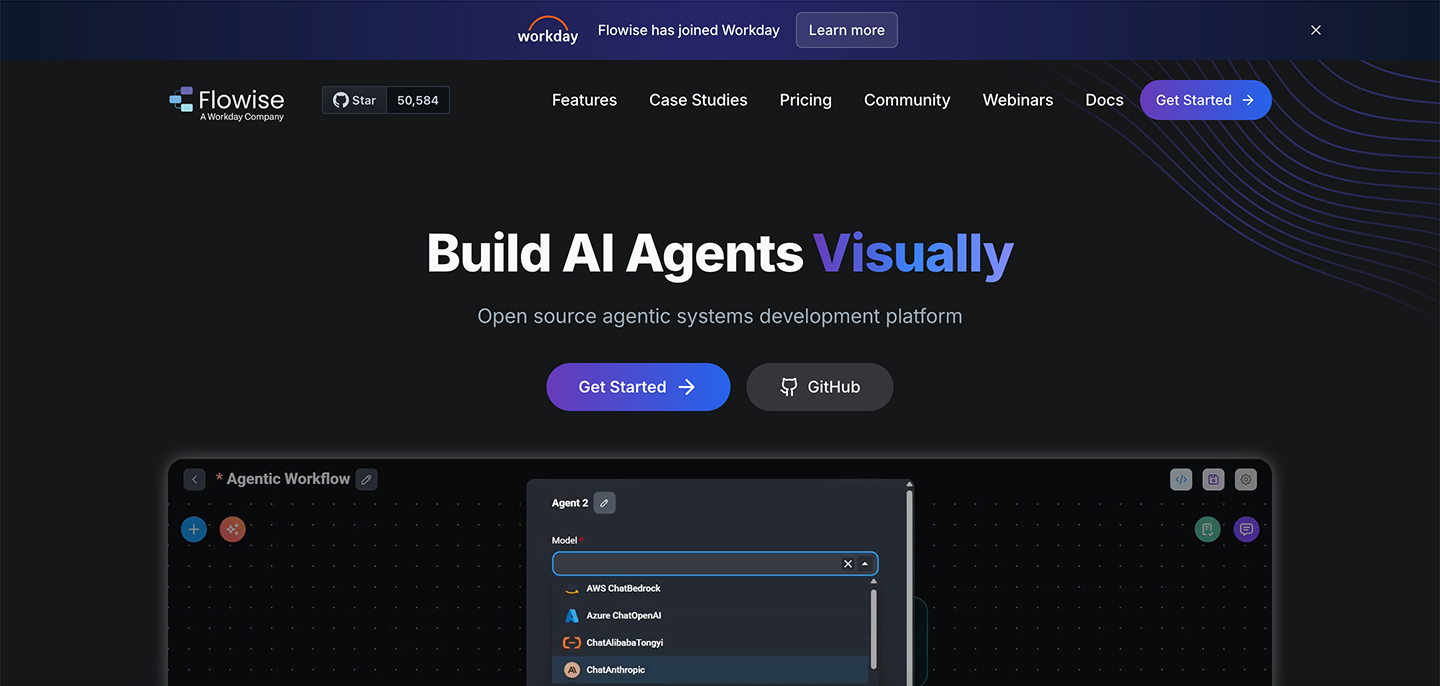
Overview: Flowise is a visual builder for AI agents, workflows, and LLM applications. It is a useful alternative for teams that prefer visual orchestration and faster iteration over starting fully from code.
Key features:
- Visual workflow builder for AI applications
- Faster experimentation for small teams and prototypes
- Easier workflow legibility for collaborative teams
- Useful for internal agent prototypes and fast-moving use cases
- Good fit when visual flow design improves speed
Pricing:
- Open-source options are available
- Hosted or enterprise pricing depends on usage model
Limitations:
- Advanced production complexity can outgrow the visual layer
- Less suited for highly customized engineering environments
- Deep governance and runtime control may require additional layers
Best suited for: Flowise is best suited for teams that think in flows, stages, and nodes and want to prototype quickly. It is especially useful when visual collaboration helps the team move from idea to working workflow faster.
9. PydanticAI
Overview: PydanticAI is a strong option for Python developers who care about typed outputs, validation, and structure. It is especially relevant when the challenge is turning model output into dependable application behavior.
Key features:
- Typed output focus for more structured agent behavior
- Good fit for Python-native development teams
- Helps reduce ambiguity between model output and application logic
- Useful for validation-heavy workflows
- Strong for structured AI application development
Pricing:
- Open-source availability
- Implementation cost depends on team stack and deployment choices
Limitations:
- Narrower scope than broader orchestration ecosystems
- Less ideal if you need a wide range of built-in abstractions across the stack
- Best fit is strongest for Python-centric teams
Best suited for: PydanticAI is best suited for Python developers building AI applications where structure and validation matter a lot. It is a smart choice when you want outputs to map cleanly into production code rather than stay as loosely formatted model responses.
Benefits of using an AI agent framework
AI agent frameworks help teams move beyond one-off prompting and toward systems that can actually work inside applications and workflows.
They make it easier to connect language models to tools, APIs, documents, and data sources. They help teams structure multi-step reasoning and task execution. They also create a foundation for retrieval, memory, handoffs, evaluation, and control. For business teams, this matters because useful agents usually need to do more than answer questions. They need to retrieve context, follow process logic, and sometimes take action.
The best frameworks also reduce repeated engineering effort. Instead of rebuilding the same model-to-tool and model-to-data patterns for every project, teams can work with more reusable abstractions and better operational consistency.
Which LangChain alternative should you choose?
The right choice depends on what you are actually replacing.
If you want a broad and flexible framework, LangChain still makes sense. If you want multi-agent collaboration, CrewAI is one of the clearest alternatives. If prompt testing and evaluation are the real problem, Vellum is a strong option. If your use case revolves around enterprise documents and retrieval, LlamaIndex is a better fit. If modular RAG pipelines matter most, Haystack deserves a close look. If your team works inside Microsoft ecosystems, Semantic Kernel is relevant. If you want a direct OpenAI-native route, OpenAI Agents SDK is worth considering. If visual orchestration helps your team move faster, Flowise fits. If typed Python outputs matter most, PydanticAI is strong.
If your challenge is getting AI agents to work across business systems, workflows, approvals, and internal operational environments, DronaHQ is the most relevant option in this list.
Getting started with DronaHQ
If your use case leans toward enterprise agents that need to connect to APIs, databases, internal workflows, or operational interfaces, explore DronaHQ today. Join us in an upcoming AI Agent workshop.
Review how to build AI agents in 5 simple steps using DronaHQ, explore DronaHQ Agents, understand how MCP server capabilities fit into system-connected agent workflows.
Related Articles