
Agentic AI in hospitality: The future of intelligent guest experiences
“The best service is the service you don’t have to ask for.” — Ritz-Carlton leadership philosophy captures where hospitality is heading.
Golden taps and Egyptian cotton are table stakes. Today’s discerning guests expect experiences that anticipate their needs before they voice them.
This is where agentic AI in hospitality enters the picture.
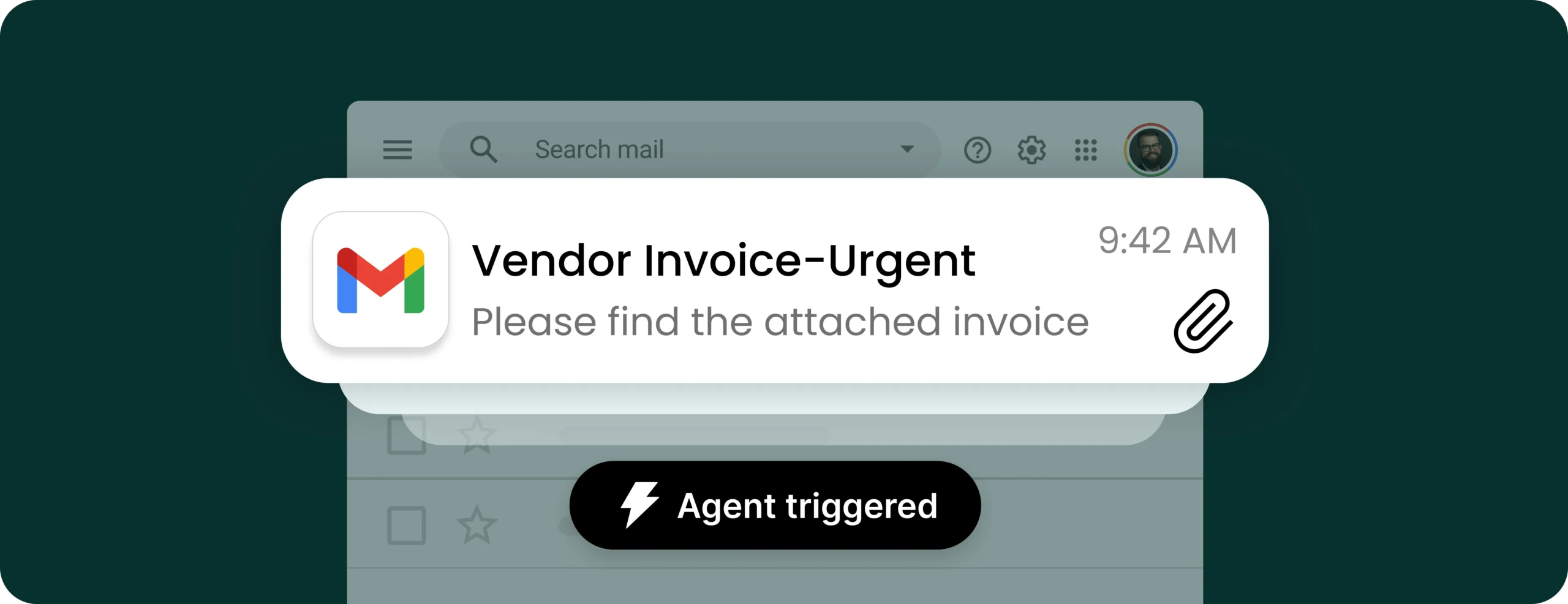
Unlike traditional hotel technology that reacts to guest requests, agentic AI systems observe context, reason across data, and take action autonomously. These AI agents for hotels manage everything from room environment and dining preferences to schedules and wake-up routines without constant guest input.
According to recent hospitality industry reports, by 2026, personalisation powered by AI has shifted from a competitive advantage to a baseline expectation across global hospitality brands. Hotels that still rely on static apps or rule-based chatbots increasingly struggle to match the fluid experiences delivered by intelligent, connected AI concierge systems.
This article explores how AI agents in hospitality are transforming the guest journey and why agentic hospitality represents the next operating model for hotel technology.
If you run a hotel chain in 2026, your app probably allows a guest to do three things: check in, look at a PDF menu, and maybe chat with a bot that tells them the pool hours.
This is a disconnected experience. The guest is still doing all the heavy lifting. They have to scroll through the menu to find vegan options. They have to remember to call reception for a wake-up call.
The future of hospitality isn’t about better chatbots; it’s about building an Agentic Concierge. An AI concierge for hotels is not a chatbot that answers questions. It is a hotel AI agent that understands guest context, connects to backend systems, and executes tasks without friction.
From “Request-response” to “Anticipate-act”
The difference between traditional hotel apps and agentic AI systems becomes clear when you compare how each handles everyday guest moments. The shift from chatbots to the agentic concierge looks something like:
| Feature | The Old Way (Standard App) | The Agentic Way (Connected) |
|---|---|---|
| Dining | Guest scrolls a 50-page PDF menu. | Agent filters & presents a curated UI. |
| Service | Guest calls Front Desk for wake-up call. | Agent proactively sets alarms based on schedule. |
| Comfort | Guest fiddles with wall thermostat. | Agent auto-adjusts room temp via IoT. |
| Context | “Welcome, Guest.” | “Welcome back, Mr. Smith. Vegan menu is ready.” |
The four pillars of agentic AI in hospitality

1. RAG (The “Know-It-All” Engine)
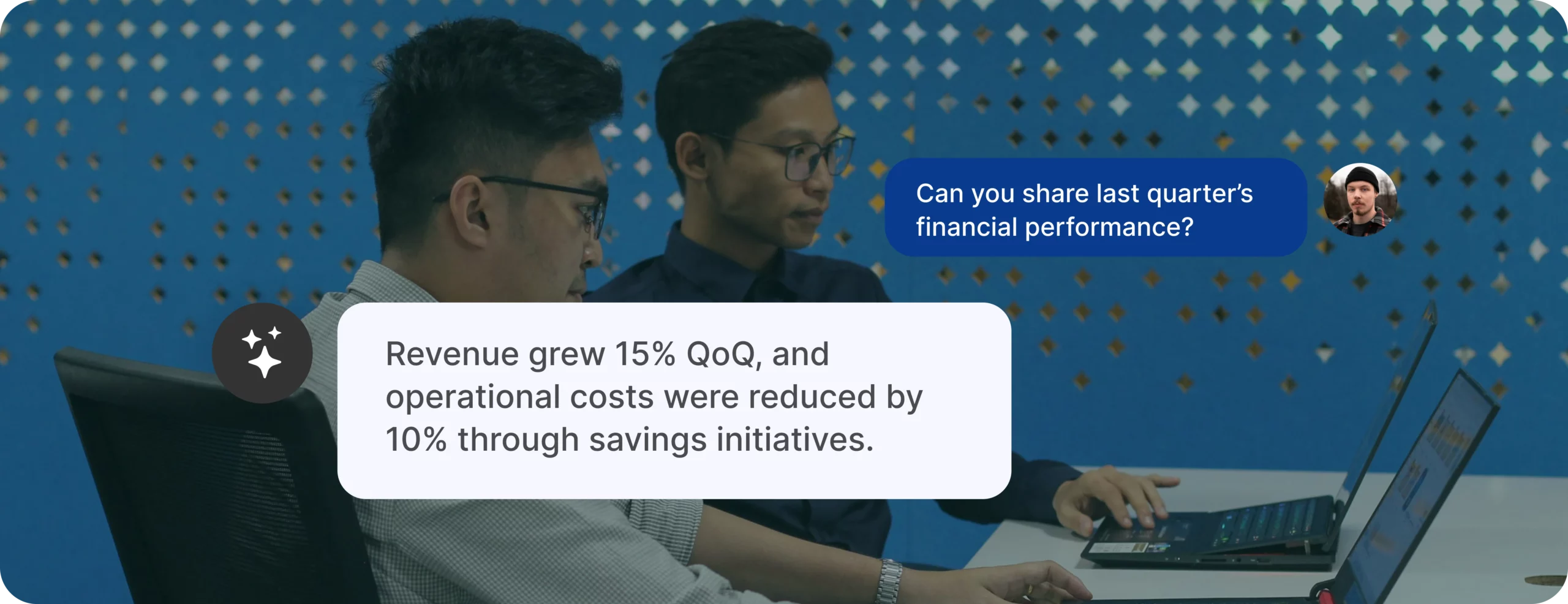
Your Agent needs real-time access to your property’s “Brain.” It shouldn’t hallucinate pool hours. Using Retrieval Augmented Generation (RAG), when a guest asks, “Can I get a late checkout?”, the Agent checks PMS availability in real-time, validates loyalty tiers, and approves it instantly.
In hotels, RAG ensures the AI agent always reflects live PMS data, policies, availability, and loyalty rules rather than guessing.
2. Long-Term Memory (The “Relationship” Layer)
A guest should never have to repeat their preferences. Using a Vector Database, the Agent identifies that the guest is a “Business Traveler” who previously ordered Vegan meals in your London property. It carries that context to New York instantly.
3. Generative UI (The “Visual” Layer)
Text is a terrible interface for ordering food. When the guest types “I’m hungry, what can I eat?”, the Agent checks the Memory Module (Vegan Preference) and renders a visual widget instead of a text list.
4. The “Hands” (IoT & External Integrations)
This is where the magic happens. The Agent connects to physical hardware and third-party services via APIs.
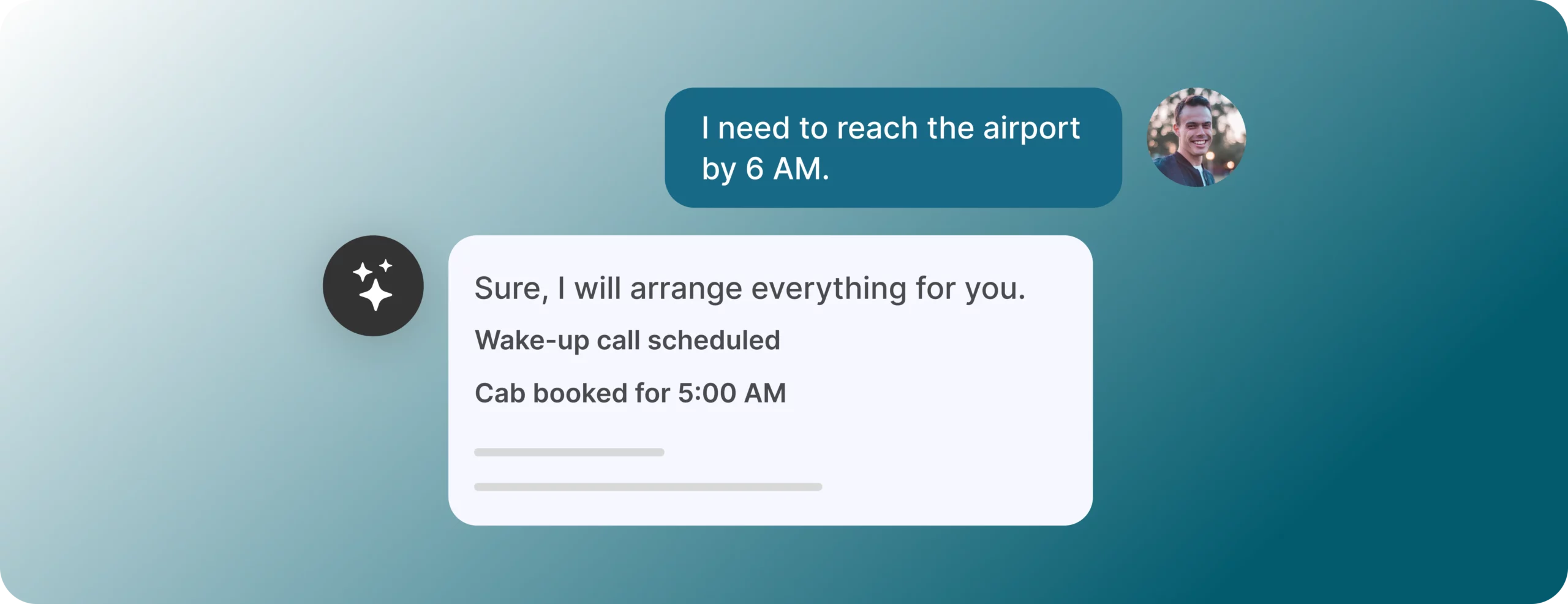
The Scenario: The Agent knows this is a business trip. At 9:00 PM, it checks your schedule for tomorrow.
What to look for in the right AI agent for hospitality
Most hospitality teams get distracted by demos. A smooth chat interface or a friendly tone is easy to ship. The real question is whether the AI agent can operate inside a hotel’s reality.
- The right AI agent for hospitality must connect deeply with core systems like PMS, CRM, POS, and IoT. Without this, it cannot move beyond conversation into action. An agent that cannot read availability, validate loyalty tiers, or trigger room controls is just a chatbot with better language skills.
- Memory is another critical factor. Guests do not experience a hotel stay as a series of isolated interactions. A hotel AI agent must retain preferences, patterns, and context across visits, locations, and channels. If a guest has to repeat dietary preferences or room choices, the system has already failed.
- Finally, the agent must be designed for proactive behaviour. The best AI agents in hospitality do not wait for commands. They observe signals like schedules, past behaviour, and real-time conditions, then act quietly in the background. This is the difference between servicing requests and delivering hospitality.
How AI agents for hospitality will evolve: future trends
Over the next few months, AI agents in hospitality will shift from reactive assistants to autonomous operators.
- One major trend is deeper environmental awareness. AI agents will increasingly factor in signals like flight delays, local weather, event schedules, and guest calendars to adjust the stay dynamically. Room readiness, dining suggestions, and service timing will adapt automatically.
- Another shift will be toward multimodal interaction. Guests will not just type requests. They will interact through voice, visuals, and ambient interfaces. Generative UI will replace long menus and static screens with contextual, moment specific interfaces.
- Most importantly, AI agents for hospitality will become invisible. The best experiences will not feel like “using AI” at all. They will feel like staying at a hotel that simply understands you.
That is the end state of agentic AI in hospitality. Not automation for its own sake, but a return to what great hospitality always promised, delivered quietly at scale.
Conclusion
In hospitality, luxury once meant physical opulence. Today, luxury means effortlessness.
Agentic AI in hospitality enables hotels to move from servicing rooms to serving people. By combining long-term memory, generative UI, and real-world integrations, AI agents for hotels act less like software and more like a personal concierge who understands the guest.
This is not about adding another app feature. It is about adopting agentic hospitality as a system where every interaction feels considered, timely, and personal.
Stop servicing the room. Start servicing the guest.
Related Articles