
Top Vertex AI alternatives in 2026 for enterprise AI teams
If you are evaluating Vertex AI alternatives,, you are not looking at a single product. You are looking at Google Cloud’s bundled answer to three distinct buyer problems: a managed machine learning platform, a model access layer for foundation models, and an enterprise agent-building environment through Vertex AI Agent Builder and Agent Engine.
At Google Cloud Next 2026, Google rebranded and consolidated the platform as the Gemini Enterprise Agent Platform, making it one of the most ambitious enterprise agent stacks on the market. That ambition is exactly what makes the alternatives question complicated. Most teams are not trying to replace Vertex AI wholesale. They are trying to solve a specific problem it is not solving well for them.
This article starts with those problems, covers what changed in 2026 and why it sharpens the tradeoffs, then works through eight alternatives split into two categories: cloud AI platform alternatives and agent and execution-layer alternatives.
What Vertex AI actually is in 2026
Before comparing alternatives, it is worth being precise about what you are comparing against, because the product has changed materially.
Vertex AI now spans model development, MLOps, foundation model access, and a growing enterprise agent stack. The platform includes Gemini 3 natively and has expanded partner model availability, including broader Anthropic coverage. Google announced “build, scale, and govern” updates across the agent lifecycle in Agent Builder, with stronger governance and enterprise control, including Cloud API Registry integration for managed tooling.
What changed in Vertex AI in 2026, and why it matters
Several 2026 updates are directly relevant to enterprise evaluations.
Stronger governance and enterprise controls. Google added Cloud API Registry integration to Vertex AI Agent Builder, enabling administrators to curate and govern approved tools for developers across the organization. Broader “build, scale, and govern” updates across the agent lifecycle also landed, including new ADK capabilities and General Availability of Agent Engine Sessions and Memory Bank.
New billing for Agent Engine services.From January 28, 2026, Sessions, Memory Bank, and Code Execution in Agent Engine became billable. These were previously free. For teams running agents at scale, this is a material cost change that adds to Vertex AI’s existing billing complexity.
Gemini 3 and 3.1 Pro on Vertex AI.Gemini 3 is now available on Vertex AI and in Agent Builder, withGemini 3.1 Pro in preview as of February 2026. This raises the native model quality bar significantly for teams evaluating the platform on reasoning capability.
Expanded partner model availability. Vertex AI’s Model Garden now includes Claude Sonnet 4.6 and Claude Opus 4.6, giving teams access to Anthropic models natively within the GCP ecosystem.
Taken together, these updates point in two directions at once. Vertex AI is more capable and enterprise-ready than it has ever been. It is also more layered and more expensive to run at scale. Buyers will increasingly care about ecosystem fit, governance depth, pricing clarity, and how much infrastructure burden their team can absorb. That tension is what the alternatives below are designed to resolve.
Why look for Vertex AI alternatives
Teams searching for Vertex AI competitors are almost always driven by one of four specific tensions.
1. Cloud lock-in. Vertex AI’s full value is most accessible inside Google Cloud. Teams that are AWS-native or Azure-native find that adopting Vertex AI means adopting GCP as a primary dependency. That is a strategic decision, not just a tooling one, and many enterprise architectures are not built for it.
2. Pricing complexity and billing surprises. Vertex AI’s billing model is layered. Foundation models, Agent Engine runtime, Sessions, Memory Bank, Code Execution, storage, and compute are all billed separately. Teams that did not map those layers before committing regularly encounter surprises at invoice time.
3. Orchestration control. Vertex AI Agent Builder is a managed environment. That is its value for some teams and its constraint for others. Engineering teams that need to define exactly how their agents reason, route, and handle state often find managed platforms too rigid. They want to own the architecture, not inherit it.
4. A faster path from AI logic to enterprise operations. Agent Builder gives you a capable agent backend. It does not give you business interfaces, approval workflows, operator dashboards, or system integrations. Teams building operational AI solutions often spend more time on the infrastructure around the agent than the agent itself.
These four motivations shape the alternatives that follow. Each tool maps directly to one or more of them.
How did we choose the alternative
The alternatives are split into two distinct categories.
Part 1: Cloud AI platform alternatives covers tools for teams evaluating Vertex AI as a managed ML and generative AI environment. If your question is “which cloud AI platform should we standardize on,” these are the tools to evaluate.
Part 2: Agent and execution-layer alternatives covers tools for teams evaluating Vertex AI Agent Builder specifically. If your question is “how do we get AI agents running reliably inside our business operations,” skip directly here.
A comparison between SageMaker and LangGraph is not useful because they are not solving the same problem. Keeping the categories separate lets you go directly to whichever one matches your evaluation.
Full comparison: Vertex AI alternatives at a glance
| Tool | Category | Best for | Starting price | Primarily replaces Vertex AI for |
| Azure AI Foundry | Cloud AI platform | Microsoft-first enterprises | Pay-as-you-go, no platform fee | Full platform, model access, agents |
| Amazon SageMaker AI | Cloud AI platform | AWS-native ML teams | ~$0.23/hr compute | ML platform, model deployment |
| Databricks Mosaic AI | Cloud AI platform | Lakehouse-centric enterprises | ~$0.07/DBU | ML platform, governed AI |
| IBM watsonx.ai | Cloud AI platform | Regulated industries | Free tier; ~$5/month Essentials | Governed model access, hybrid AI |
| Dataiku | Cloud AI platform | Cross-functional governed AI | Custom enterprise pricing | MLOps, AI operationalization |
| DronaHQ | Agent/execution layer | Enterprise agent deployment with governance | Free plan; pay-as-you-go from $5 | Agent Builder, full-stack deployment |
| LangGraph | Agent/execution layer | Code-first agent orchestration | Free (open source) | Agent Builder, orchestration control |
| DataRobot | Agent/execution layer | Business-facing AI platform | Custom enterprise pricing | Agent Builder, business AI layer |
Part 1: Cloud AI platform alternatives
1. Azure AI Foundry
Best for: Microsoft-first enterprises standardizing on Azure AI infrastructure
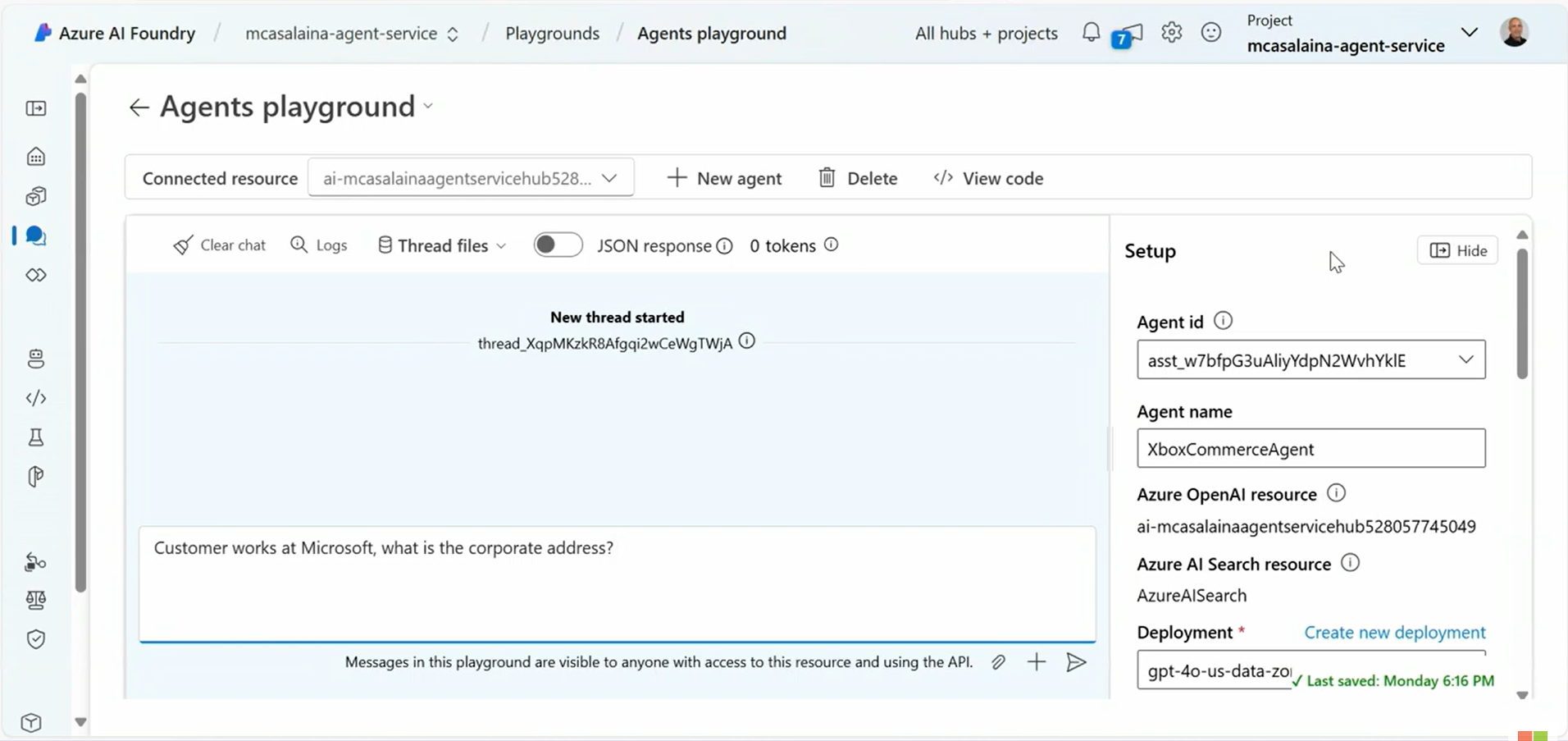
Azure AI Foundry is the clearest enterprise-grade counterpart to Vertex AI. It consolidates Azure’s AI services, foundation model access (including OpenAI, Meta, and Mistral), agent tooling, and enterprise governance under a single platform identity.
For organizations already standardized on Microsoft, whether through Azure infrastructure, Microsoft 365, or enterprise agreements, Foundry removes most of the switching cost argument. For teams whose primary motivation is cloud lock-in avoidance within a non-GCP architecture, it is the natural first evaluation stop.
Where it outperforms Vertex AI:
– Copilot extensibility
– Azure Active Directory-native security
– Enterprise compliance coverage (strong advantage for regulated industries)
– Pricing transparency is generally cleaner than Vertex AI’s layered model, especially for cost forecasting before commitment
Where to be careful:
– Inherits Azure’s overall platform complexity
– Onboarding requires significant investment if your team is not already Azure-native
Pricing: No separate platform fee. Model usage is billed per token (GPT-4o on Azure runs approximately $2.50 per 1 million input tokens) plus compute and storage at standard Azure rates. See Azure AI pricing.
Best fit: Enterprises running Microsoft infrastructure, teams that want Azure OpenAI Service with full platform management, and organizations where security and compliance sit inside existing Microsoft tooling.
2. Amazon SageMaker AI
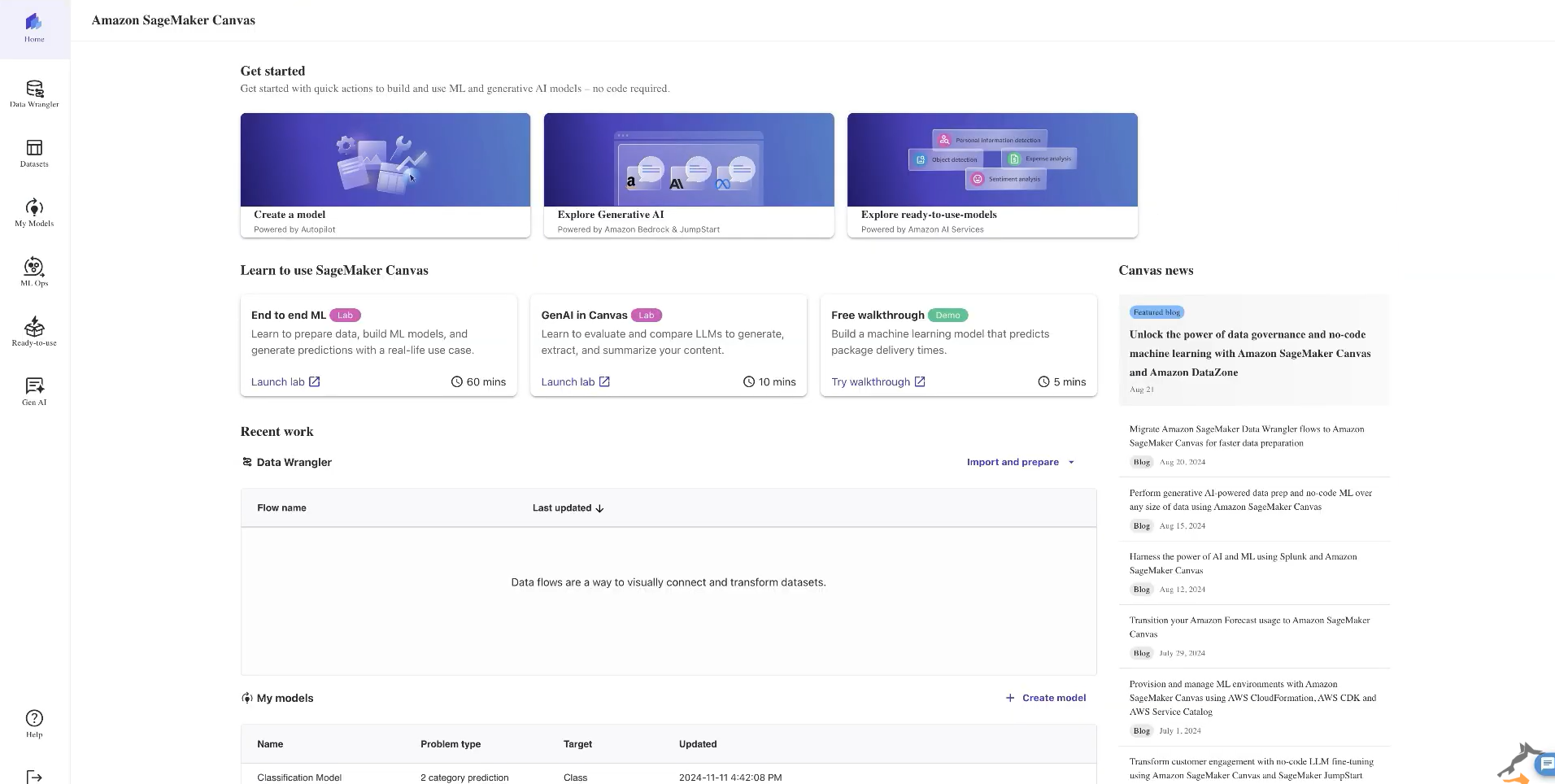
Best for: AWS-native ML and AI teams with established data infrastructure on AWS
Amazon SageMaker AI covers the full model lifecycle from experimentation through deployment and monitoring. It is mature, deeply integrated into the AWS ecosystem, and the natural path for teams already running data infrastructure on S3, Redshift, Glue, or EMR.
Where it outperforms Vertex AI:
– Tooling for custom training, experiment tracking, model registry, and endpoint management is battle-tested at enterprise scale
– Strong integration across the AWS data ecosystem (S3, Redshift, Glue, EMR)
– AWS global infrastructure and compliance certifications are among the most complete in the industry
Where to be careful: SageMaker’s generative AI and agent story lags behind Vertex AI’s current pace. Amazon Bedrock handles foundation model access, but the integration between Bedrock and SageMaker adds seams that teams building production AI agents will need to navigate. Running ML and generative AI across two separate services is a real operational overhead compared to what Vertex AI now offers under one roof.
Pricing: SageMaker Studio has no additional charge. An ml.m5.xlarge instance runs approximately $0.23 per hour. Inference endpoints are billed per hour of uptime per instance. See SageMaker pricing.
3. Databricks Mosaic AI
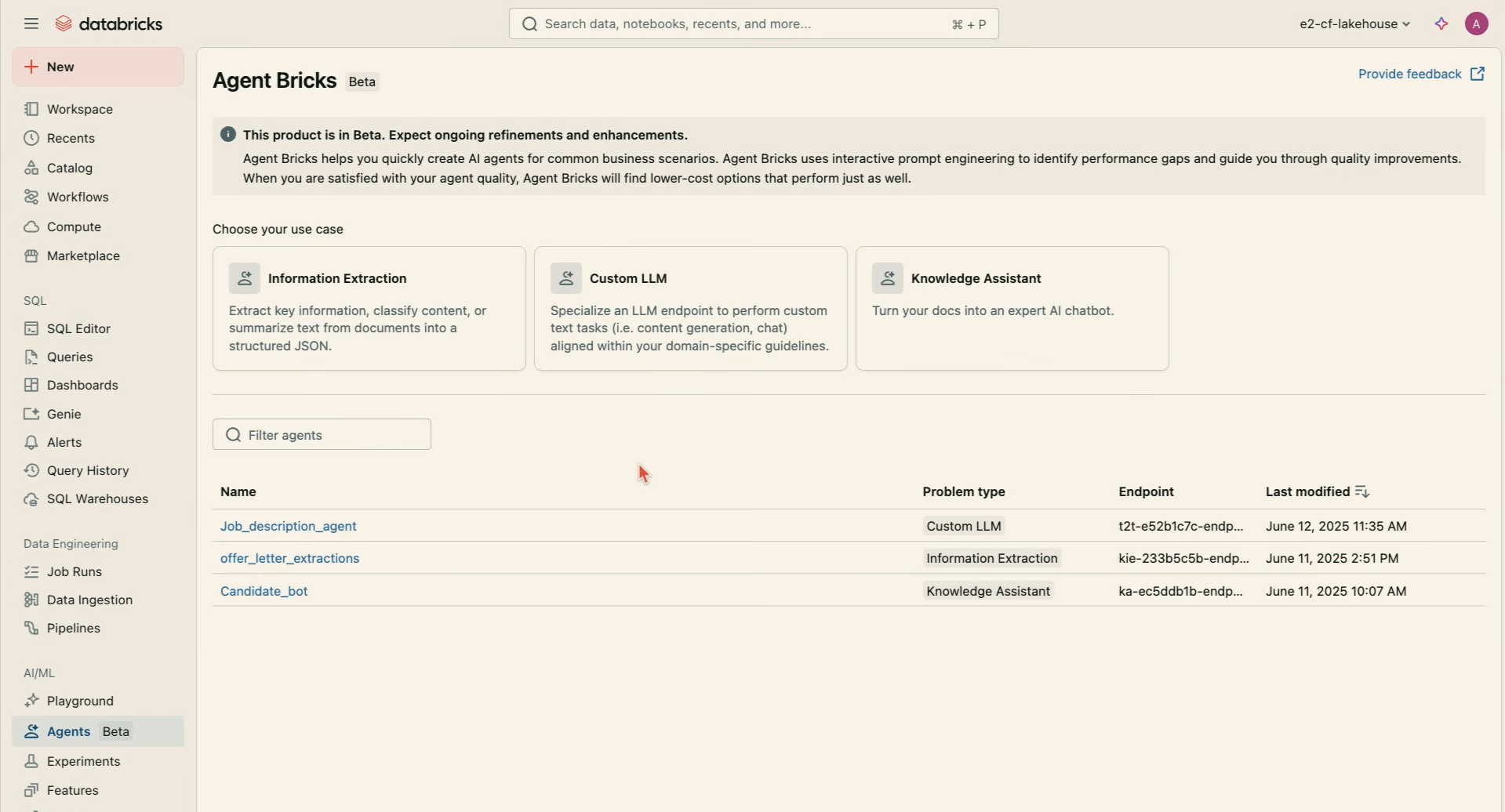
Best for: Data-platform-heavy enterprises where AI is downstream of complex data pipelines
Databricks Mosaic AI integrates model training, fine-tuning, MLflow-based experiment tracking, model serving, and foundation model access, all tightly coupled to the Databricks lakehouse and Unity Catalog governance layer.
Where it outperforms Vertex AI:
– Unified platform: data + AI in the same system (no integration overhead)
– Strong governance via Unity Catalog (lineage, compliance, access control)
– Ideal for data-heavy enterprises with complex pipelines
Where to be careful:
– Not built as a pure AI-first platform (AI is an extension of data platform)
– Agent capabilities are thinner than Vertex AI Agent Builder
– Pricing at scale (DBUs) can become expensive if not modeled upfront
Pricing: Jobs Compute runs approximately $0.07 per DBU. Foundation Model APIs are pay-per-token (DBRX Instruct runs approximately $0.75 per 1 million tokens). Enterprise pricing requires a contract. See Databricks pricing.
4. IBM watsonx.ai
Best for: Governance-heavy and regulated-industry enterprise AI
IBM watsonx.ai offers foundation model access, fine-tuning, prompt engineering tooling, and IBM’s established governance capabilities through watsonx.governance. It is built for enterprises that prioritize explainability and auditability over development speed.
Where it outperforms Vertex AI:
– Strong enterprise governance and audit capabilities
– Advanced bias detection and explainability tooling
– Better support for hybrid deployments (on-prem + cloud)
Where to be careful:
– Slower developer experience compared to Vertex AI
– Narrower ecosystem integrations
– Less suited for rapid generative AI experimentation
Pricing: Lite tier (free, 50,000 tokens per month), Essentials tier (approximately $5 per month, 500,000 tokens), Standard tier with custom enterprise pricing. See watsonx.ai pricing.
5. Dataiku
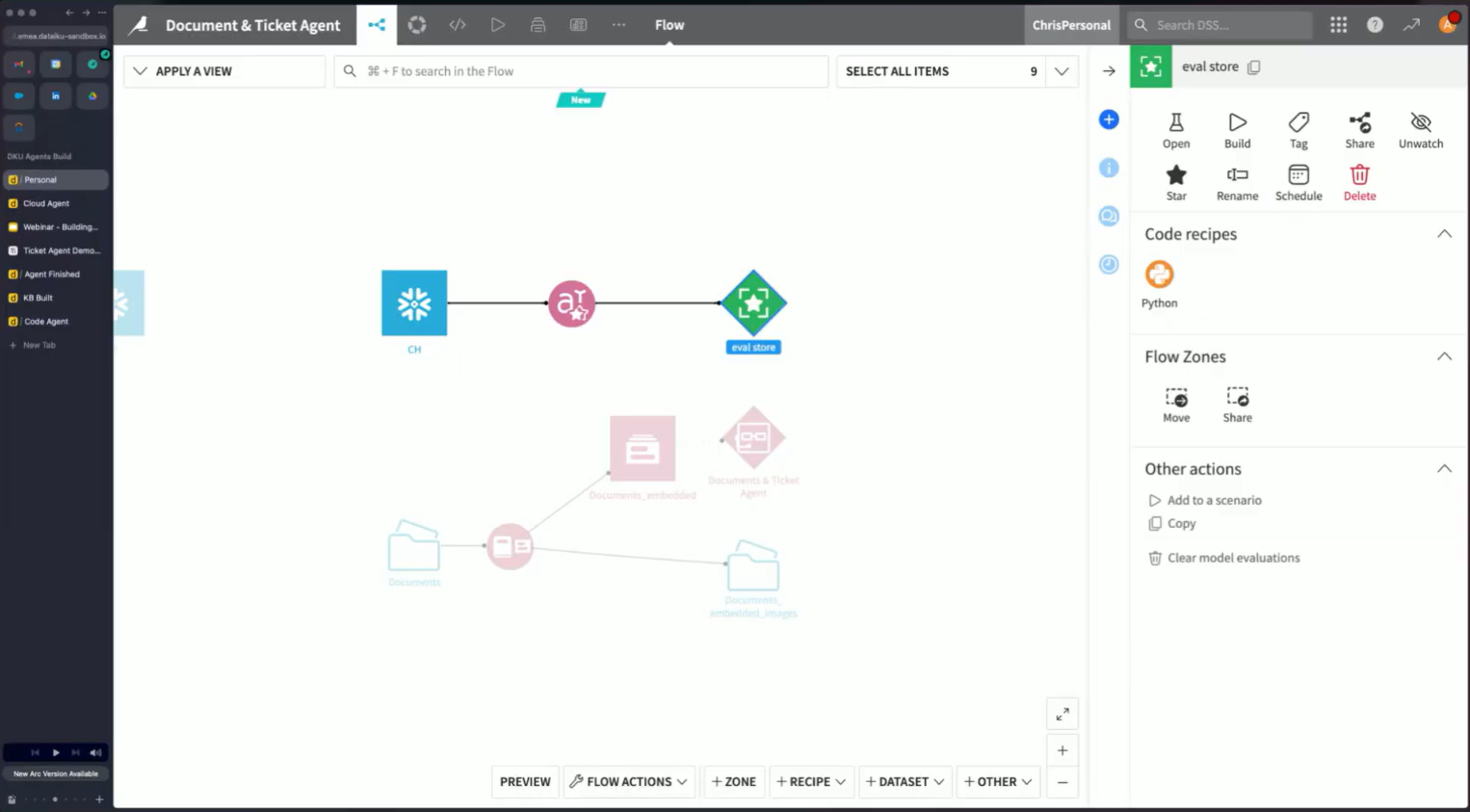
Best for: Governed cross-functional AI operations where business and technical teams that need to demonstrate business impact without owning all the underlying infrastructure.
Dataiku is less about raw infrastructure power and more about making AI accessible and governable across technical and non-technical teams. It covers the full workflow from data preparation through model building, deployment, and monitoring, with role-based access controls built throughout.
Where it outperforms Vertex AI:
– Designed for cross-functional teams (data + business users)
– Strong role-based governance across workflows
– Easier onboarding for organizations facing internal adoption friction
Where to be careful:
– Not suited for advanced LLM infrastructure or deep agent orchestration
– Limited control at model and system architecture level
– Not ideal for building production-grade agent systems
Pricing: Cloud and SaaS editions start in the range of several thousand dollars per month for small teams. Enterprise plans require a sales conversation. See Dataiku pricing.
Moving from platform to agent alternatives
The five tools above address which cloud AI platform an enterprise should build on. The three below address a different question: how do you get AI agents operating reliably inside your business?
Vertex AI Agent Builder is increasingly where enterprise teams encounter Vertex AI directly. They are not evaluating it as an MLOps platform. They are evaluating it because they need to build, deploy, and govern agents that interact with business systems. That is a different problem, and it attracts a different set of alternatives.
If your team needs tools from both categories, that is common. The right architecture often combines a cloud AI platform for model access and MLOps with a more targeted agent or execution layer for operational deployment. The tools below cover the agent side of that combination.
Part 2: Agent and execution-layer alternatives
6. DronaHQ
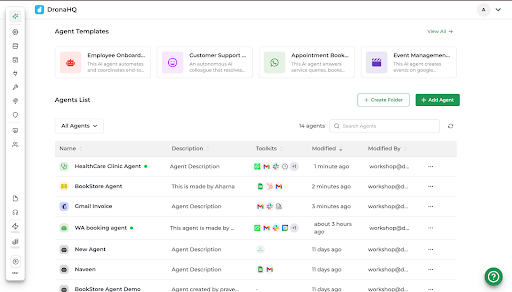
Best for: Mid-to-large enterprises running AI agents across multiple systems with governance requirements
DronaHQ is an enterprise-grade agent orchestration platform for building, deploying, and governing AI agents deeply integrated with business systems. It goes beyond standalone agent frameworks by providing everything needed to operationalize AI in one place: UI, workflows, memory, governance, and observability.
The distinction worth understanding is where the agent output goes. Most agent platforms, including Vertex AI Agent Builder, focus on backend orchestration and leave the output question unanswered: what does the operator actually do with the result? DronaHQ addresses that interface layer directly by embedding agents into enterprise applications, dashboards, admin panels, and operational workflows.
Typical use cases include supply chain and inventory agents, HR onboarding automation, finance and support tooling, admin panels with AI-assisted decision support, and operations dashboards that surface agent recommendations inline.
Where it outperforms Vertex AI Agent Builder:
– Full-stack execution layer (UI + workflows + integrations + governance)
– Built-in interfaces: dashboards, admin panels, operational apps
– Native audit trails for agent actions and reasoning
– AI copilot (Artisan) accelerates build time using natural language
– 4,000+ integrations via OAuth (no API key overhead)
– Built-in observability, testing playground, and multi-turn context handling
Where to be careful:
– Smaller marketplace of pre-built agents
– Most use cases require building from scratch
– Overhead for small teams or low-governance environments
– Custom branding only available in higher tiers
Pricing: Pay-as-you-go usage based pricing. Custom enterprise pricing is available for larger deployments. See DronaHQ pricing.
7. LangGraph
Best for: Engineering teams that need custom code-first control over stateful agent orchestration
LangGraph provides a framework for building stateful, multi-actor agent systems with explicit control over state, transitions, memory, and persistence. Built within the LangChain ecosystem, it lets engineering teams define the agent’s full execution graph in code without surrendering that logic to a managed platform.
Where it outperforms Vertex AI Agent Builder:
– Full architectural control over agent logic (state, transitions, memory)
– No managed abstraction layer, everything is code-defined
– Runs on any infrastructure (no cloud lock-in)
– Supports A2A protocol for interoperability across platforms
Where to be careful:
– Requires strong engineering investment
– No low-code or managed experience
– Deployment, scaling, and monitoring handled entirely by your team
Pricing: LangGraph is open source and free. LangSmith (observability and tracing) has a free Developer tier, a Plus tier at approximately $39 per month, and Teams pricing on request. LangGraph Platform for managed deployment starts at approximately $39 per month plus usage. See LangChain pricing.
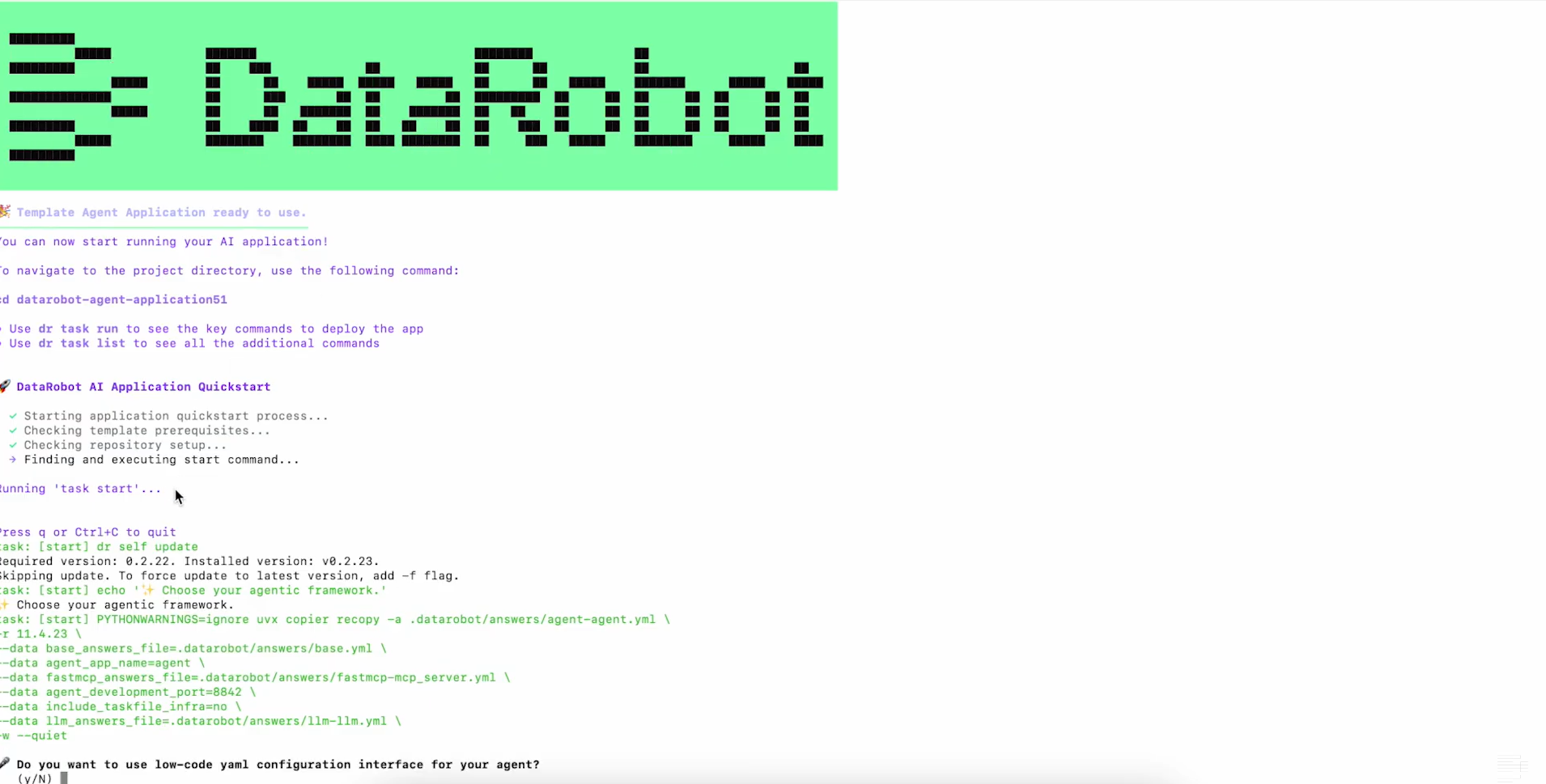
8. DataRobot Agent Workforce Platform
Best for: Enterprises that want an AI platform with a stronger business-user and decision-maker layer
DataRobot’s Agent Workforce Platform extends DataRobot’s established AutoML and MLOps heritage into multi-agent orchestration, with tooling aimed at giving business owners meaningful visibility and the ability to intervene in agent workflows.
Where it outperforms Vertex AI Agent Builder:
– Strong business-user visibility into agent workflows
– Enables intervention and oversight from non-engineering stakeholders
– Better alignment for organizations needing business buy-in
Where to be careful:
– Narrower scope in model infrastructure compared to Vertex AI
– Limited flexibility for deep generative AI development
– Pricing is not transparent (enterprise contract only)
Pricing: Enterprise contract pricing only, typically starting in the range of $50,000 or more per year. See DataRobot pricing.
Matching alternatives to your real motivation
| If your primary reason for looking is… | Start here | Why |
| GCP lock-in, team is AWS-native | Amazon SageMaker AI | Keeps data gravity on AWS, mature ML infrastructure |
| GCP lock-in, team is Azure-native | Azure AI Foundry | Deep Microsoft ecosystem fit, cleaner pricing |
| Pricing complexity and billing surprises | IBM watsonx.ai or DronaHQ | Transparent pricing models, fewer hidden layers |
| Orchestration control without a managed platform | LangGraph | Full code-level control, no vendor abstraction |
| Data platform integration and lakehouse governance | Databricks Mosaic AI | AI and data on a single governed platform |
| Regulated industry governance and hybrid deployment | IBM watsonx.ai | Strongest enterprise governance and hybrid posture |
| AI agents embedded in enterprise apps and dashboards | DronaHQ | Full-stack agent deployment with UI and observability |
| Cross-functional AI adoption across business and technical teams | Dataiku | Collaboration and governance built across the org |
| Business stakeholder ownership of agent workflows | DataRobot Agent Workforce Platform | Business-user visibility and intervention tooling |
What this list intentionally leaves out
Google AI Studio is a related Google product, not an external alternative. It is useful for prototyping and prompt development but is not a production replacement for Vertex AI.
Salesforce Agentforce is highly relevant if your agent use case is CRM-centric, but it is too use-case-specific for a broad enterprise alternatives list.
CrewAI is a credible option alongside LangGraph for engineering teams building multi-agent systems. It now supports the A2A protocol natively, making it interoperable with Vertex AI. Its framework-first nature puts it outside the enterprise platform scope of most buyers on this list, but it is worth knowing if orchestration flexibility is your primary driver.
The bottom line
Vertex AI is more capable in 2026 than at any point in its history. The governance improvements are real. Gemini 3.1 Pro raises the model quality bar meaningfully. The rebranding to Gemini Enterprise Agent Platform signals a clear long-term bet on agentic enterprise AI.
The platform’s strengths are most accessible when you are already committed to Google Cloud, have the engineering depth to navigate its layers, and can absorb the setup and configuration its power requires. Teams outside that profile, or where pricing clarity, orchestration ownership, or time to production matter most, will find better starting points in the alternatives above.
Start with your motivation. The right platform follows from that.
Related Articles