
Top 8 Flowise alternatives in 2026
Flowise became popular because it gave developers a visual way to build AI agents, RAG pipelines, and tool-connected workflows without starting from raw orchestration code. That made it useful for teams who wanted to prototype quickly, self-host when needed, and keep more control than a lightweight chatbot builder could offer. The search for alternatives usually begins later. The flows get bigger. More people start touching them. Debugging gets harder. The team wants stronger collaboration, better production guardrails, deeper code control, or a cleaner path from AI flow to real business software.
The best Flowise alternatives are the ones that solve those next-stage problems, not just the ones that also have a canvas.
What is Flowise?
Flowise is an open-source visual builder for AI agents and LLM workflows. It gives teams a drag-and-drop canvas for chaining prompts, tools, retrieval, memory, and orchestration logic, while still exposing APIs, SDKs, tracing, evaluations, and self-hosting. In practice, it works best for technical teams who want to move faster than a code-only stack would allow, but still want more flexibility than a closed SaaS builder.
Flowise review
A fast visual builder for AI workflows that works well in the early and middle stages, then starts to feel crowded as the system grows. Flowise is a canvas-based platform for AI agents, RAG systems, and tool-connected flows. It is best for developers and technical teams that want open-source flexibility, self-hosting, and visual composition without assembling everything from scratch in code. People start looking for alternatives when the canvas becomes dense, when handoffs between team members get messier, when debugging takes longer, or when the workflow needs either deeper orchestration control or a stronger business layer around it.
The 8 best Flowise alternatives in 2026
1. Dify
Best Flowise alternative for teams that want an open-source builder with a more finished application layer. Dify is an open-source platform for building and deploying AI applications, agents, and RAG workflows. It is best for teams that like Flowise’s general direction, but want the output to feel more like a managed AI product than a builder canvas.
Why it stands out
- One of the closest alternatives to Flowise in real buyer intent
- Gives teams a stronger application layer around the workflow, not just a graph of logic
- Better suited to builders who want to move from prototype to shareable AI product without changing tools immediately
- Open-source posture keeps it credible for teams that still care about control and self-hosting
- A cleaner choice for teams that want more packaging and less “builder sprawl” than Flowise can create over time
Where it weakens
- Still sits in the same broad category, so complexity does not magically disappear
- Less attractive for teams that want fine-grained orchestration control at a lower level
- Can feel more opinionated than Flowise for builders who want the canvas to stay central
Pricing: Professional starts at $59 per workspace/month. View pricing
2. Langflow
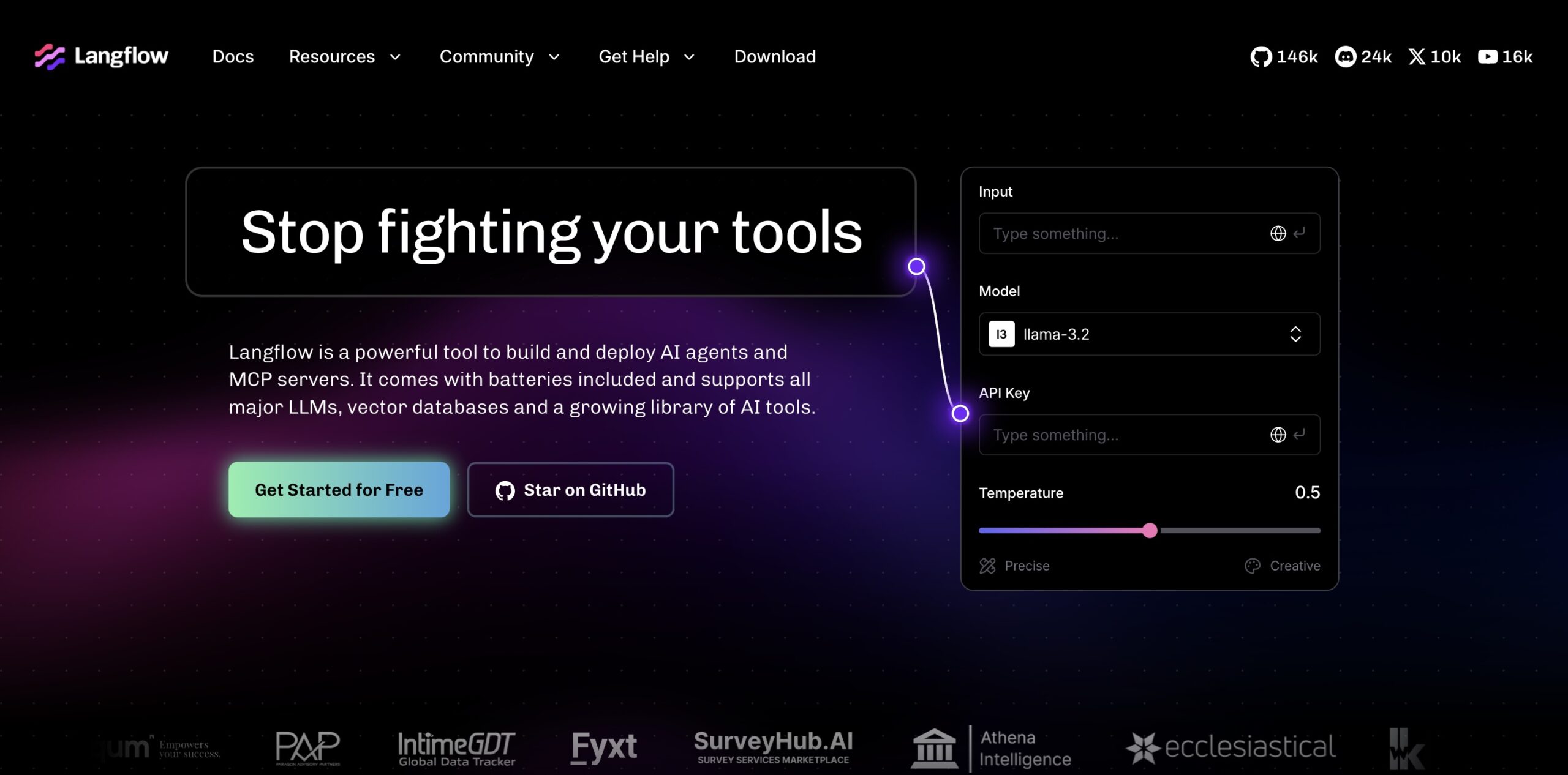
Best Flowise alternative for developers who want a visual builder that stays close to code. Langflow is an open-source visual builder for AI agents, MCP servers, and LLM workflows. It is best for developers who like a canvas, but do not want to feel trapped inside one.
Why it stands out
- Very close category match to Flowise, which makes the comparison natural
- More appealing to Python-oriented developers who want a smoother path from nodes to code
- Useful for teams that expect to customize, extend, and inspect workflows more deeply over time
- Strong option for builders who want visual speed without giving up engineering ownership
- Good bridge between a visual builder mindset and a code-heavy future state
Where it weakens
- More technical than products aimed at semi-technical teams
- Less packaged for business users who want a more finished delivery layer
- Public pricing is not as simple or visible as some managed competitors because the open-source route is central
Pricing: Open-source and free to self-host. Explore Langflow
3. n8n
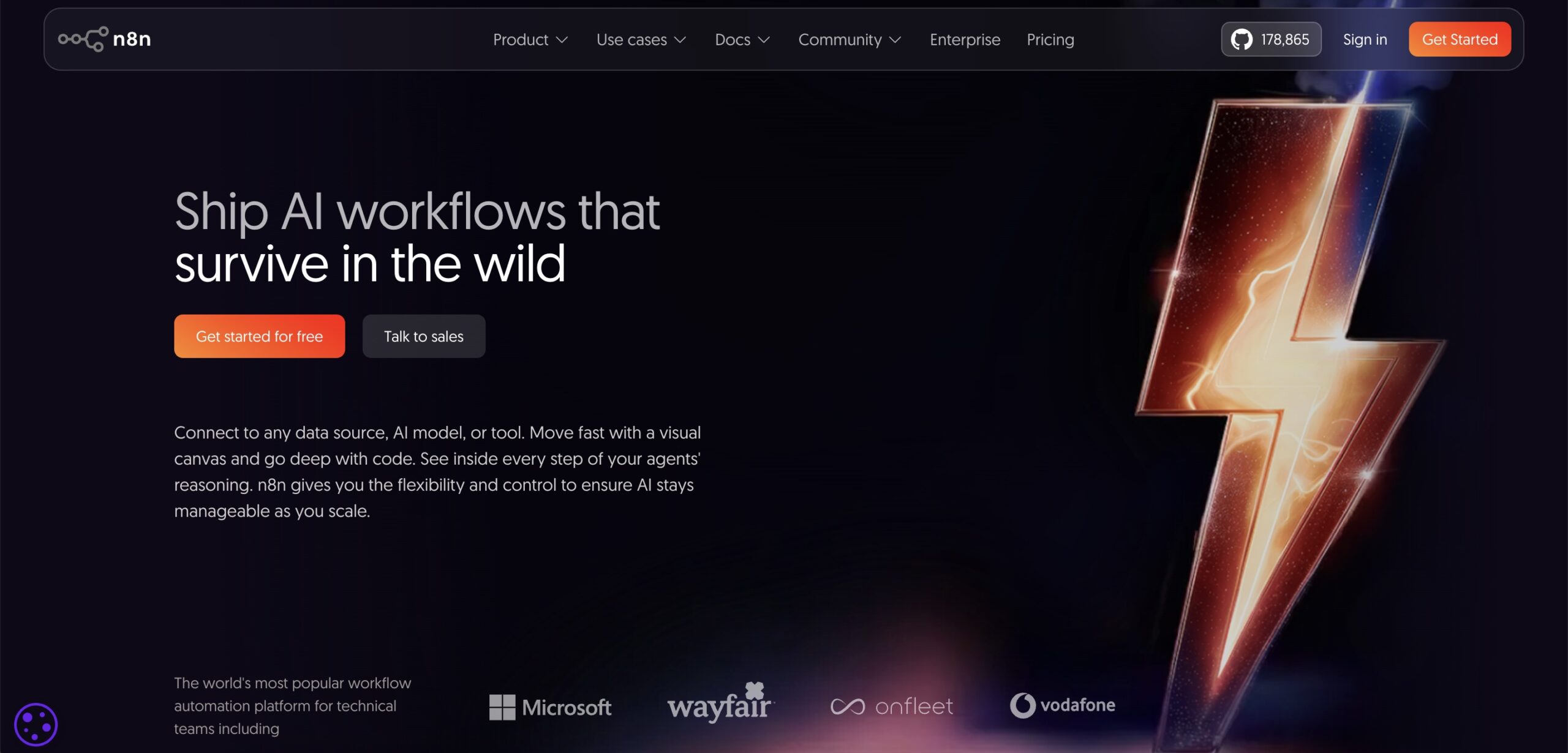
Best Flowise alternative for teams whose AI work is really an automation problem. n8n is a workflow automation platform that now supports serious AI agent and AI workflow use cases. It is best for teams that need agents, but also need triggers, systems, handoffs, and operational automation around them.
Why it stands out
- Stronger than Flowise when the workflow has to plug directly into real business systems and automations
- Better fit for teams solving end-to-end process execution rather than only AI flow design
- Broad automation footprint makes it easier to place AI inside existing operational logic
- Useful for teams that want one layer for integrations, triggers, actions, and AI steps
- Self-hosted and cloud options keep it flexible for different deployment preferences
Where it weakens
- Not as focused a visual AI workbench as Flowise or Langflow
- Broader scope can feel like overhead for teams that only want agent composition
- AI depth depends partly on how comfortable the team is with workflow design beyond the AI parts
Pricing: Cloud pricing is execution-based. View pricing
4. DronaHQ
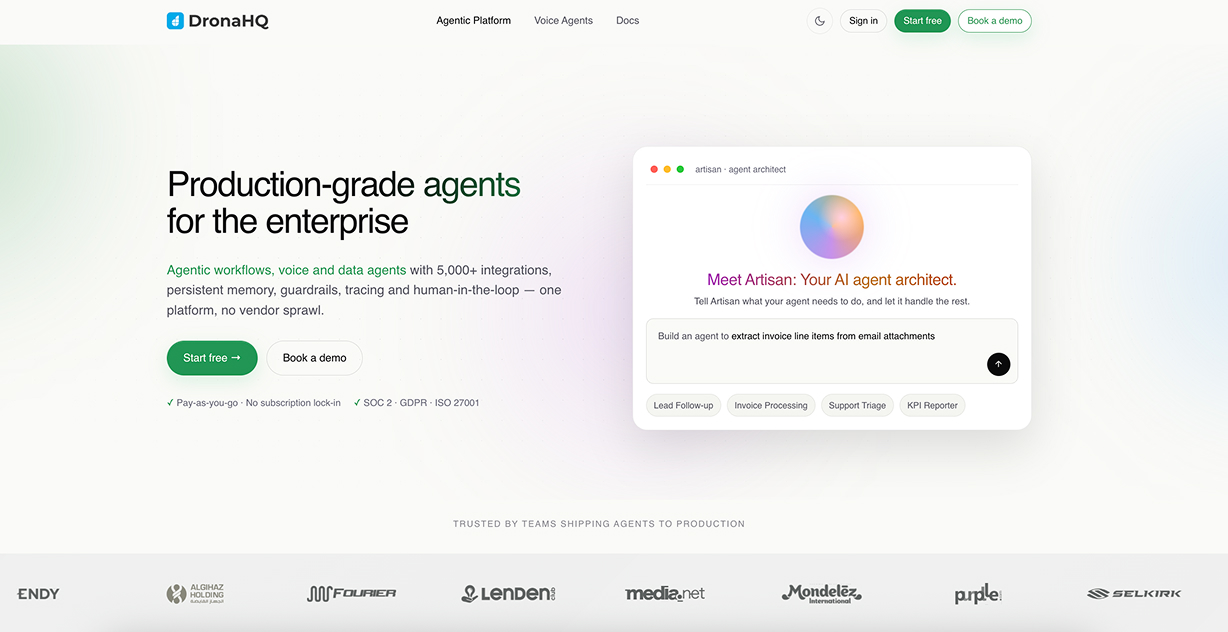
Best Flowise alternative when the agent is turning into operational software. DronaHQ is an agentic platform for building AI agents, interfaces, workflows, and business applications around enterprise data and actions. It is best for teams that need more than orchestration. They need execution, UI, approvals, and controlled rollout.
Why it stands out
- Strong when the workflow needs screens, forms, approvals, dashboards, or human checkpoints around the agent
- Better fit than Flowise for internal tools, back-office assistants, and operational apps tied to company systems
- Gives teams a way to wrap AI logic in real business processes instead of leaving it inside a flow graph
- Useful when adoption depends on how the workflow is presented and governed, not only how it is orchestrated
- More credible once the project has to live as software used by teams every day
Where it weakens
- Less direct if the buyer only wants another visual AI workflow builder
- Broader platform scope can be unnecessary for early experimentation
- Not the clearest answer for teams focused on low-level orchestration research
Pricing: No subscriptions, simple, pay-as-you-go pricing. View pricing
5. CrewAI
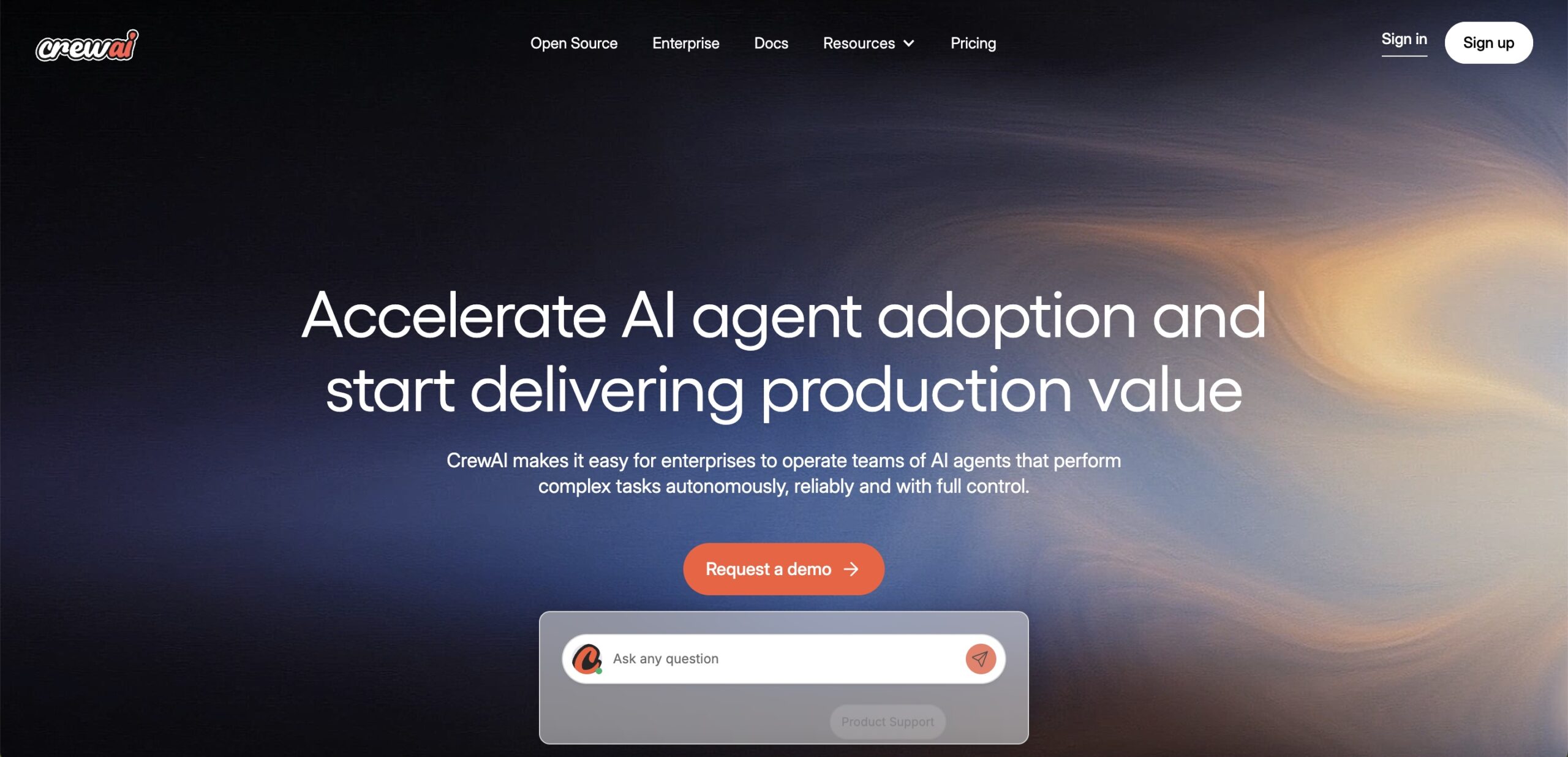
Best Flowise alternative for teams designing multi-agent systems on purpose. CrewAI is a platform and framework for creating collaborative AI agents that work together across tools, tasks, and roles. It is best for engineering teams that have moved past single-flow thinking and want to design agent teamwork directly.
Why it stands out
- Clear strength in role-based, collaborative agent systems
- Better fit than Flowise when agent coordination is the core problem, not only visual workflow design
- Useful for teams that want explicit control over agent roles, task handoffs, and collaboration patterns
- Gives engineering teams more room to design the structure of a multi-agent system rather than only arrange nodes
- More natural for builders who see agents as a coordinated system, not just a sequence of steps
Where it weakens
- Adds engineering complexity compared with visual-builder-first tools
- Less inviting for semi-technical teams that want a faster, simpler start
- Can feel oversized if the workflow does not truly need multiple cooperating agents
Pricing: Free plan available, with enterprise pricing custom. View pricing
6. LangGraph
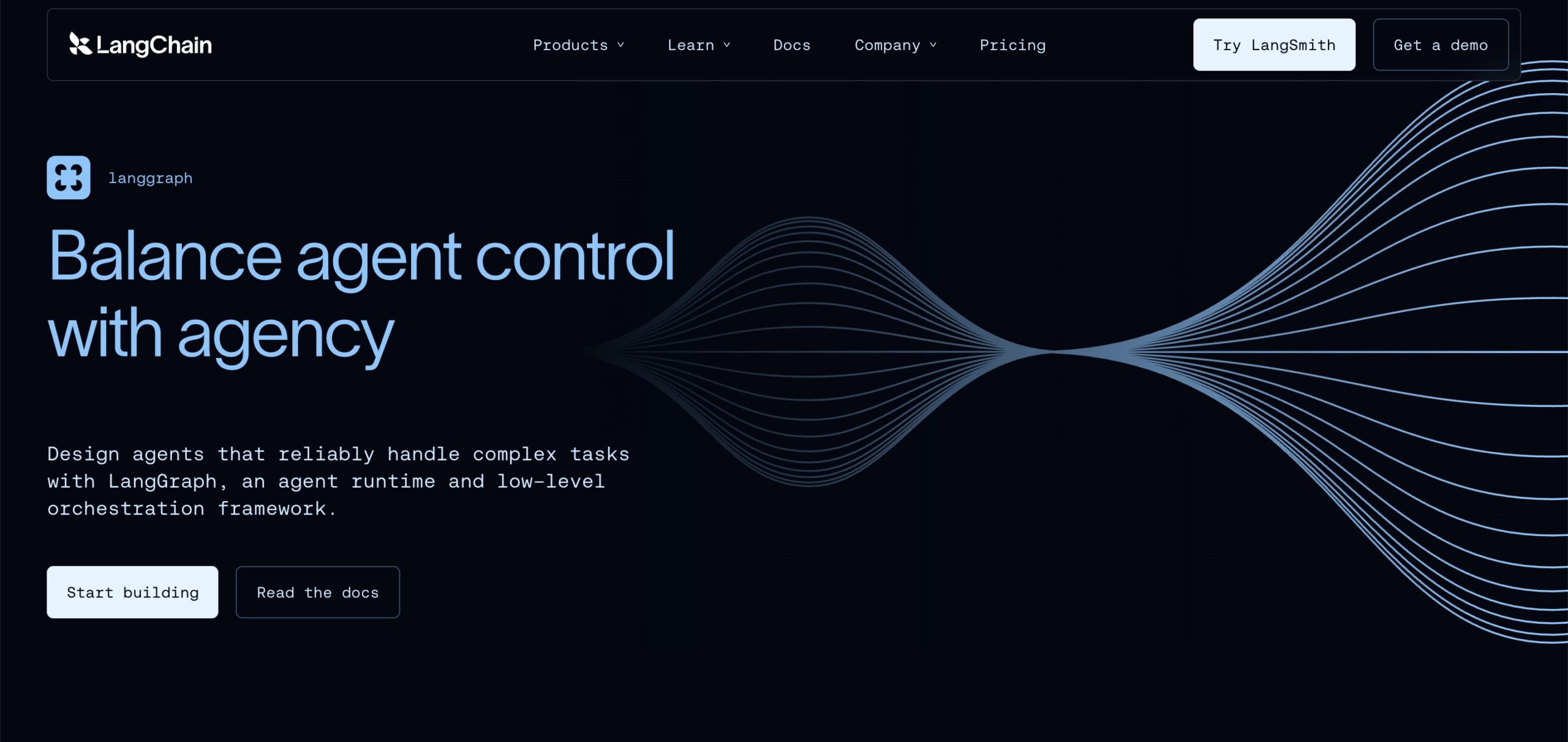
Best Flowise alternative for teams that want stateful orchestration without canvas limits. LangGraph is a low-level orchestration framework for long-running, stateful agents. It is best for engineering teams that are ready to trade visual convenience for more precise control over how agents think, pause, resume, and branch.
Why it stands out
- Strong fit for teams that care deeply about state, checkpoints, and control flow
- Better than Flowise for engineering-led teams building custom orchestration logic at scale
- Useful when the workflow has become too dense or brittle inside a visual builder
- Pairs well with LangSmith for debugging, evaluation, and observability
- Strong long-term path for teams building agent infrastructure as a core capability
Where it weakens
- Much less approachable for non-technical teams
- Gives up the speed and readability of visual composition
- Pushes more architecture and maintenance responsibility onto the team
Pricing: LangGraph is open source, with LangChain platform pricing available separately. View pricing
7. Gumloop
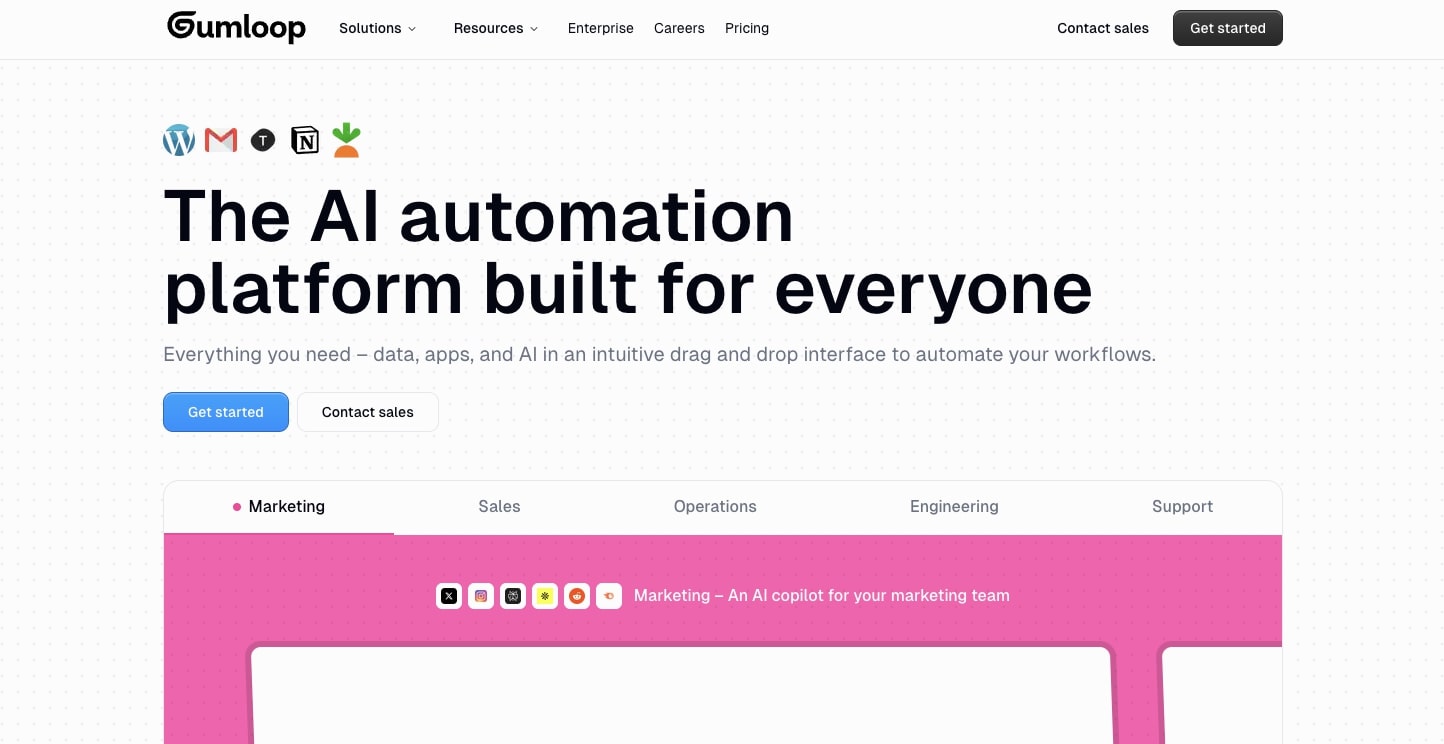
Best Flowise alternative for teams that want AI workflows closer to business operations. Gumloop is a visual AI automation platform for building agents and workflows around real business tasks. It is best for teams that care more about operational automation, internal process work, and non-engineering accessibility than about open-source control.
Why it stands out
- Easier to place inside business operations than more developer-shaped builders
- Better fit than Flowise for teams that want AI nodes inside lead ops, internal ops, and process workflows
- More accessible for teams that do not want a heavy engineering setup just to automate useful work
- Useful when the workflow needs to be understandable by operators as well as technical builders
- Good option for teams that want a visual system with faster business adoption
Where it weakens
- Less attractive for teams that want self-hosting and open-source control
- More productized and less flexible than Flowise for highly technical use cases
- Advanced agent architecture work may still push teams toward more developer-led tooling
Pricing: Free plan available. Pro starts at $37/month and enterprise is custom. View pricing
8. Stack AI
Best Flowise alternative for enterprises that want a managed drag-and-drop AI platform. Stack AI is an enterprise AI agent platform designed for IT, operations, and architecture teams that want a secure managed environment for AI workflows and agents. It is best for organizations that prefer a polished enterprise platform over an open-source-first builder.
Why it stands out
- Strong enterprise posture around deployment, security, and managed delivery
- Better fit than Flowise for organizations that want procurement-friendly AI infrastructure with less self-hosting overhead
- Useful for due diligence, support, claims, and internal process workflows where governance matters early
- More attractive to enterprise stakeholders who want a finished platform rather than a flexible builder toolkit
- Clear option for teams that value enterprise readiness over builder freedom
Where it weakens
- Less appealing for teams that want open-source control and deeper self-hosted flexibility
- Can feel heavier than needed for lean teams or early-stage prototyping
- Public pricing remains less transparent than simpler self-serve tools
Pricing: Team and enterprise plans available. View pricing
Quick comparison table
| Platform | Best for | Strongest edge | Likely limitation | Pricing starting point |
| Dify | Productized open-source agent workflows | Closest overall alternative with stronger app layer | Still shares some complexity with Flowise | $59/workspace/month |
| Langflow | Developer-friendly visual AI building | Best visual builder for Python-shaped teams | More technical than productized options | Free to self-host |
| n8n | AI plus business process automation | Strong workflow automation depth | Broader than a pure AI builder | Usage-based |
| DronaHQ | Enterprise apps and operational agents | Adds UI, workflows, and execution around agents | Broader than a visual builder-only tool | Pay-as-you-go pricing |
| CrewAI | Multi-agent systems | Better collaborative agent architecture | More engineering-heavy | Free, enterprise custom |
| LangGraph | Stateful orchestration control | Deep precision for agent engineering | Less approachable and not visual-first | Open source, platform extras |
| Gumloop | Business-friendly AI workflow automation | Easier operational workflow orientation | Less open-source and less developer-flexible | Free, Pro from $37/month |
| Stack AI | Managed enterprise AI agents | Strong enterprise-ready drag-and-drop platform | Less transparent pricing and less open-source flexibility | Team and enterprise plans |
Related Articles