
Top Make.com Alternatives for AI Agents and Workflow Automation
If you are searching for Make.com alternatives, you probably already know why Make became popular in the first place. It is visual, fast to pick up, and flexible enough for a wide range of app-to-app automations. Its pricing page now also leans heavily into AI, with Make positioning itself around agentic automation, AI agents, and more than 3,000 app integrations.
But the reasons teams start looking elsewhere are usually practical.
Some want more control over code, infrastructure, and self-hosting. Some want stronger enterprise orchestration. Some want an easier path into AI agents rather than classic workflow automation with a few AI steps layered in. And some simply reach a point where scenario sprawl, governance, or pricing logic starts making them reevaluate the stack.
That is why the market around Make alternatives is broader than it first appears. This is not just a visual automation comparison anymore. It now includes workflow platforms, AI agent builders, integration products, and developer focused orchestration tools.
This guide breaks down the top Make.com alternatives across that broader landscape and helps you choose based on what you are actually trying to build.
What is an AI agent builder?
An AI agent builder is a platform or framework used to create agents that can interpret goals, retrieve context, use tools, trigger actions, and operate across workflows or connected systems. In this category, the difference between a workflow tool and an agent builder often comes down to how much runtime reasoning, tool use, and context handling the platform supports.
How we selected the tools for this comparison
We did not treat this as a random list of automation products.
Each platform here had to meet a few filters. It needed to be a credible alternative to Make in real evaluation conversations. It needed to offer meaningful workflow automation, orchestration, or connected system execution. It also needed relevance to how teams now think about AI workflows or AI agents, since that is increasingly where Make users are heading.
That is why this list includes classic workflow competitors like Zapier and Integrately, developer leaning platforms like n8n and Pipedream, enterprise orchestration products like Tray.io, and agent oriented platforms like DronaHQ, Langflow, Composio, Vellum, and Flowise.
What is Make.com?
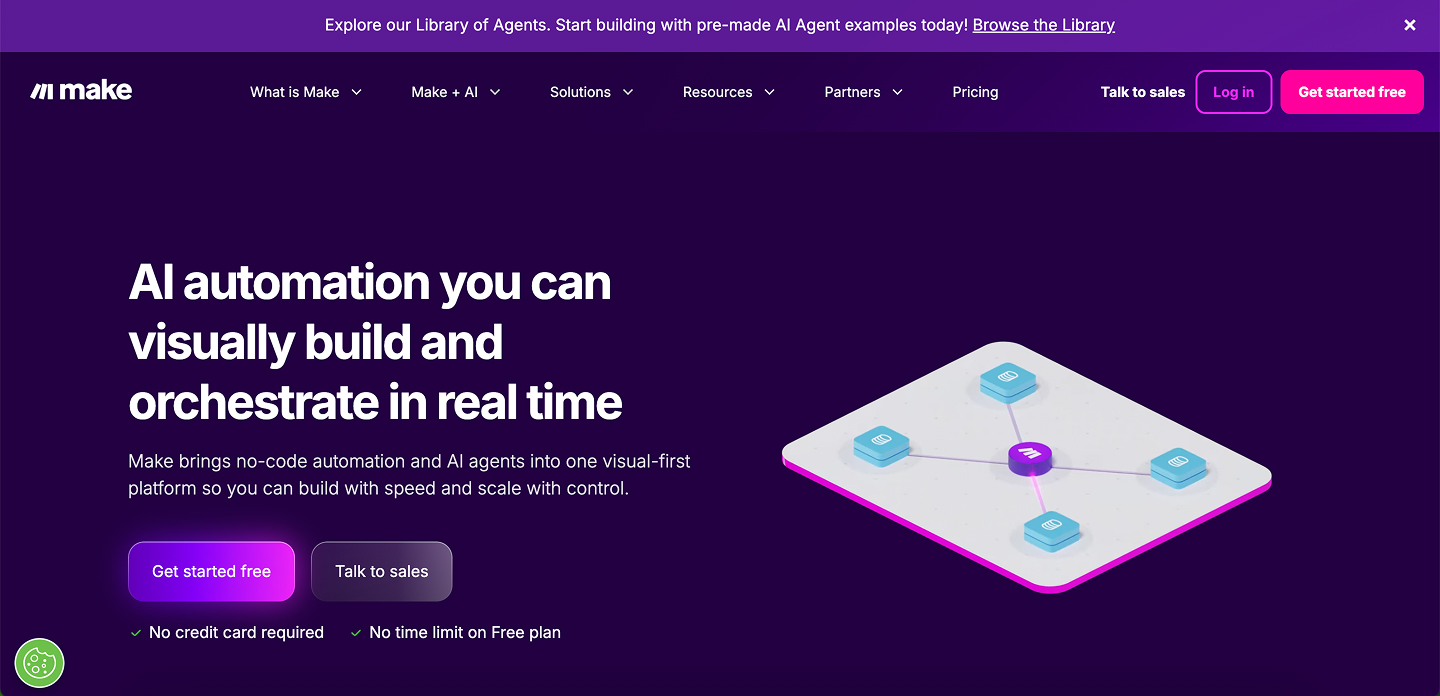
Make.com is a visual workflow automation platform used to connect apps, APIs, and business processes through drag-and-drop scenarios. It has expanded well beyond simple app automation and now actively promotes AI agents, AI tools, and agentic automation, making it one of the more ambitious workflow platforms in this category. . Its pricing page highlights AI agents, an AI toolkit, AI apps, and an MCP server alongside its core automation product.
Key features
- Visual scenario builder with routers and filters
- More than 3,000 app integrations
- AI agents and AI toolkit support
- JavaScript and Python code execution
- API access and enterprise app integrations
Pricing
- Free plan includes 1,000 credits a month
- Paid plans start at $9 a month for Core and custom pricing for Enterprise
Limitations
- Complex scenarios can become hard to maintain at scale
- Governance depth is lighter than some enterprise platforms
- Agent support is newer than its core workflow model
Best suited for
Make.com is best suited for teams that want visual workflow automation with room to grow into AI enhanced processes. It is a strong fit when speed, app connectivity, and operational flexibility matter more than rigid enterprise process controls.
Best Make.com alternatives
- DronaHQ for teams building AI agents that operate across business systems.
- Zapier for teams that want mainstream automation with broad integrations and low friction.
- n8n for technical teams that want flexibility, self hosting, and deeper workflow control.
- Tray.io for enterprise teams that need stronger orchestration and API led automation.
- Gumloop for AI first automation flows with modern data and document handling.
- Integrately for simpler one click automations and faster setup.
- Langflow for teams moving from workflows into LLM and agent systems.
- Composio for connecting AI agents to external tools and apps.
- Pipedream for code first automation and API orchestration.
- Vellum for production AI workflows, evaluations, and agent orchestration.
- Flowise for open source visual AI workflows and agent building.
DronaHQ
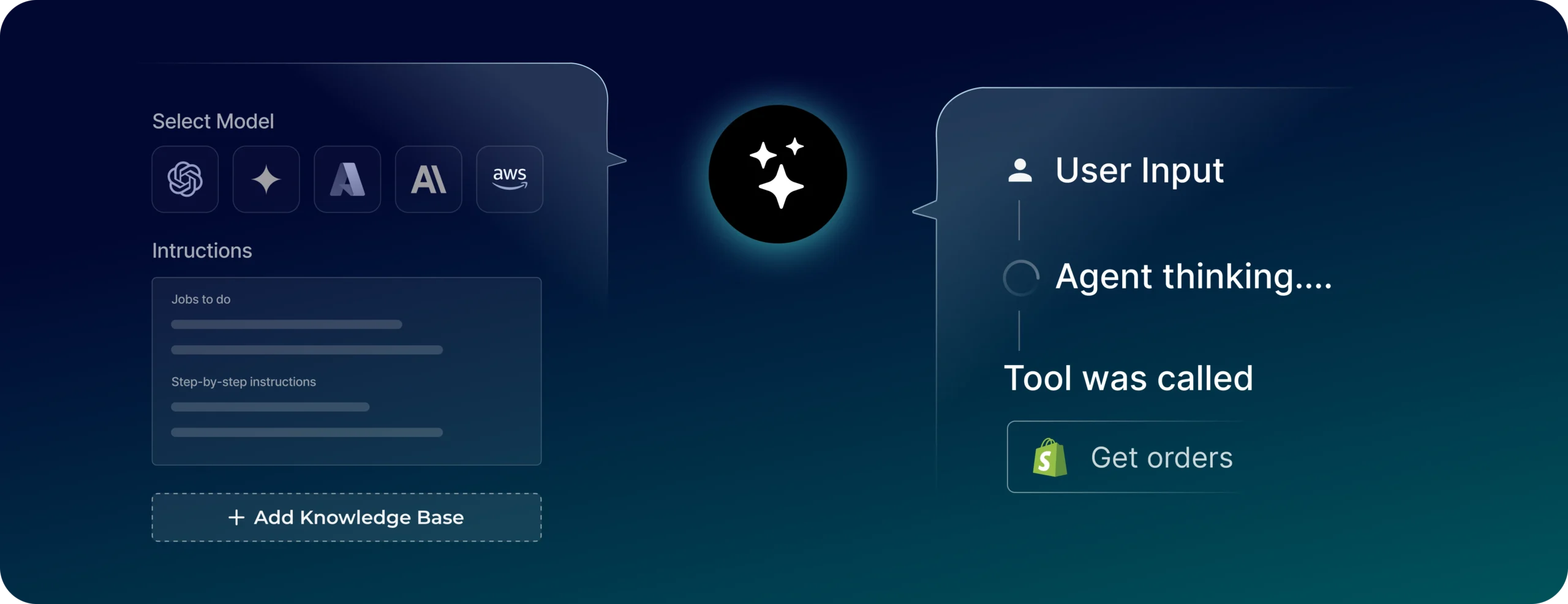
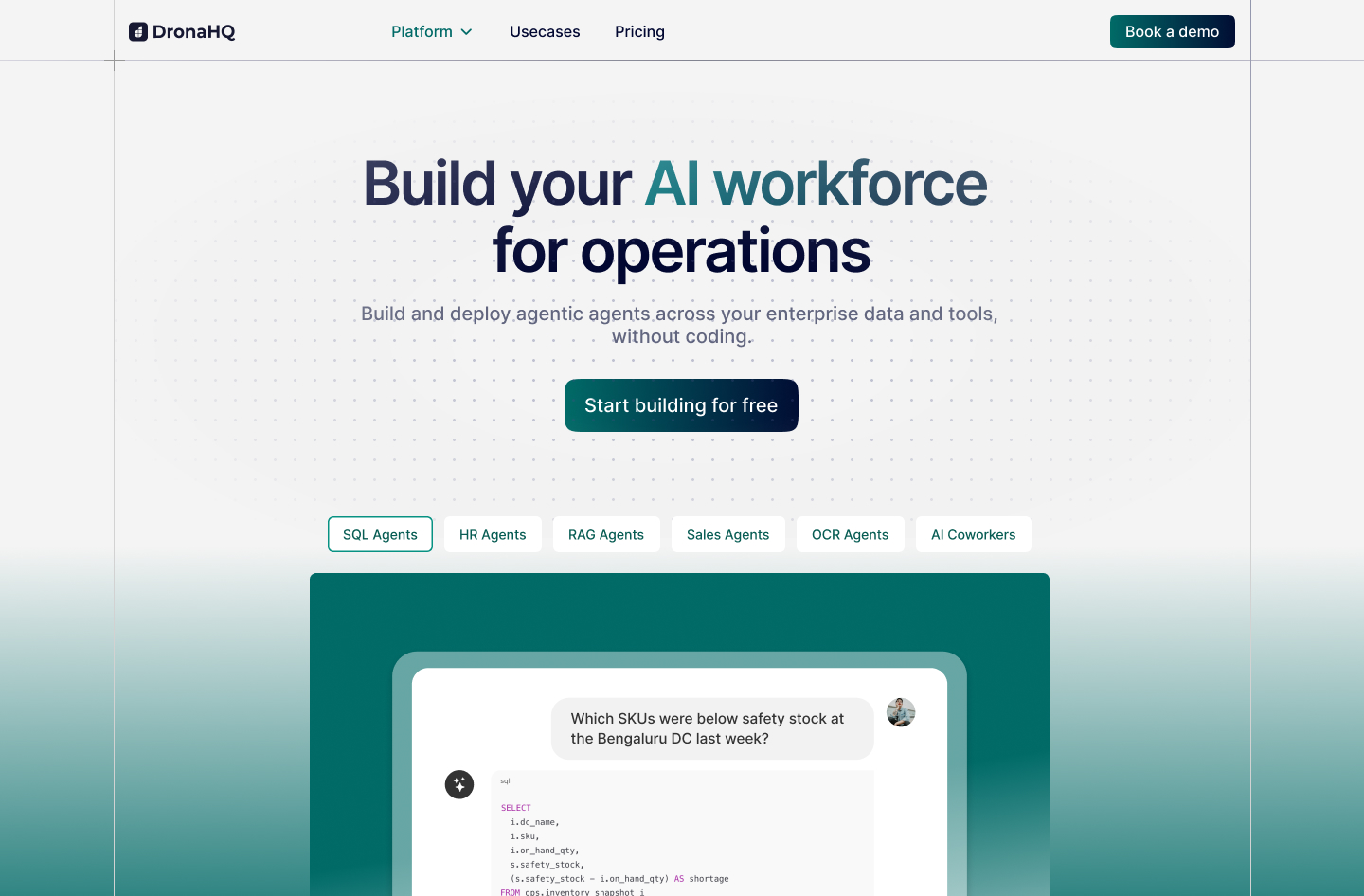
DronaHQ is an AI agent platform for building agent driven workflows across APIs, databases, and operational systems. It is built for teams that want software to retrieve context, take actions, and operate inside governed business processes rather than stay limited to app to app workflow chaining.
Key features
- AI agents connected to APIs and enterprise systems
- Multi agent orchestration with tools and triggers
- Built in RAG traces and observability
- JavaScript and Python execution for custom logic
- Guardrails masking and human review controls
Pricing
- Starter starts at $100 a month billed annually on the pricing page
- Higher plans and enterprise options scale by usage and deployment needs
Limitations
- Better for system and API automation than desktop bot replication
- Requires clearer process design than simple template tools
- Less suited to teams seeking legacy RPA first tooling
Best suited for
DronaHQ is best suited for teams moving from workflow automation into agent driven execution across business systems. It fits best when the goal is to build AI agents that can work with data, tools, and operational workflows in production rather than only move records between apps.
Zapier
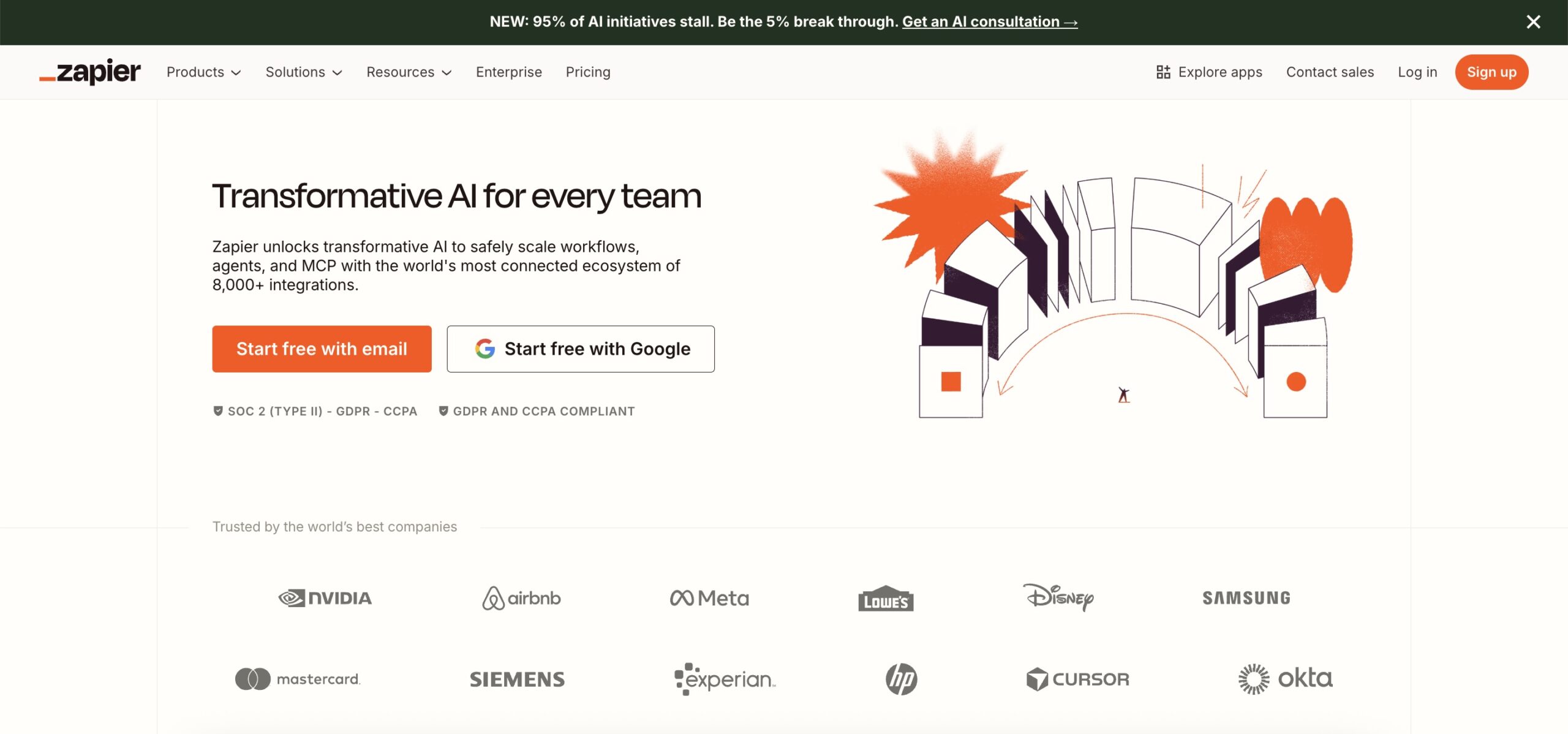
Zapier is one of the most widely used automation platforms in the market. It remains the easiest point of entry for many teams because of its app coverage and low learning curve, and its pricing page now explicitly frames the product around AI agents as well as classic Zaps.
Key features
- Broad library of app integrations
- Multi step Zaps with conditions and formatting
- Tables Forms and Interfaces in one platform
- AI agent messaging on free and paid plans
- Large template ecosystem and low setup friction
Pricing
- Free plan is listed at $0 a month
- Professional starts at $19.99 a month billed annually
Limitations
- Developer control is lighter than code friendly platforms
- Advanced automation can become expensive with scale
- Deep system orchestration is not its strongest angle
Best suited for
Zapier is best suited for teams that want speed, accessibility, and broad app automation without much setup overhead. It works well when the priority is operational convenience, not deep infrastructure control or highly customized agent execution.
n8n
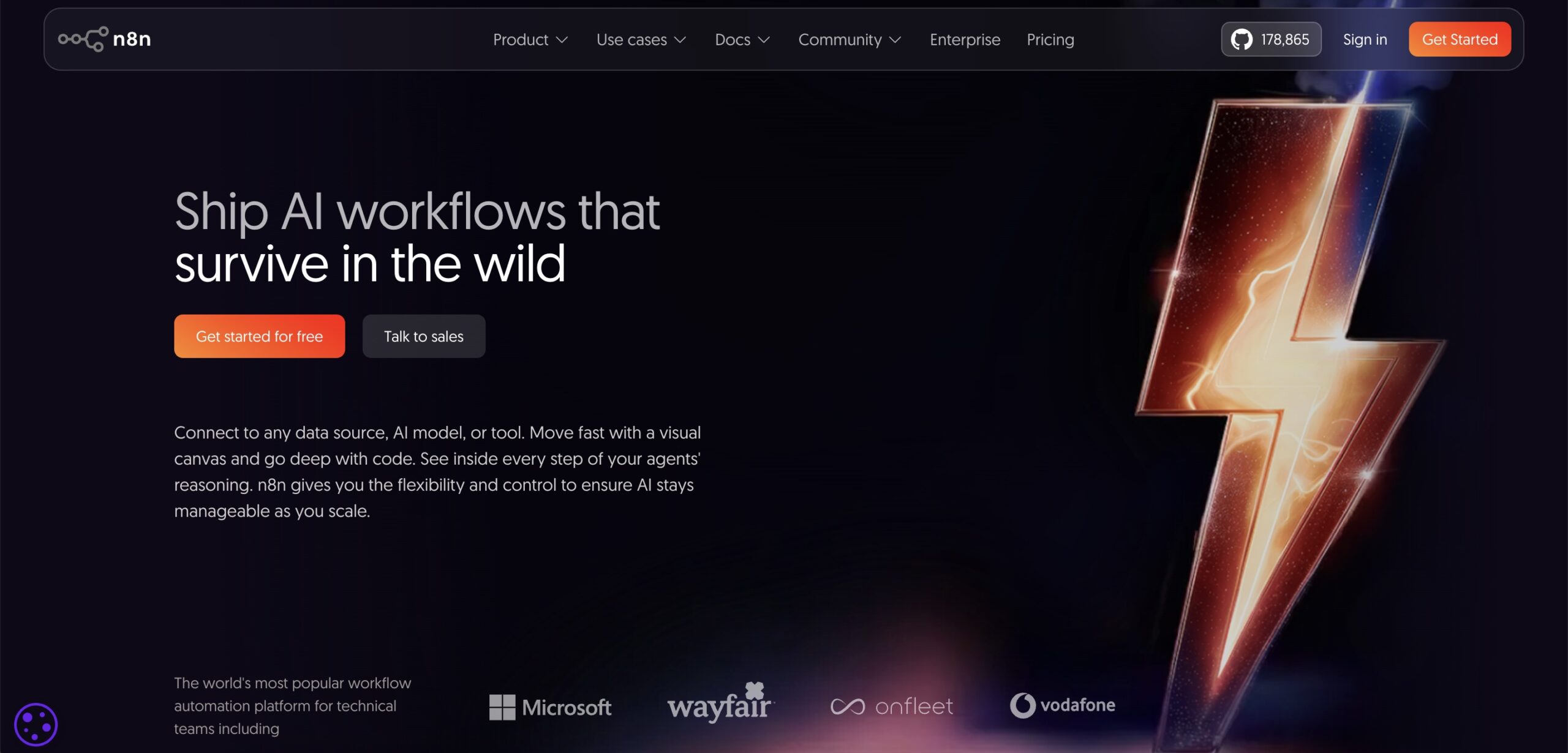
n8n is a developer friendly automation platform that has become a popular Make alternative for teams that want more control. It supports self hosting, code level customization, and increasingly AI related workflows, while keeping the visual workflow model that many Make users already understand.
Key features
- Visual workflow builder with code friendly extensibility
- Self hosted and cloud deployment options
- Large integration ecosystem across apps and APIs
- AI workflow support and builder credits
- Error workflows execution logging and queue mode
Pricing
- Cloud pricing includes Starter, Pro, and Enterprise plans
- Free trial includes 20 AI Workflow Builder credits according to n8n pricing FAQ
Limitations
- Larger flows can become hard to manage visually
- Core architecture is still workflow led, not agent first
- Enterprise governance is lighter than full automation suites
Best suited for
n8n is best suited for technical teams that want flexible automation without the weight of classic enterprise software. It works especially well when API orchestration, self hosting, and custom logic matter more than polished no code simplicity.
Tray.io
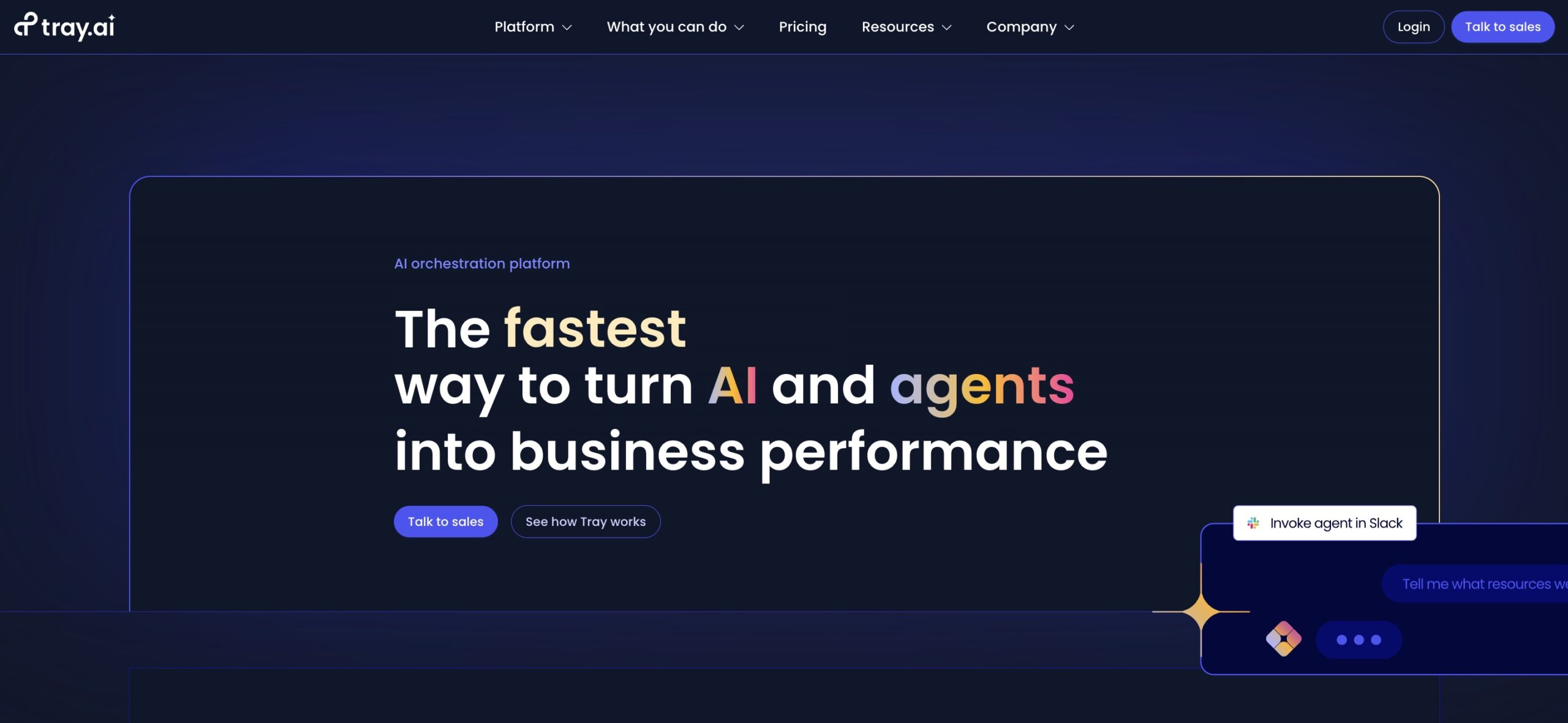
Tray.io sits further upmarket than Make and is built for enterprise integration and orchestration. It is less about quick scenario building and more about scale, API control, and embedded or enterprise automation, with Merlin Agent Builder sold separately for AI agent use cases.
Key features
- Enterprise integration and automation platform
- API led orchestration with custom JavaScript
- Embedded integration options for product teams
- Enterprise governance and usage controls
- Merlin Agent Builder for AI agents
Pricing
- Pricing is custom and based on plan plus usage
- Merlin Agent Builder is purchased separately according to Tray pricing
Limitations
- Less approachable for small teams than Make or Zapier
- Pricing transparency is limited on the public site
- Best value appears at enterprise scale
Best suited for
Tray.io is best suited for larger organizations that need stronger orchestration and API control than lighter workflow tools provide. It makes sense when integration complexity, embedded automation, or enterprise scale matter more than ease of entry.
Gumloop
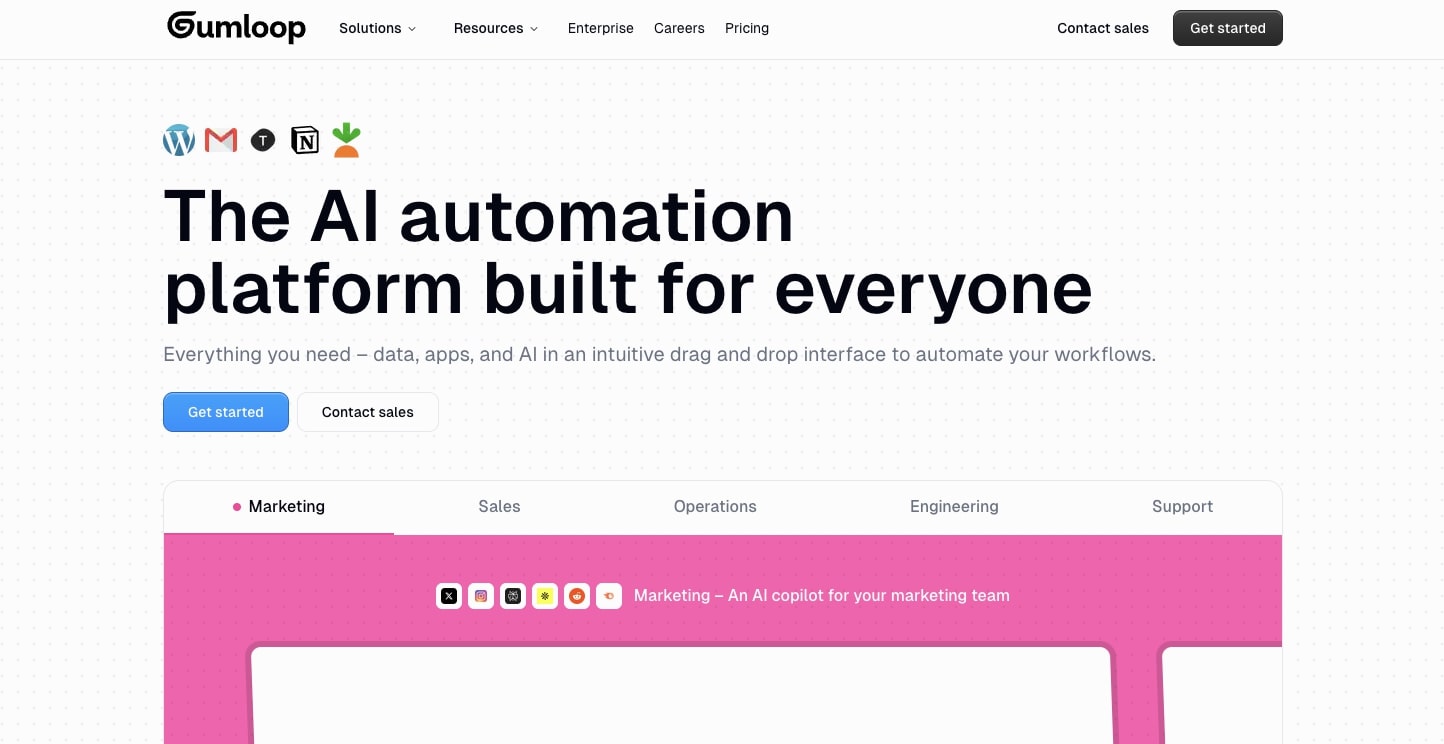
Gumloop is an AI first automation platform that leans much more heavily into AI workflows than traditional integration tools do. It is particularly relevant for teams working with extraction, research, document handling, and operational AI tasks where workflows need stronger model centric capabilities.
Key features
- AI first workflow automation design
- Document extraction and AI data processing
- Modern operational automations around AI tasks
- No code visual flow building
- Templates and building blocks for AI workflows
Pricing
- Public pricing is available on Gumloop’s pricing page
- Plans scale from lower entry tiers to enterprise options
Limitations
- Less mature as a general purpose integration ecosystem than older platforms
- Better for AI heavy workflows than broad app automation
- Enterprise depth is still narrower than larger incumbents
Best suited for
Gumloop is best suited for teams that see automation mainly as an AI workflow problem rather than an integration problem. It works well when the center of gravity is documents, extraction, AI processing, and operational tasks that benefit from model driven logic.
Integrately
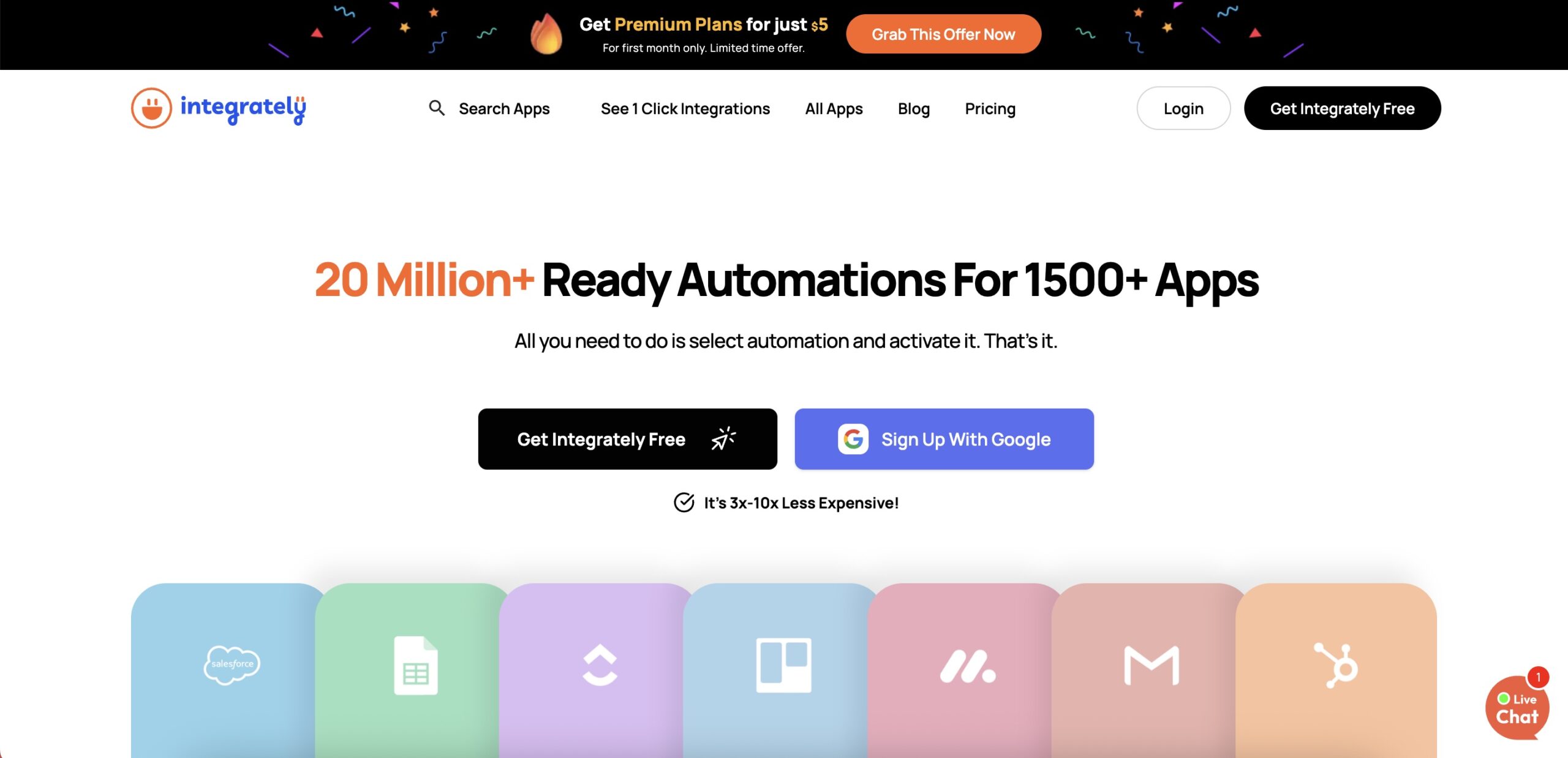
Integrately is a simpler Make alternative built around fast setup and one click automation. It is less ambitious than Make in areas like agents or developer tooling, but that is also part of the appeal for teams that want straightforward automation without extra platform complexity.
Key features
- One click automation templates
- Simple workflow setup for common app pairs
- Large app catalog for operational automations
- Lower learning curve than more flexible tools
- Basic paths and routers in paid plans
Pricing
- Starter is listed at $19.99 a month billed annually
- Higher plans scale by task volume and feature depth
Limitations
- Less flexible than Make for complex workflows
- Agent and AI depth is limited compared with newer platforms
- Not built for deep developer customization
Best suited for
Integrately is best suited for small teams that care more about quick wins than architectural flexibility. It is a good fit when the workflow is simple, common, and not expected to evolve into a more agentic or code heavy system.
Langflow
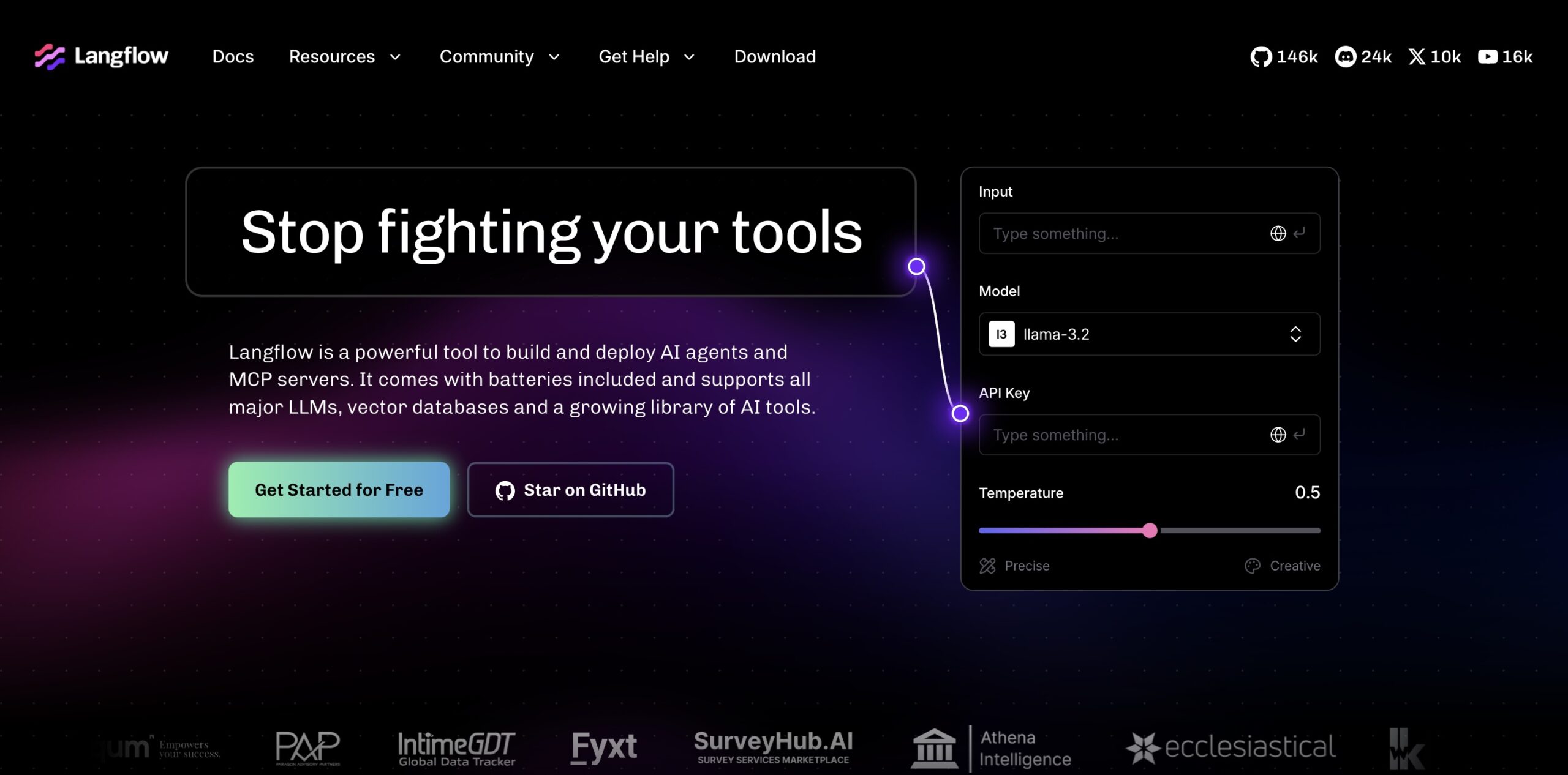
Langflow is a visual low code builder for agentic and RAG applications. It belongs in this list because many teams looking beyond Make are not just switching workflow tools. They are moving into LLM workflows and need something designed for agents rather than app automation first.
Key features
- Visual builder for LLM and agent workflows
- Strong fit for RAG and tool using systems
- Open source and developer extensible
- Better aligned with agent design than classic automation tools
- Useful bridge from experimentation to structured agent flows
Pricing
- Open source version is available
- Commercial deployment options depend on hosting and setup choices
Limitations
- Not a direct replacement for broad app automation platforms
- Requires more AI workflow context than simple no code tools
- Operational integrations are not its primary strength
Best suited for
Langflow is best suited for teams moving from workflow automation toward AI systems that reason, retrieve context, and use tools. It fits better as an agent builder than as a general operational automation platform.
Composio
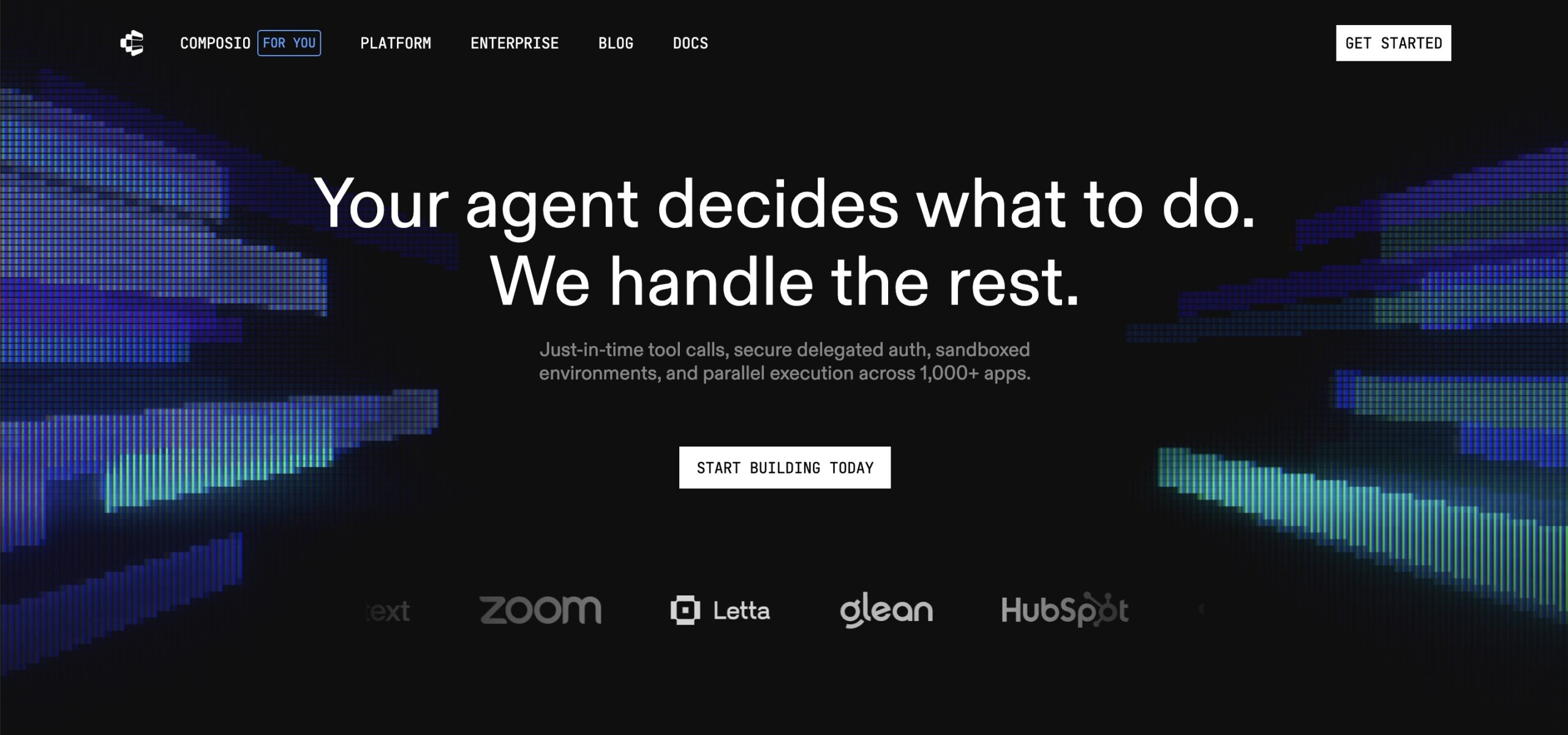
Composio is not a Make style workflow builder in the traditional sense. It is better understood as agent infrastructure for connecting AI agents to external tools and software systems, which makes it relevant when teams are less interested in flows and more interested in tool using agents.
Key features
- Tool connectivity layer for AI agents
- Focus on agents interacting with software systems
- Developer centric infrastructure for action execution
- Strong relevance for agent tool use and auth flows
- Designed around agent operations rather than app automation templates
Pricing
- Public site points users to pricing and demo paths
- Enterprise style engagement appears central to the product model
Limitations
- Not a direct one to one replacement for Make workflows
- Better as infrastructure than as a general no code tool
- Requires a clearer agent architecture to be useful
Best suited for
Composio is best suited for teams already building AI agents and looking for a stronger way to connect those agents to external tools. It is less about replacing simple workflows and more about powering the action layer of agent systems.
Pipedream
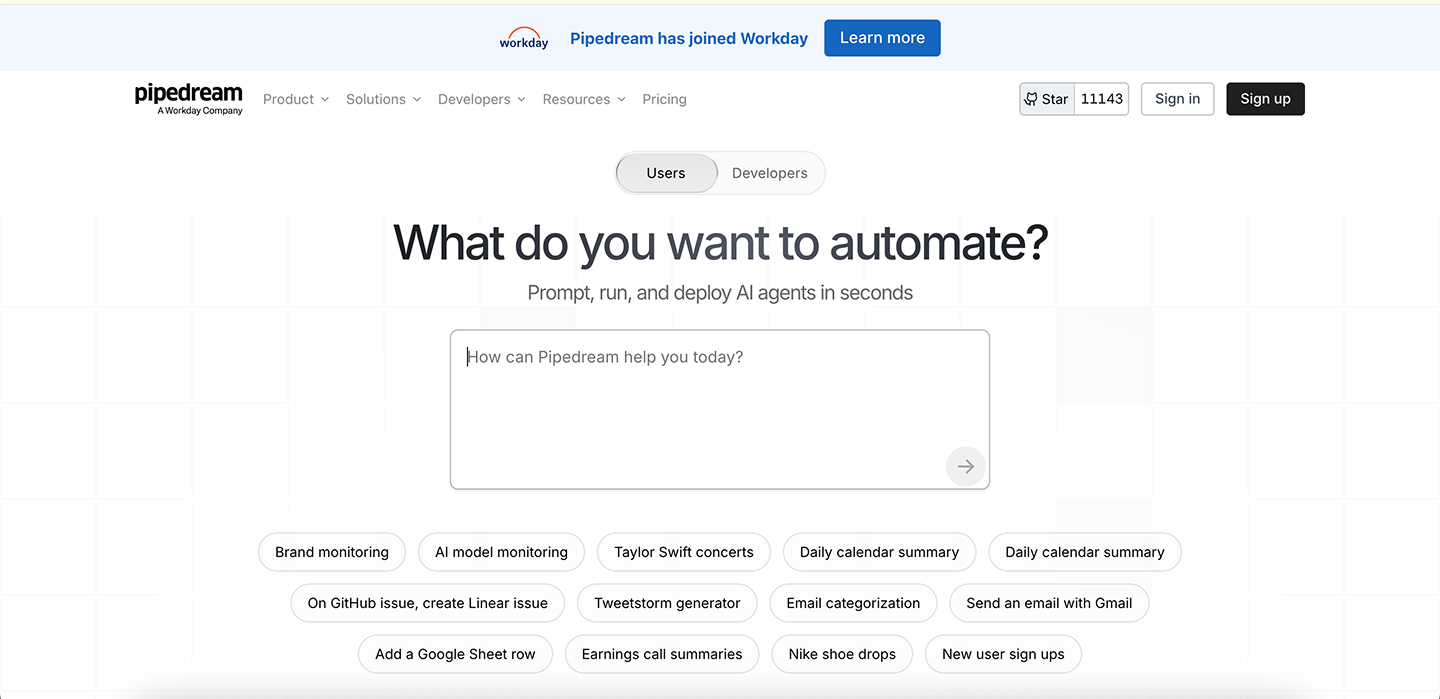
Pipedream is a developer focused automation and integration platform with strong code level control. It is a natural Make alternative for teams that like workflow automation but want to work closer to APIs, custom logic, and event driven execution without moving into a heavy enterprise suite.
Key features
- Code first workflow and API automation
- Strong developer control with custom steps
- Event driven architecture for integrations
- Broad app and webhook support
- Good fit for technical teams building operational automations
Pricing
- Public pricing is available on the pricing page
- Plans scale with credits and usage requirements
Limitations
- Less approachable for non technical teams
- Visual simplicity is not its primary value proposition
- Governance is lighter than enterprise orchestration platforms
Best suited for
Pipedream is best suited for developers and technical operations teams that want automation with code level flexibility. It fits best when the workflows are API heavy, event driven, and likely to need custom logic rather than template based setup.
Vellum
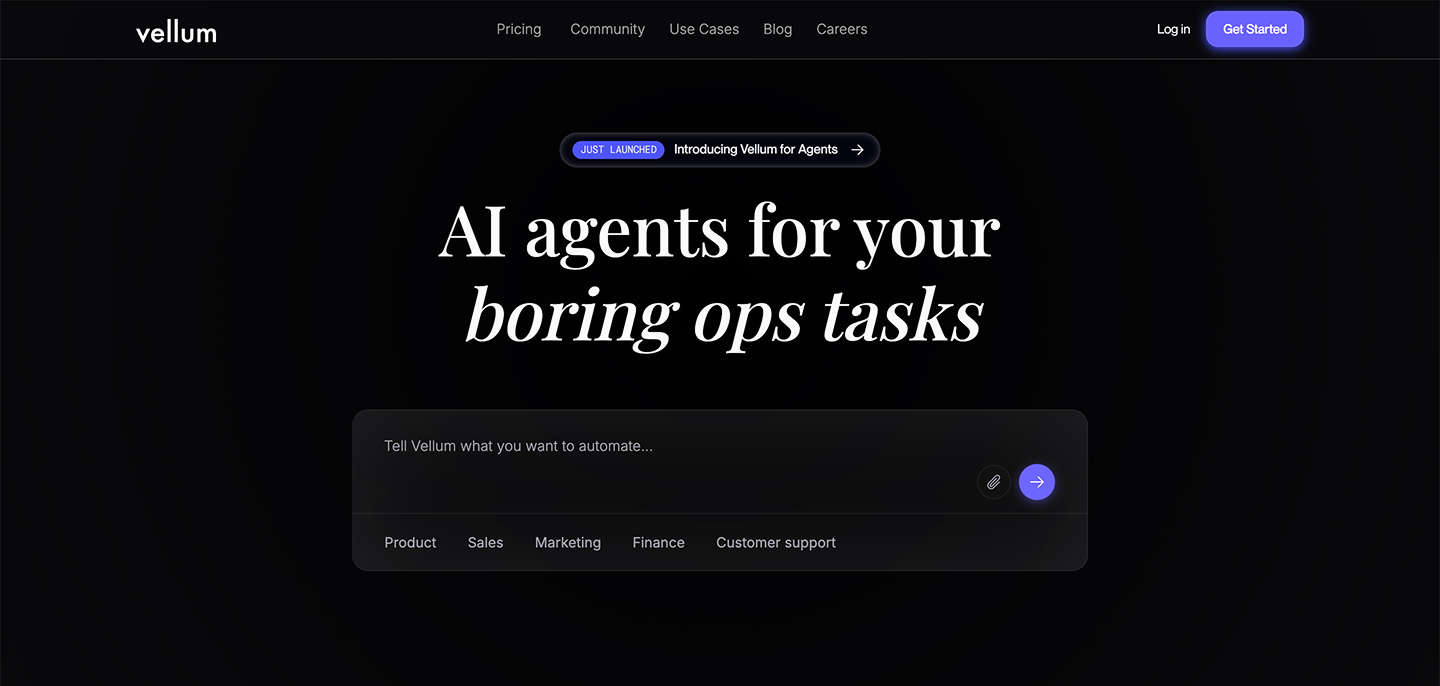
Vellum is an AI development platform focused on orchestration, evaluations, retrieval, deployment, and observability for LLM applications. It belongs in this comparison because some Make users are not really searching for another workflow tool. They are searching for a better platform for production AI systems.
Key features
- Orchestration for AI workflows and agents
- Evaluations retrieval and deployment capabilities
- Observability for production AI systems
- Stronger AI application focus than app automation tools
- Useful for teams moving from automation to production AI
Pricing
- Pricing is available through Vellum’s sales flow
- Product is oriented toward teams building production AI systems
Limitations
- Not a broad operational app automation platform like Make
- Better for AI systems than general app to app workflows
- Commercial evaluation is less self serve than lighter tools
Best suited for
Vellum is best suited for teams that have outgrown workflow automation as the center of gravity and now need orchestration, testing, and deployment for LLM powered applications. It is a better fit for production AI workflows than for general business automations.
Flowise
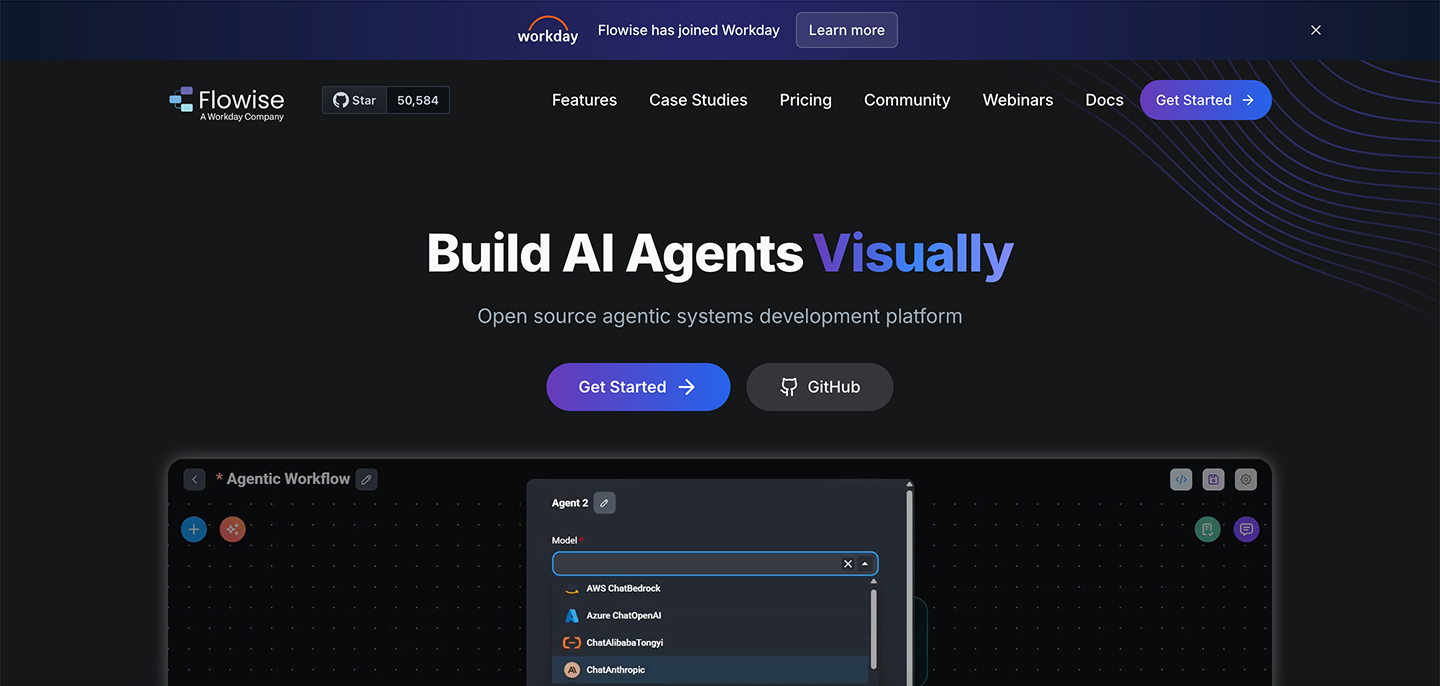
Flowise is an open source visual builder for AI agents and LLM workflows. It is often explored by teams that like visual flow building but want to move closer to agent systems, RAG pipelines, and open source AI tooling rather than stay inside general workflow automation products.
Key features
- Visual builder for AI agents and LLM flows
- Open source with self hosted flexibility
- Strong fit for RAG and agent style systems
- Easier entry into AI orchestration than code only stacks
- Community driven ecosystem around AI workflows
Pricing
- Open source version is available
- Hosted and commercial options depend on deployment path
Limitations
- Not designed for broad business app automation first
- Requires more AI context than classic workflow tools
- Enterprise governance is lighter than larger commercial platforms
Best suited for
Flowise is best suited for teams that want a visual route into AI agents without giving up open source flexibility. It is more relevant when the destination is an LLM workflow or agent system, not just another app integration scenario.
Benefits of using an AI agent builder
The biggest benefit is that an AI agent builder can handle work that is too dynamic for fixed rules alone.
Instead of hardcoding every path, teams can build systems that retrieve context, choose between tools, and decide how to proceed at runtime. That becomes useful in operational work where requests are incomplete, context changes across systems, and the right action depends on what the system discovers along the way.
A good AI agent builder also helps close the gap between automation and execution. It connects models to business systems, gives teams more control over how agents act, and reduces the amount of brittle coordination that would otherwise be pushed into long rule trees.
Getting started with DronaHQ
If your team is moving beyond app to app workflows into AI agents, start with a real operational use case. Pick something where context is scattered across systems and the next action cannot always be hardcoded. That is where the difference between a workflow tool and an agent platform becomes visible fast.
DronaHQ Agentic Platform is one place to test that shift in a real workflow. You can also compare it with other low code AI agent builders if you want a broader view of how this category is evolving.
Related Articles