
What are enterprise AI agents? 7 of the best AI agent platforms for enterprise
Enterprise AI agents are quickly becoming one of the most important software categories in business AI. The reason is simple. Most teams do not need another chatbot sitting on top of disconnected information. They need systems that can understand a request, pull context from business data, reason through the next steps, take action inside approved tools, and return a result that a team can actually use.
That is the gap enterprise AI agents are trying to close.
An enterprise AI agent is not just a language model with a nice interface. It is an AI system designed to operate inside real business environments with access controls, approvals, tool use, memory, data grounding, auditability, and workflow logic. In practice, that means an enterprise AI agent can do things such as resolve a support query using order history, summarize a live incident using logs and tickets, route a procurement task based on policy, or trigger a multistep internal workflow across CRM, ERP, HR, and knowledge systems.
This is also why interest in enterprise AI agents has accelerated so fast. Enterprises are no longer evaluating AI only as a writing assistant or search layer or GPT wrappers. They are evaluating whether AI can participate in operations and generate visible ROI.
In this guide, we will break down what enterprise AI agents are, how they differ from chatbots and copilots, what capabilities matter in an enterprise setting, and 7 of the best AI agents for enterprise teams to evaluate in 2026.
What are enterprise AI agents?
Enterprise AI agents are AI systems built to help organizations execute work across internal systems, data, and workflows. They can interpret goals, reason through tasks, retrieve business context, make bounded decisions, and take actions through connected tools or applications.
The key phrase here is bounded decisions. In consumer AI, the model is often the product. In enterprise AI, the model is only one layer. The real product is the operational system around it. That system includes retrieval, permissions, connectors, workflow rules, observability, human review, and security controls.
A useful way to think about enterprise AI agents is this: they sit between intent and execution.
A user expresses intent in natural language. The agent interprets that intent, checks context, uses tools, follows guardrails, and either completes the task or escalates it with the right information. That makes enterprise AI agents especially useful in areas where work today is repetitive, multi-step, data-heavy, and spread across too many systems.
How enterprise AI agents work
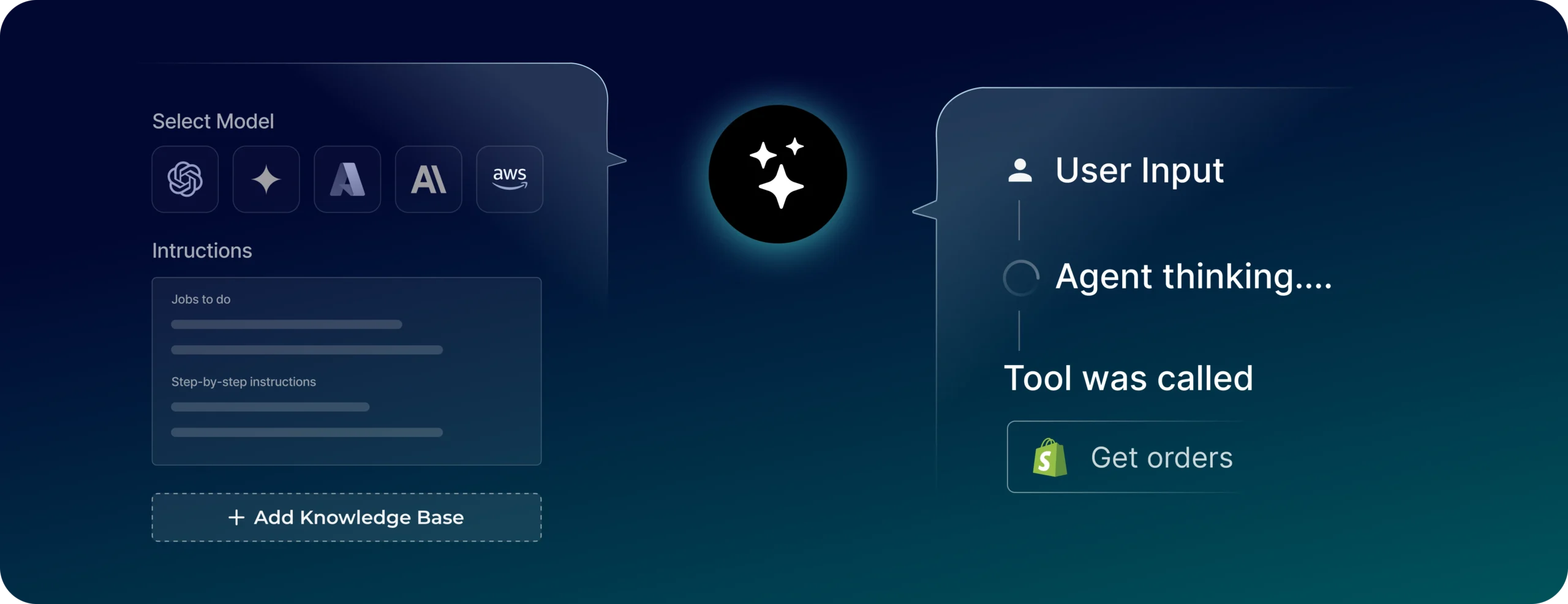
Most enterprise AI agents combine six layers:
- Language understanding to interpret the request and user intent
- Retrieval to pull relevant information from enterprise data and knowledge sources
- Reasoning and planning to decide what steps to take
- Tool use to call APIs, trigger workflows, query databases, or update systems
- Guardrails to enforce permissions, policy, validation, and human approvals
- Observability to trace actions, evaluate outputs, and improve performance over time
This stack matters because enterprise work is rarely a one-prompt task. A finance query may require ERP data, policy rules, approval logic, and an auditable output. A service resolution workflow may need customer history, order data, SLA checks, and the ability to update a ticket. Without orchestration and governance, the AI may generate a response. With enterprise agent architecture, it can complete a business task.
Enterprise AI agents vs chatbots vs copilots
A lot of content on this topic mixes these terms together. That usually makes evaluation harder.
- Chatbots are usually designed for predefined conversations and narrow workflows. They can be useful for FAQs, scripted support, and guided task completion.
- Copilots are assistive systems. They help users draft, summarize, search, recommend, or generate outputs inside an existing product or work surface.
- Enterprise AI agents go a step further. They can often plan, retrieve context, decide across branches, use tools, and execute actions with more autonomy inside approved boundaries.
This does not mean every enterprise needs fully autonomous agents. In many settings, the best enterprise AI agent is one that works with a human in the loop, uses strong approvals, and handles only the parts of the workflow that benefit from speed and consistency.
Why enterprises are paying attention now
Three things changed.
- First, models got better at tool calling, planning, and structured output.
- Second, enterprise platforms got better at secure retrieval and workflow integration.
- Third, leadership teams started asking a more useful question. Instead of asking whether AI can generate text, they started asking whether AI can reduce resolution time, improve throughput, lower manual workload, and increase process visibility.
That is why the strongest enterprise AI agent use cases are now appearing in support operations, IT operations, employee service, finance workflows, sales operations, procurement, and internal knowledge work.
What separates a true enterprise AI agent from a demo
Many AI agent demos look impressive for five minutes. Enterprise reality is less forgiving.
If you are evaluating AI agents for enterprise use, look for these capabilities:
- Secure connectors to enterprise systems and data sources
- Retrieval grounded in business context and permissions
- Workflow execution, not just response generation
- Approval layers and human-in-the-loop control
- Logging, tracing, testing, and policy enforcement
- Ability to manage multiple agents or multi-step orchestration
- Support for hybrid environments if your data is not all in one cloud
- Clear fit with the systems your teams already use
This is where many pilots stall. The problem is usually not the prompt. It is the operational layer around the prompt.
7 of the best AI agents for enterprise teams
There is no single best enterprise AI agent for every company. The right choice depends on your data architecture, existing software stack, target workflows, and governance needs. Still, a few platforms consistently stand out because they are building for enterprise scale rather than consumer novelty.
1. DronaHQ Agentic Platform
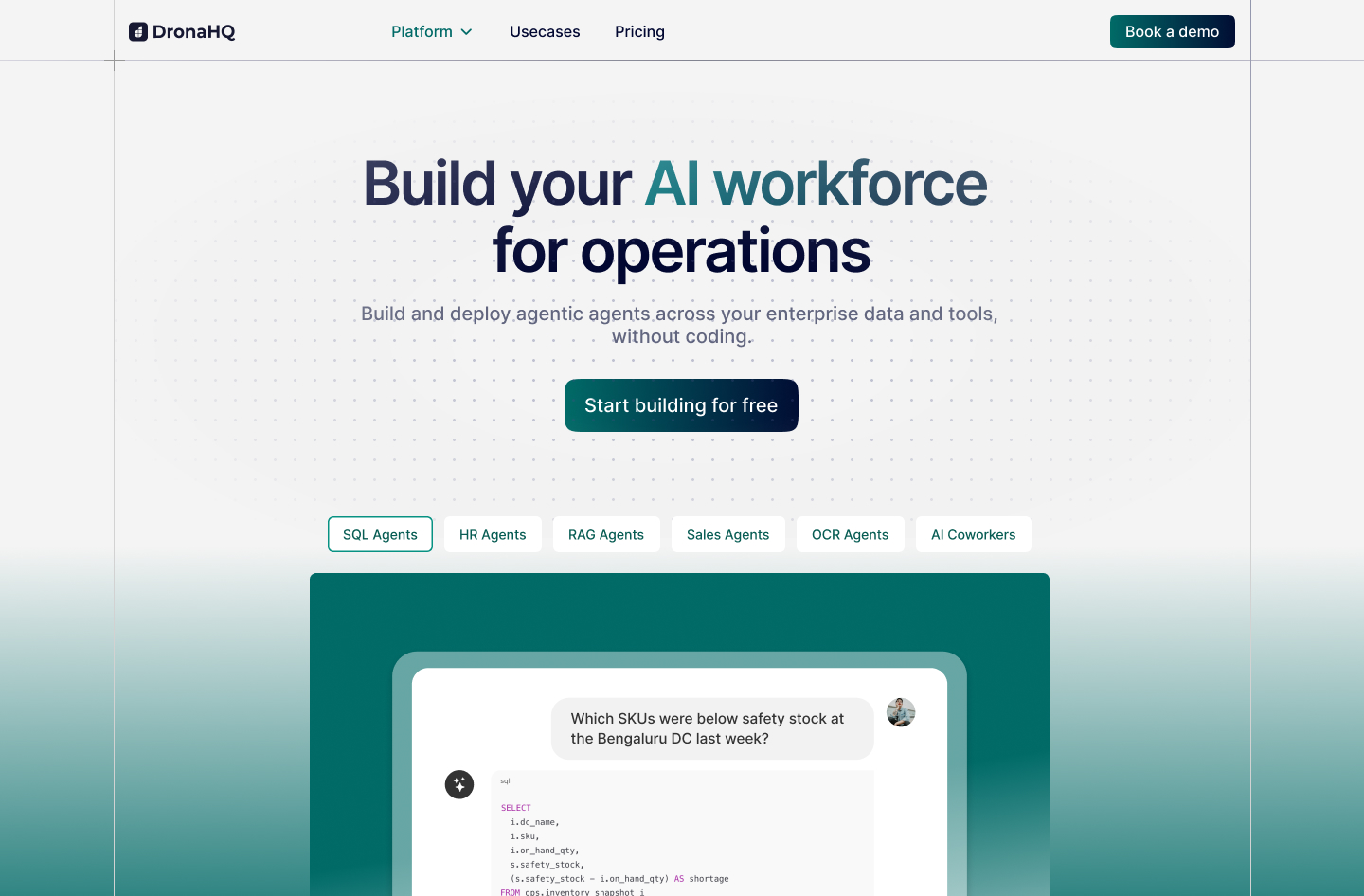
DronaHQ fits this market from a different angle than many pure agent frameworks. It is positioned as an agentic application platform that helps organizations build AI agents and operational applications that work across enterprise systems. That distinction matters because enterprise teams often discover that the hard part is not generating an answer. It is creating the environment where agents can retrieve context, interact with tools, trigger workflows, and work alongside human teams inside real operational systems.
DronaHQ is designed to provide that application and orchestration layer. Teams can securely connect agents to enterprise data, build operational interfaces for humans and agents, orchestrate workflows across systems, and deploy AI-driven experiences inside day-to-day business processes. This makes it relevant for organizations that need more than a reasoning engine and want a governed environment where agents and applications work together.
Its strongest differentiation is that it combines interfaces, enterprise integrations, workflow orchestration, and AI agent capabilities in one platform. That opens up practical use cases such as internal operational apps, AI workflow agents, knowledge assistants, data assistants, and automation systems that coordinate work across multiple enterprise tools.
Why it stands out: strong fit for teams that need the orchestration and application layer around AI agents, especially where humans and agents need to collaborate through dashboards, workflows, and internal tools.
Best fit: engineering teams, internal tooling teams, digital transformation teams, AI solution teams, and partners building operational systems for the agentic era.
Pricing: Pay as you go
2. Salesforce Agentforce
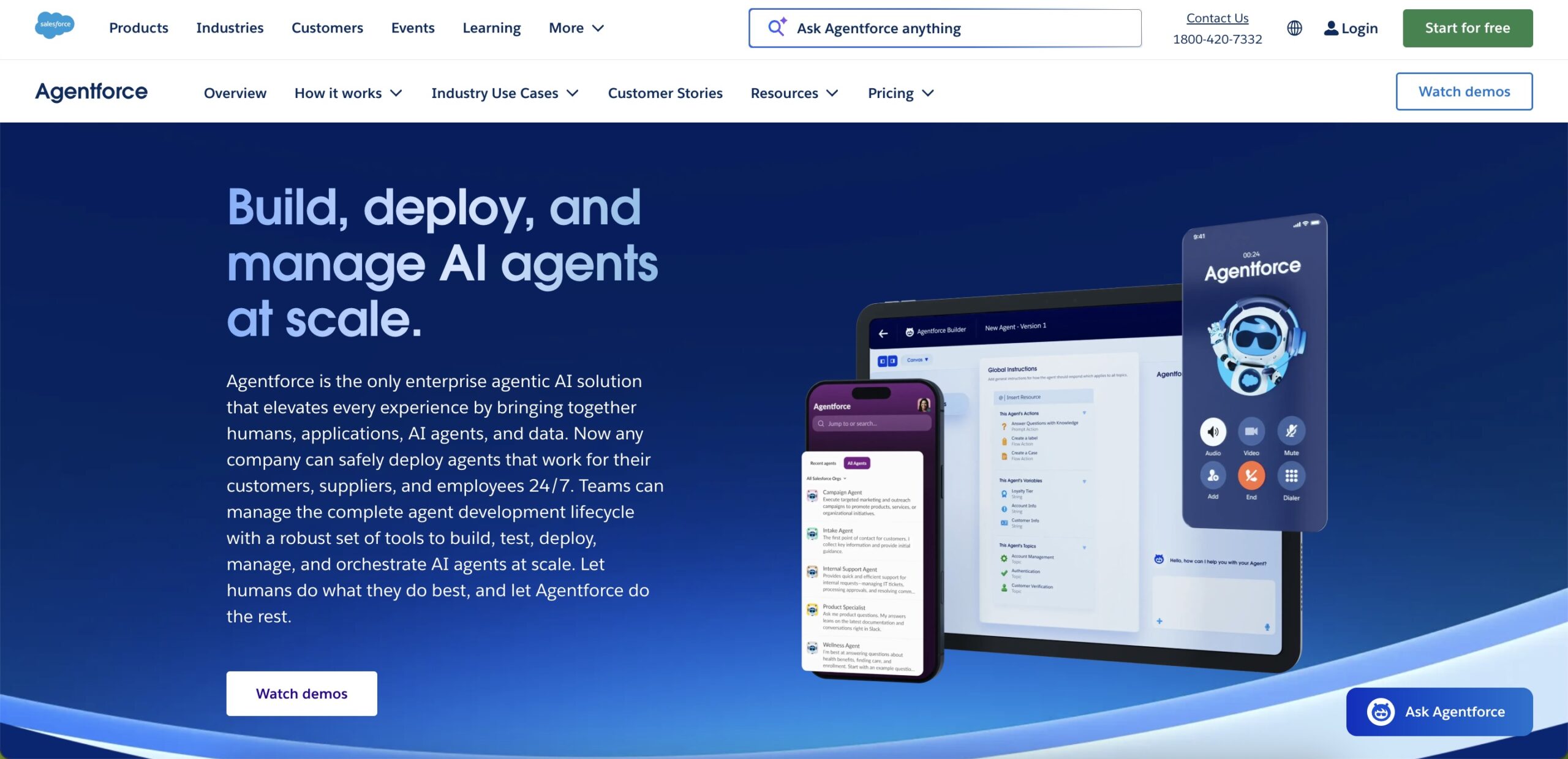
Salesforce has turned Agentforce into a broad enterprise agent platform tied to its CRM, data, workflow, and Slack ecosystem. The platform focuses on building, testing, supervising, and deploying AI agents across customer and employee workflows. It also emphasizes grounding agents in existing workflows, integrations, and business context.
This makes Agentforce particularly relevant for customer-facing and revenue-facing operations. Sales, service, and marketing teams that already live inside Salesforce can extend agents into the workflows they use every day instead of creating a disconnected AI layer.
Why it stands out: strong ecosystem fit for CRM-led operations, supervision tooling, and extensibility across customer and employee workflows.
Best fit: enterprises already committed to Salesforce that want to operationalize AI inside sales, service, and customer experience processes.
3. Microsoft 365 Copilot agents
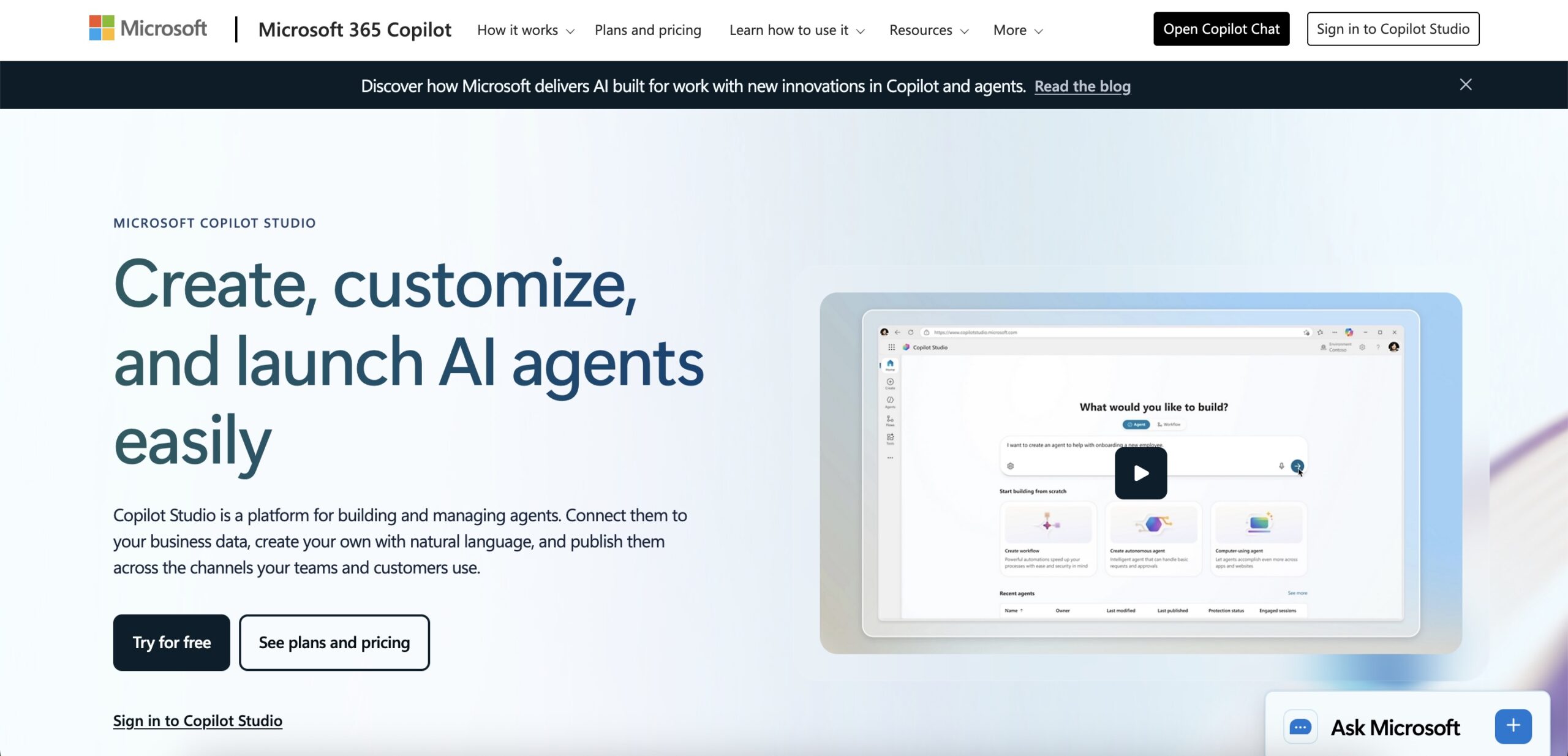
Microsoft approaches enterprise AI agents from the productivity stack outward. Copilot Studio lets teams create agents using natural language or a graphical interface, and publish them into Microsoft 365 Copilot and other channels. The biggest strength is reach. For organizations already operating in Teams, Outlook, SharePoint, Excel, and the broader Microsoft ecosystem, this makes agent adoption easier to distribute.
Microsoft is also building more around agent management, connectors, and enterprise controls, which matters for companies trying to move from isolated assistants to governed internal agents.
Why it stands out: massive distribution, strong Microsoft ecosystem integration, and low friction for organizations already standardized on Microsoft tools.
Best fit: enterprises that want internal AI agents embedded into employee productivity workflows and Microsoft work surfaces.
4. Vertex AI Agent Builder
and Gemini Enterprise agents
Google is positioning Vertex AI Agent Builder as a full-stack platform to build, scale, and govern enterprise-grade agents grounded in enterprise data. Combined with Gemini Enterprise agent capabilities, it gives organizations a path to build custom agents with strong cloud infrastructure, developer tooling, and secure search and retrieval.
Google is particularly compelling for teams that want deeper developer flexibility. It supports building with frameworks, deploying at scale, and combining search, retrieval, and agent infrastructure in one ecosystem.
Why it stands out: strong developer flexibility, enterprise search depth, and cloud-native infrastructure for production deployment.
Best fit: engineering-led enterprises that want more control over how agents are built, grounded, and scaled.
5. SAP Joule Agents
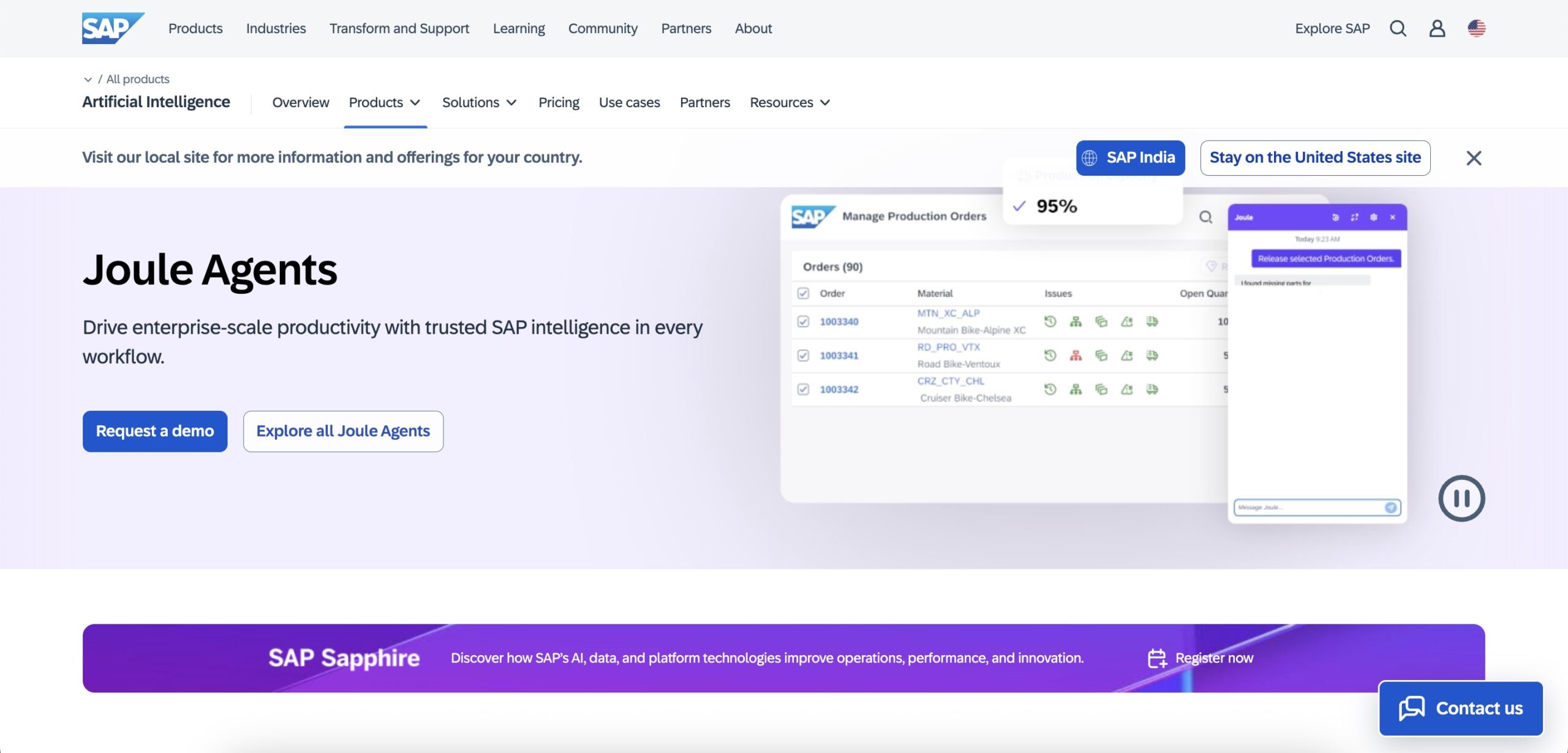
SAP brings a very practical advantage to the enterprise AI agent market. It already sits close to core business operations for many large organizations. Joule Agents are designed to work across functions such as procurement, supply chain, HR, customer experience, and business transformation management.
That matters because enterprise AI success often depends on how close the agent sits to actual system-of-record workflows. If your processes already live in SAP, an agent operating within that context can be more useful than a generic layer sitting outside it.
Why it stands out: strong line-of-business depth, built-in relevance for ERP-centric organizations, and clear use cases tied to operational functions.
Best fit: enterprises with SAP-heavy environments that want AI agents inside existing business processes rather than on the side.
6. Snowflake Intelligence
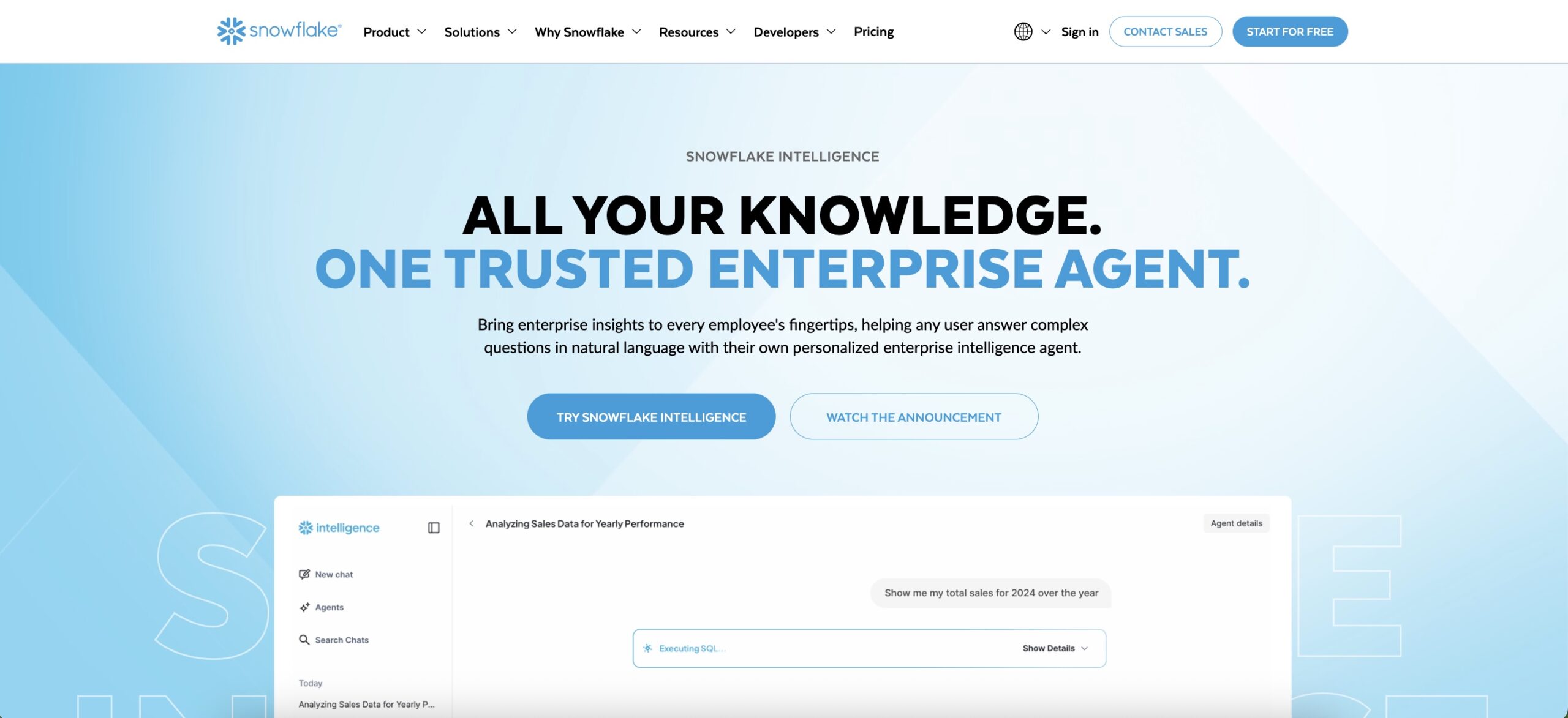
Snowflake is taking a data-first approach to enterprise AI agents. Snowflake Intelligence is positioned as a trusted enterprise agent that helps users ask complex questions in natural language and get grounded answers from enterprise data. The strength here is obvious. For many companies, the biggest blocker is not interface design. It is trusted access to structured and unstructured data across the organization.
Snowflake becomes especially compelling when the use case is analytics-heavy, data-heavy, or tied to an existing Snowflake footprint. Its broader Cortex and AI capabilities also make it relevant for teams that want to build custom agentic workflows closer to their governed data environment.
Why it stands out: strong data foundation, enterprise trust story, and relevance for teams that want agents grounded in real business context.
Best fit: organizations with major Snowflake investments or teams building data agents, analytics agents, and enterprise knowledge agents.
7. IBM watsonx Orchestrate
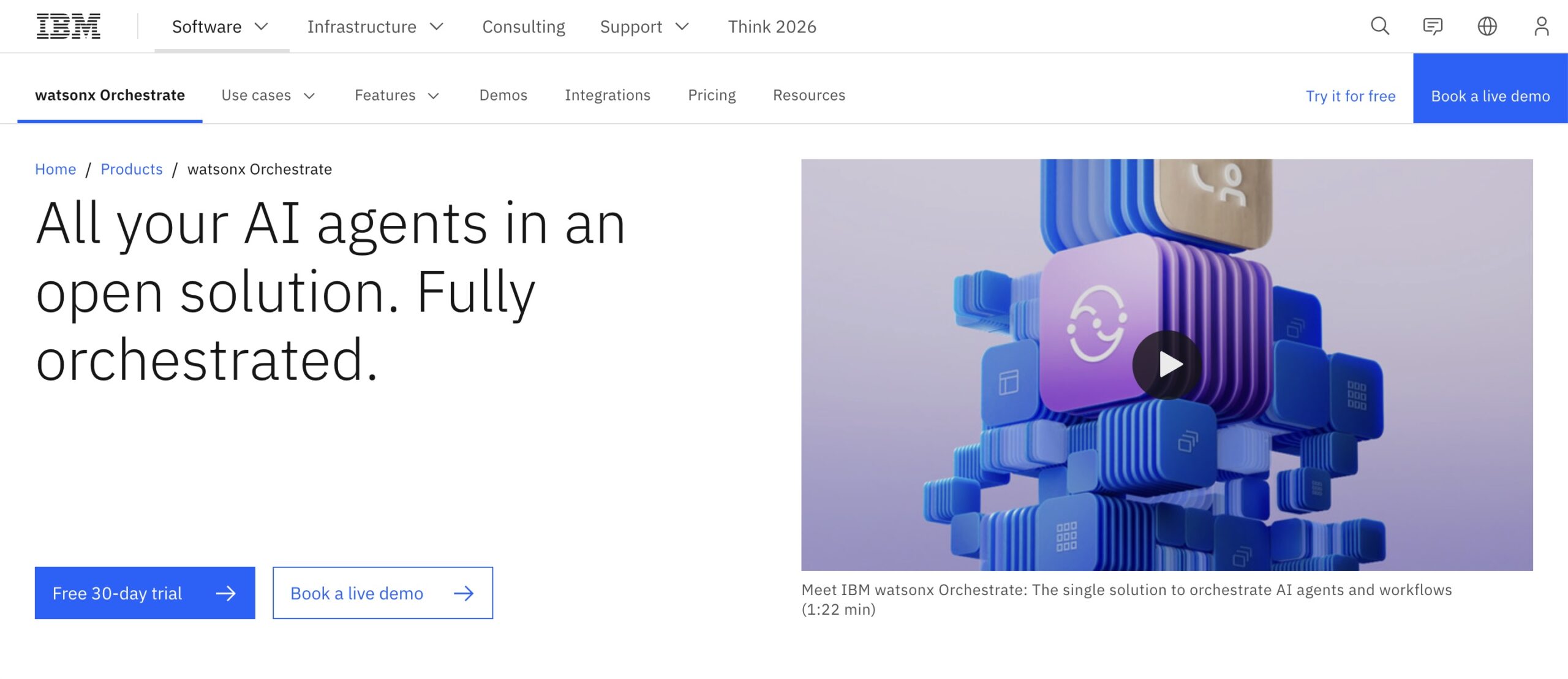
IBM has positioned watsonx Orchestrate around automating work across the business with AI agents, centralized oversight, built-in guardrails, and policy enforcement. That governance story is important. Many large enterprises are comfortable experimenting with AI, but far more cautious when AI begins acting across systems, roles, and regulated workflows.
IBM also offers prebuilt and custom agents, along with a catalog approach that helps teams discover and manage agents in a more governed workspace.
Why it stands out: governance-led positioning, strong enterprise oversight language, and suitability for organizations that want agent deployment with visible control structures.
Best fit: large enterprises in regulated or complex operating environments where oversight and policy enforcement are critical.
Which enterprise AI agent platform is best?
The honest answer is that the best enterprise AI agent platform depends on where your operational context already lives.
If your goal is to build agents that operate through internal applications, workflows, and enterprise system integrations, DronaHQ deserves attention. If your business runs heavily on SAP, start there. If your workflows live in Salesforce, Agentforce deserves a serious look. If your teams live in Microsoft 365, Copilot Studio has natural distribution. If your biggest advantage is governed data inside Snowflake, Snowflake Intelligence has a strong case. If your team wants infrastructure and developer flexibility, Google Vertex AI Agent Builder is strong. If governance and oversight are the biggest blockers, IBM watsonx Orchestrate is worth evaluating closely.
The mistake is choosing based on marketing categories alone. The better approach is to map the agent platform to the system landscape, target workflow, approval model, and deployment maturity inside your company.
Real enterprise AI agent use cases worth prioritizing
The strongest early wins usually come from high-volume workflows with measurable outcomes. A few examples:
- Customer support agents that resolve order, refund, claims, or account issues using real system context
- IT operations agents that summarize incidents, correlate alerts, retrieve runbooks, and assist with remediation steps
- Employee service agents for HR, policy, onboarding, and internal requests
- Finance and procurement agents that validate information, gather context, and move tasks through approval flows
- Sales and revenue operations agents that prepare account briefs, update CRM records, and surface risk or next steps
- Knowledge agents that unify policies, documents, and internal references with permission-aware retrieval
These are useful because they are close to measurable business outcomes such as lower handling time, fewer manual handoffs, faster approvals, better consistency, and improved internal visibility.
How to evaluate AI agents for enterprise use
A simple evaluation framework helps.
Start with one workflow, not ten. Pick a process with clear friction, available data, and visible ROI. Define what the agent should be allowed to do, what data it can access, when human approval is needed, and how success will be measured.
Then evaluate platforms across these questions:
- Can the agent access the right data securely?
- Can it take action, not just answer questions?
- Can you inspect what it did and why?
- Can you control permissions, approvals, and escalation?
- Can it work with the systems your teams already use?
- Can you expand from one agent to multiple workflows later?
If a platform looks strong in a demo but weak on these questions, you are probably looking at an assistant, not an enterprise-grade agent system.
Final thoughts
The market is still evolving, and the best choice depends heavily on your stack and use case. But the direction is clear. AI agents for enterprise teams are moving from isolated pilots into bounded, governed, outcome-driven workflows.
The teams that get value first will not be the ones chasing the most autonomous demo. They will be the ones choosing narrow, high-friction workflows, grounding agents in trusted context, and building with approvals, observability, and real operational ownership.
If that foundation is in place, enterprise AI agents stop feeling experimental and start feeling like software that can carry part of the workload.
Related Articles