
Choosing the right memory and retrieval stack for your AI agent
An AI agent’s memory stack is the set of storage and retrieval systems that let it access information beyond its active context window, across tasks and sessions.
TL;DR: Memory architecture is not a tool selection. It is a set of layered decisions about what to store, where to store it, and how to retrieve it precisely. Getting this wrong is the most common reason production agents fail.
Most agent failures don’t trace back to the model. They trace back to what the agent can’t remember, can’t retrieve, or retrieves at the wrong time.
What agent memory actually means
Unlike a single-turn chatbot, an agent operates across multiple steps and often across multiple sessions. The context window holds only what is immediately active. Everything else needs a place to live and a way to come back when needed.
The MemGPT research paper from UC Berkeley frames this as a paging problem: the context window is like RAM, and memory systems are like disk storage. The agent needs to know what to load, when to load it, and what to discard.
Retrieval is not the same as memory. Retrieval is one operation within a memory system: a query goes in, relevant content comes back. Memory is the broader infrastructure that makes retrieval possible and meaningful.
Why tool selection is not the same as architecture
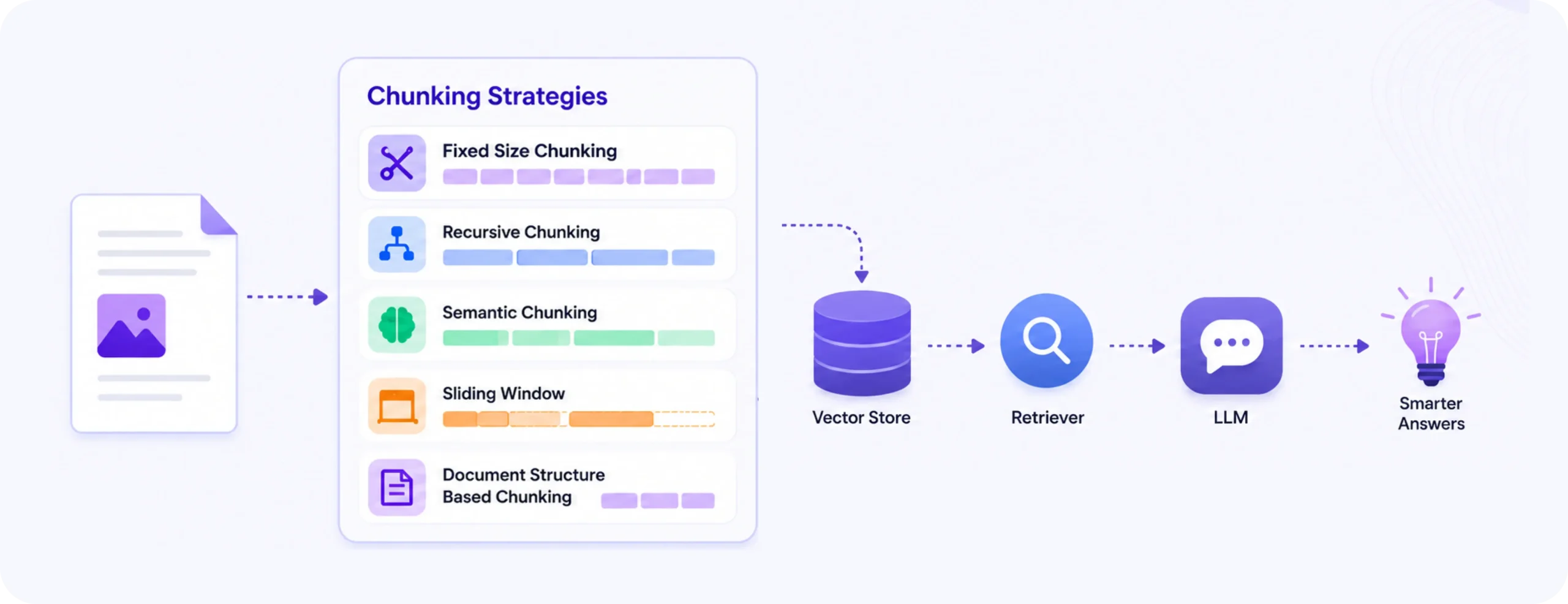
When teams start building agents, they typically reach for a vector database and wire up a RAG pipeline. That is a reasonable starting point. The problem is treating it as a complete solution.
Vector databases handle semantic similarity search. They do not handle workflow state recovery, structured queries, relationship traversal, or audit logging. RAG is a retrieval pattern, not a memory system.
The result is predictable: agents that forget what happened mid-task, retrieval that returns topically related content instead of the specific fact the user asked about, and no trace of what the agent accessed or why. These problems do not show up in demos. They show up three months after deployment.
The decision that matters is not which vector database to use. It is which type of storage to use for which type of data, at which layer of the system.
Why this matters for enterprises
The production gap is significant. A 2023 study from Stanford on generative agent simulations showed that agents without structured memory systems produce contradictory outputs, repeat actions they have already taken, and fail on tasks that require referencing past context.
For enterprise teams, this translates into three concrete risks:
Inconsistency. An agent that cannot reliably recall prior interactions gives different answers to the same question across sessions. For customer-facing applications, this erodes trust quickly.
Cost. Stuffing everything into the context window is the easiest workaround. It is also expensive. Large context windows cost significantly more per token, and the cost scales with every interaction.
Auditability. Regulated industries need to know what an agent retrieved, why it retrieved it, and how that shaped its output. A system without structured memory logging cannot satisfy that requirement.
The NIST AI Risk Management Framework is voluntary guidance that encourages traceability and explainability as properties of trustworthy AI systems. Memory architecture is one of the primary places where both are either supported or undermined.
How the core memory components compare
This table is the most important thing to understand before choosing any tool. Different components solve different problems. None of them are substitutes for each other.
| Capability | Vector DB | Checkpointer | SQL / relational | Graph DB |
|---|---|---|---|---|
| Semantic recall | Yes | No | Limited | Partial |
| Workflow state recovery | No | Yes | No | No |
| Structured queries | Weak | No | Yes | Yes |
| Relationship traversal | Weak | No | Partial | Yes |
| Long-running agent support | Limited | Yes | Partial | Yes |
| Audit log / replay | No | Partial | Yes | No |
| PII and tenant isolation | Partial | No | Yes | Partial |
| Cost at scale | Medium | Low | Low | High |
The practical implication: most production agents need at least two of these components working together. An agent that uses only a vector database has no way to recover interrupted workflows, no way to query structured facts, and no way to trace what it retrieved.
The four types of memory your agent needs
Memory in cognitive science is not a single system. The cognitive architectures for language agents paper from Princeton classifies agent memory into four types, each with a distinct function.
Working memory holds the current task context. This is the context window itself. It is fast and immediately accessible, but it is finite and ephemeral.
Short-term memory persists within a session. A session store like Redis fits here. It allows an agent to reference what happened earlier in the same conversation without re-fetching it from a slower system.
Long-term memory spans sessions. This is where vector databases, relational stores, and graph databases live. It holds customer preferences, historical decisions, documents, and past outputs.
Procedural memory stores patterns of execution: how an agent solved a specific class of problem before. This is less commonly implemented but increasingly relevant for agents that run recurring workflows.
Understanding which type of memory a given piece of information belongs to tells you which storage system it should live in.
The modern agent memory stack, layer by layer
A production memory stack is not a single database. It is a set of layers, each responsible for a specific job.
Orchestration layer. The agent runtime (LangGraph, CrewAI, custom orchestration) manages task flow and decides what to read from or write to memory at each step.
Working memory. The active context window. Managed by the LLM itself. This is where retrieved content lands before the model reasons over it.
Session store. Redis or an equivalent in-memory store. Holds short-term state: current conversation, intermediate task outputs, ephemeral user preferences. Low latency, not persistent by default.
Checkpointer. Persists workflow state so that long-running or interrupted tasks can resume. LangGraph’s built-in checkpointing writes state to Postgres or SQLite. Without this, a network interruption or timeout means starting from scratch.
Vector database. Semantic retrieval over unstructured content: documents, past conversations, knowledge bases. Pinecone, Weaviate, Qdrant, and pgvector are common choices. Strong for “find content similar to this query.” Weak for “give me the customer’s account number.”
Relational database. Structured facts, user records, policy data, compliance logs. SQL is the right tool here. Trying to embed structured data into vectors loses precision and makes exact lookups unreliable.
Graph database. Relationship-aware retrieval. Useful when the agent needs to traverse connections: who reported to whom, which products are related to which categories, how entities relate across a knowledge graph. Neo4j and Amazon Neptune are common options.
Observability and audit layer. Logs of what was retrieved, when, by which agent, and with what result. This is not optional in regulated environments. Tools like LangSmith, Arize, or custom event logging handle this.
Choosing the right retrieval strategy
Retrieval strategy matters as much as storage choice. The same vector database can return highly relevant results or completely irrelevant ones, depending on how you query it.
Semantic retrieval uses embedding similarity. Good for fuzzy, intent-based queries. Degrades when the user asks something precise that requires exact matching.
Keyword retrieval uses BM25 or similar algorithms. Good for exact term matching. Misses synonyms and paraphrases.
Hybrid retrieval combines both. A 2024 paper from Microsoft Research on retrieval-augmented generation showed that hybrid approaches consistently outperform pure semantic retrieval on heterogeneous enterprise data, which is the kind of data most companies actually have.
Reranking adds a second-pass model that scores retrieved results for relevance before passing them to the LLM. This is one of the highest-leverage improvements most teams can make. It decouples retrieval (broad) from selection (precise).
Recency-aware retrieval weights recent content more heavily. Useful for agents that track evolving information, like support ticket history or market conditions.
Metadata filtering restricts retrieval to a subset of the index before semantic search runs. For multi-tenant systems, this is also the primary mechanism for tenant isolation.
A production retrieval pipeline typically combines at least three of these: hybrid search, metadata filtering, and reranking. Using semantic retrieval alone is a prototype decision, not a production one.
Memory architecture by use case
The right stack depends on what the agent is doing. The following recommendations are based on the specific retrieval and persistence requirements of each use case.
| Use case | Recommended stack | Why |
|---|---|---|
| Customer support agent | Vector DB + Redis + SQL | Semantic recall for past tickets, fast session state, structured customer records |
| Research and analysis agent | Hybrid search + reranker + object storage | Broad retrieval over documents with precision pass |
| Coding agent | Episodic memory + checkpointer + vector DB | Resume long tasks, recall past code patterns |
| Enterprise copilot | SQL + vector DB + graph DB | Structured facts, semantic search, relationship traversal |
| Workflow automation agent | Checkpointer + event log + SQL | State recovery, auditability, structured triggers |
| Multi-agent system | Shared vector DB + graph memory + message queue | Agents share knowledge without duplicating retrieval |
| Compliance-heavy agent | SQL + audit log + metadata-filtered vector DB | Traceability, tenant isolation, regulatory requirements |
One principle holds across all of these: the retrieval system should match the shape of the query. Structured questions go to SQL. Fuzzy semantic questions go to a vector store. Relational questions go to a graph. Mixing these up is the most common architectural mistake.
Common mistakes teams make in production
Using a vector database for everything. Vector databases are retrieval systems, not memory systems. Using them to store structured facts or workflow state creates precision problems that are hard to debug.
Persisting every interaction forever. Memory accumulates noise over time. Without summarization, pruning, or expiration policies, retrieval quality degrades as the index grows. Research on long-context agents shows that unmanaged memory growth can invert retrieval performance: more stored data, worse results.
No memory summarization. Long conversation histories should be compressed periodically. Storing raw transcripts and retrieving from them verbatim is expensive and imprecise.
Retrieval without reranking. The top-k results from a vector search are not necessarily the most relevant. Reranking adds a few hundred milliseconds and significantly improves precision.
No observability on retrieval. If you cannot see what your agent retrieved and why, you cannot debug failures, explain outputs, or audit decisions. This is a hard requirement in any enterprise context.
Storing structured data as embeddings. A customer’s account status, subscription tier, or policy number should never live in a vector index. It belongs in a relational database with exact-match queries.
Enterprise guidance: what to build at each stage
Memory architecture should match the complexity and risk profile of the system. Overbuilding early wastes time. Underbuilding creates technical debt that is expensive to unwind.
MVP stage
Start with a vector database and a session store. Use a managed vector database like Pinecone or Weaviate to avoid operational overhead. Add Redis for session state. Use your existing relational database for structured facts. Do not build a custom retrieval pipeline yet.
The goal at this stage is to validate that memory improves agent performance, not to build a complete production stack.
Growth stage
Add hybrid retrieval and reranking once your query volume is high enough to measure retrieval quality. Add checkpointing if your agents run workflows longer than a few minutes. Begin logging retrieval events for debugging. Implement metadata filtering if you are serving multiple tenants or departments.
At this stage, start defining your memory lifecycle: what gets stored, for how long, and what triggers pruning or summarization.
Enterprise scale
At scale, the memory stack becomes a governed system with its own operational requirements.
- Multi-layer memory with clear boundaries between short-term, long-term, and episodic stores
- Tenant isolation enforced at the retrieval layer, not just the application layer
- PII detection and redaction before content enters long-term memory
- Versioned memory so that changes to the knowledge base can be audited and rolled back
- Retrieval observability integrated with your existing monitoring stack
- Regular memory audits: what is in the index, how old is it, is it still accurate
The NIST AI Risk Management Framework is voluntary guidance, not a binding standard, but it encourages organizations to treat all AI system components as part of the overall risk surface. Memory systems that store customer data, past decisions, or proprietary knowledge carry real compliance obligations regardless. Designing for governance from the start is significantly cheaper than retrofitting it.
What good memory architecture actually enables
An agent with well-designed memory can:
- Resume a multi-step task after an interruption without losing context
- Retrieve precisely what a user asked about, not just topically related content
- Answer structured questions without hallucinating facts that should come from a database
- Operate across sessions without treating each conversation as if it were the first
- Provide a traceable record of every retrieval decision for audit purposes
These are not advanced features. They are baseline requirements for any agent operating in a production environment.
The best AI agents are not powered by larger models. They are powered by better memory architectures.
Building production AI agents requires more than choosing the right model. It requires orchestration, workflow reliability, memory management, and enterprise governance — working together as a system.
Related Articles